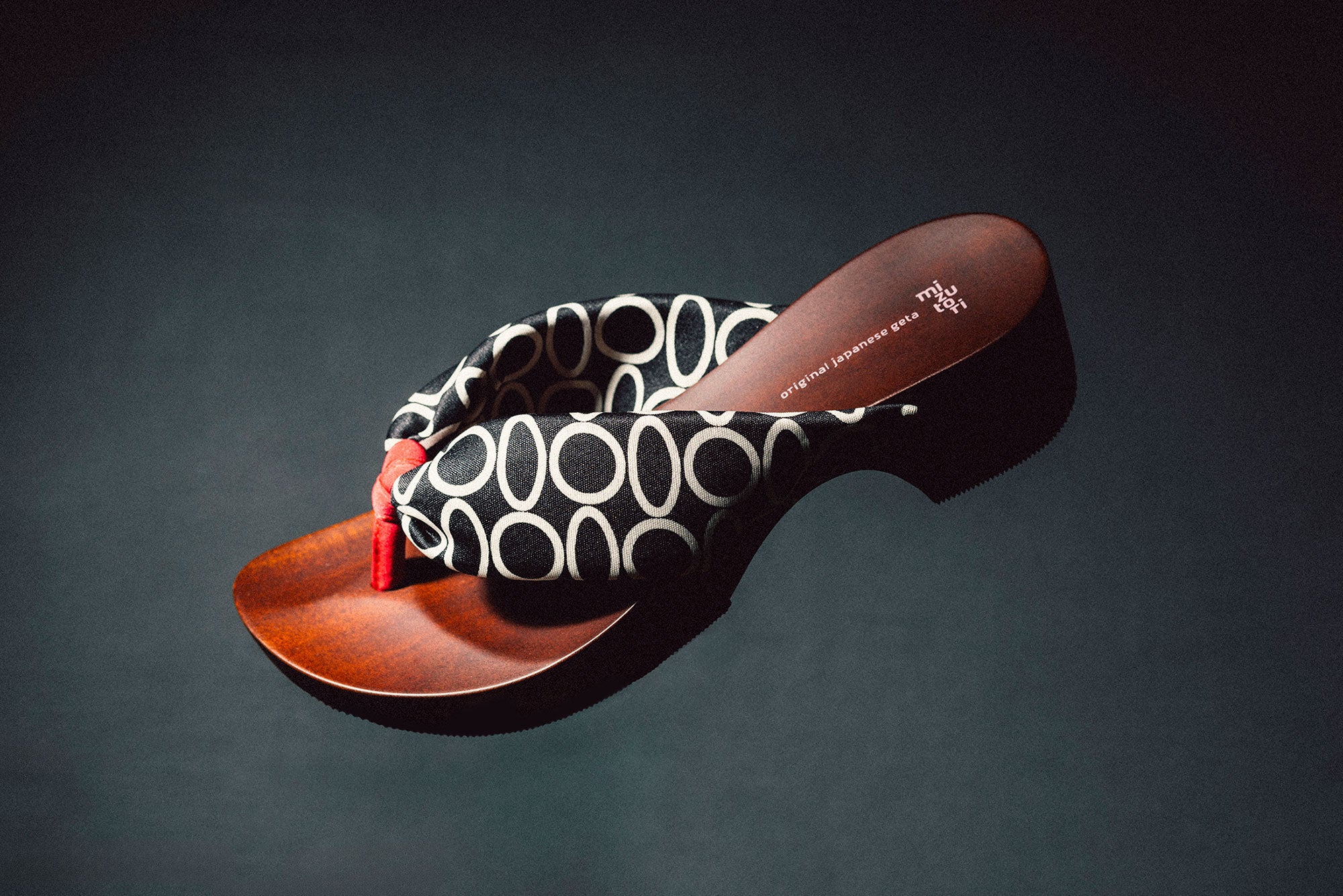

What Are Ukon Geta?
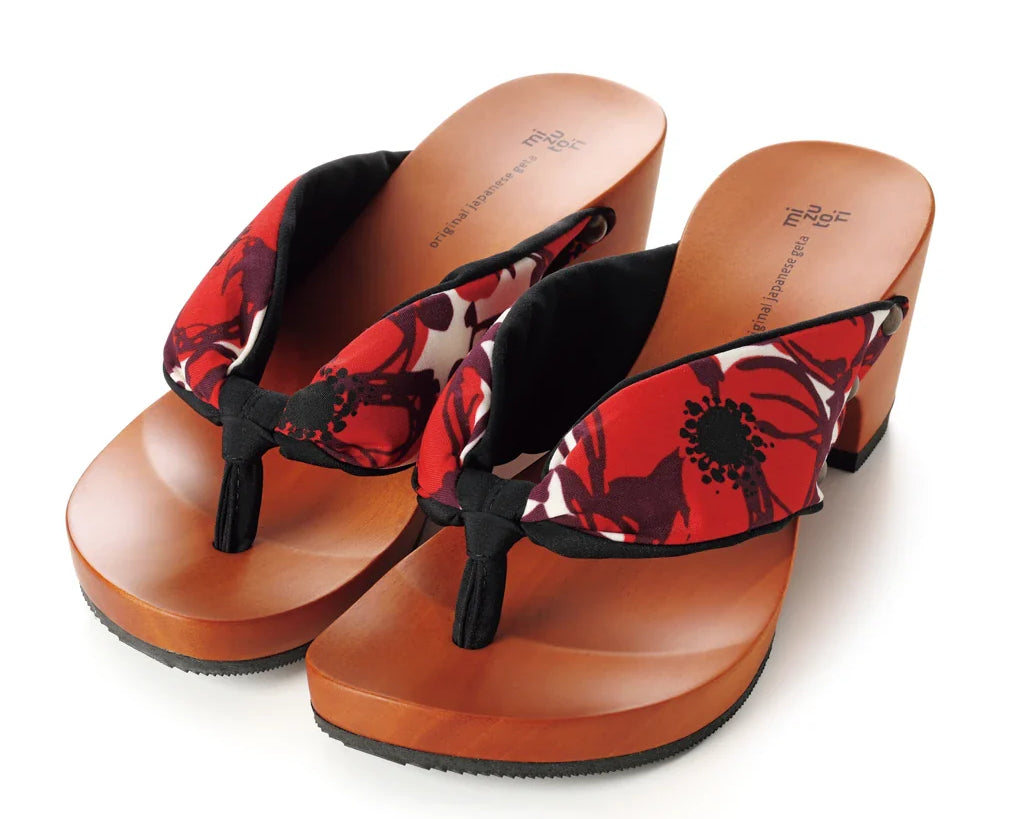
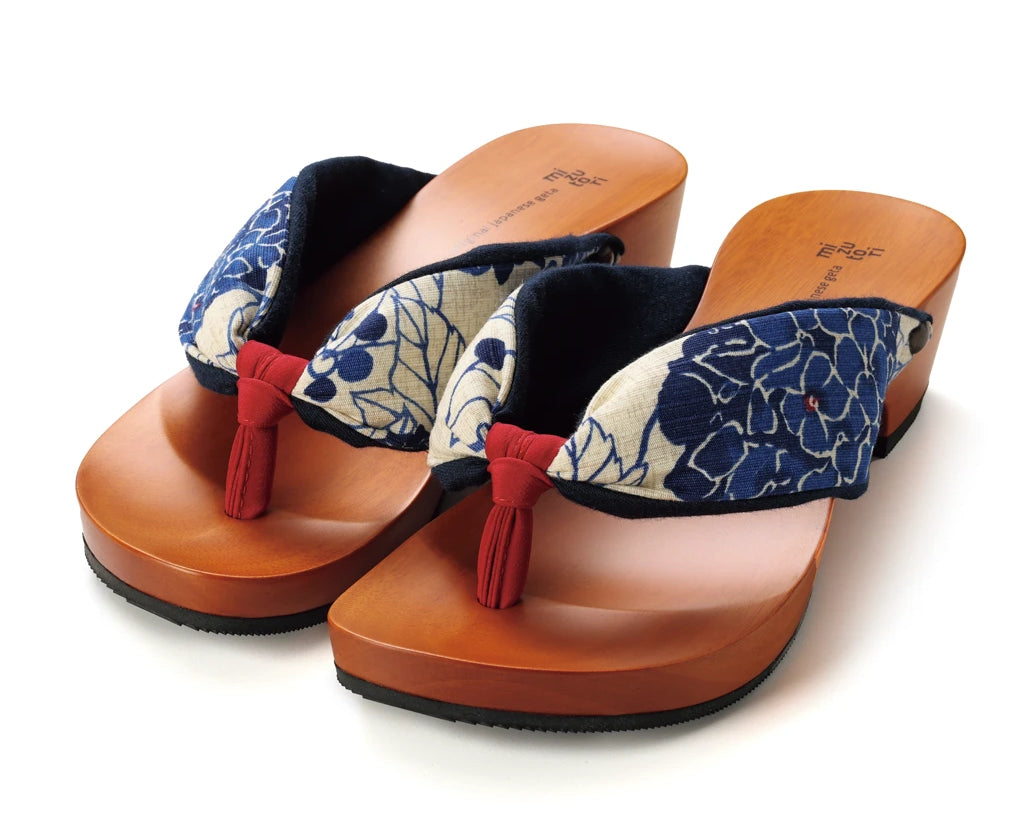
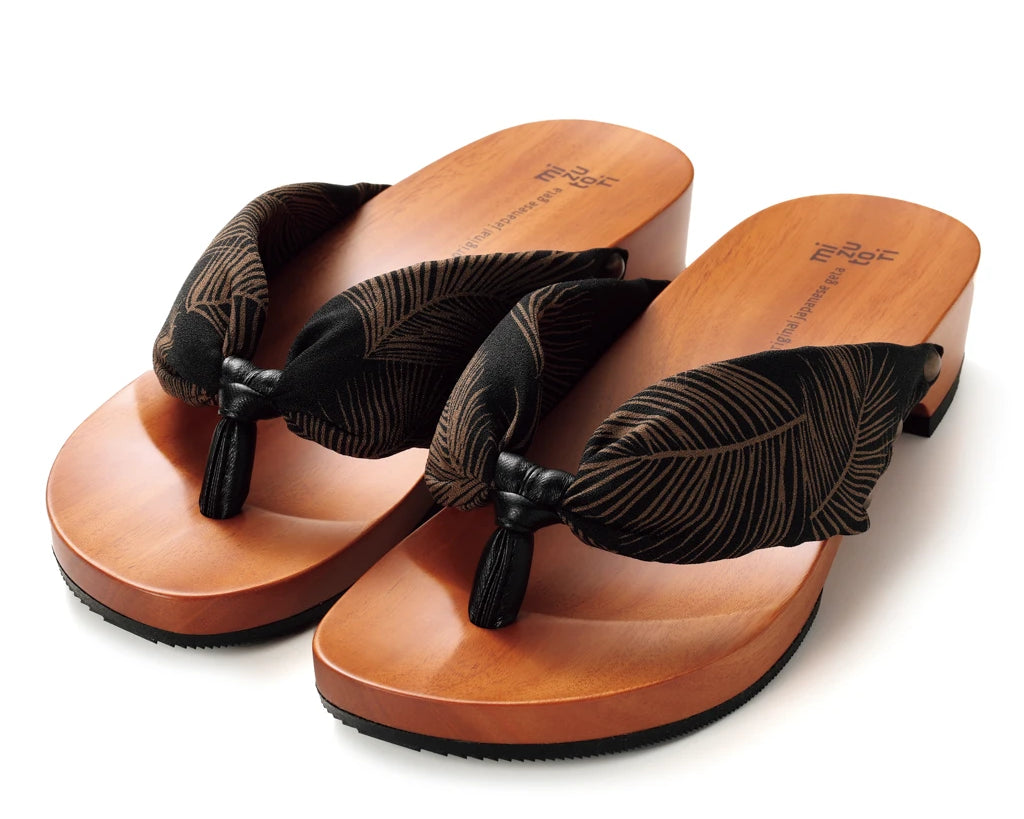
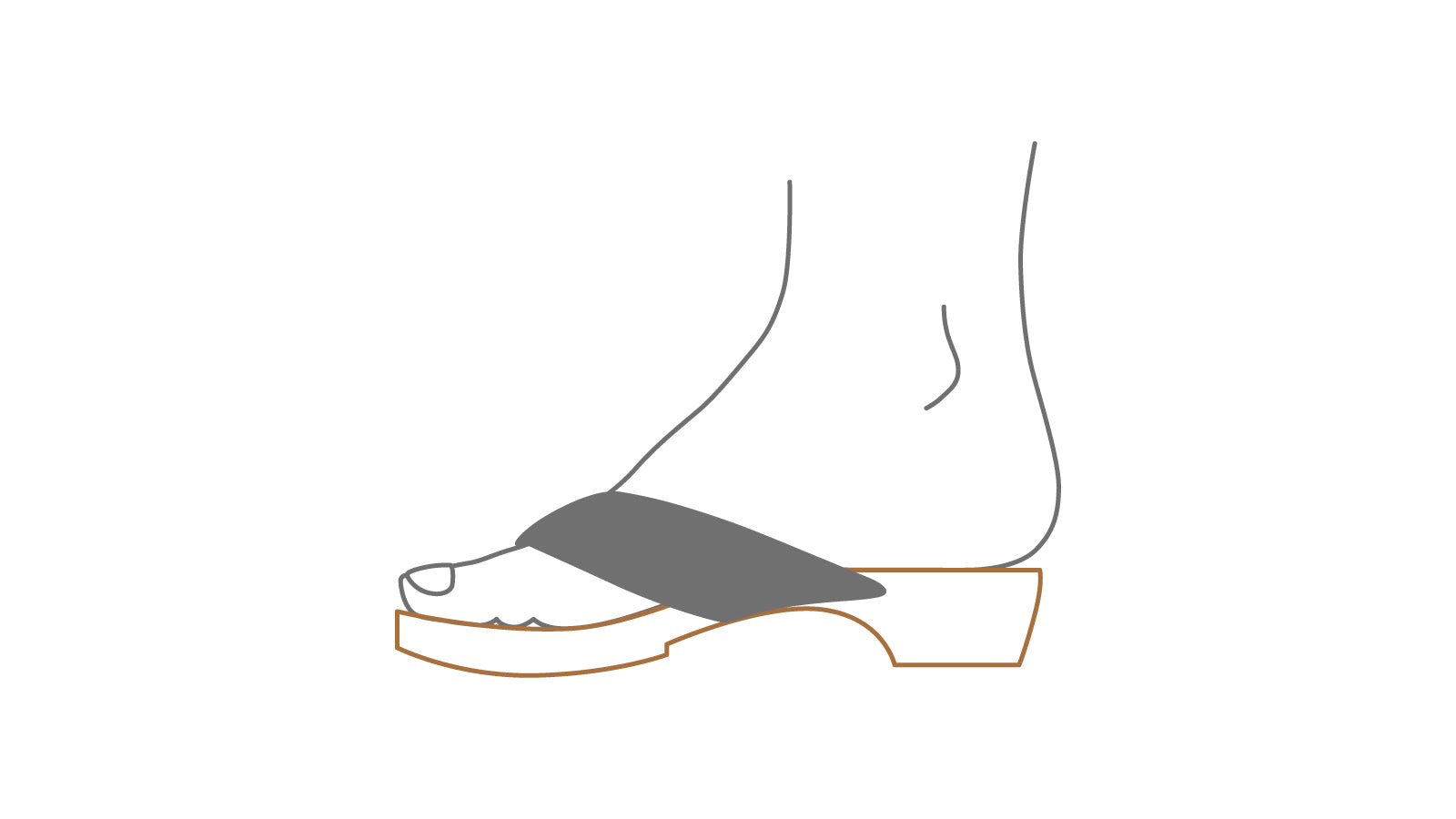
Ukon geta are a type of traditional Japanese wooden footwear characterized by a shape resembling zori sandals and a recessed section in the center of the sole.
Unlike conventional two-tooth geta, which have two separate wooden supports beneath the platform, ukon geta have a raised and recessed structure formed directly into the wooden base. They are generally lower in height and are commonly worn with yukata, a casual type of summer kimono.
Shape and Characteristics of Ukon Geta
One of the defining features of ukon geta is the recessed section beneath the center of the wooden platform, leaving the front and rear portions to make contact with the ground.
Traditional two-tooth geta are supported by two distinct wooden teeth attached beneath the platform. Ukon geta, by contrast, rest on the front and rear sections of the base itself, creating a different sensation when walking.
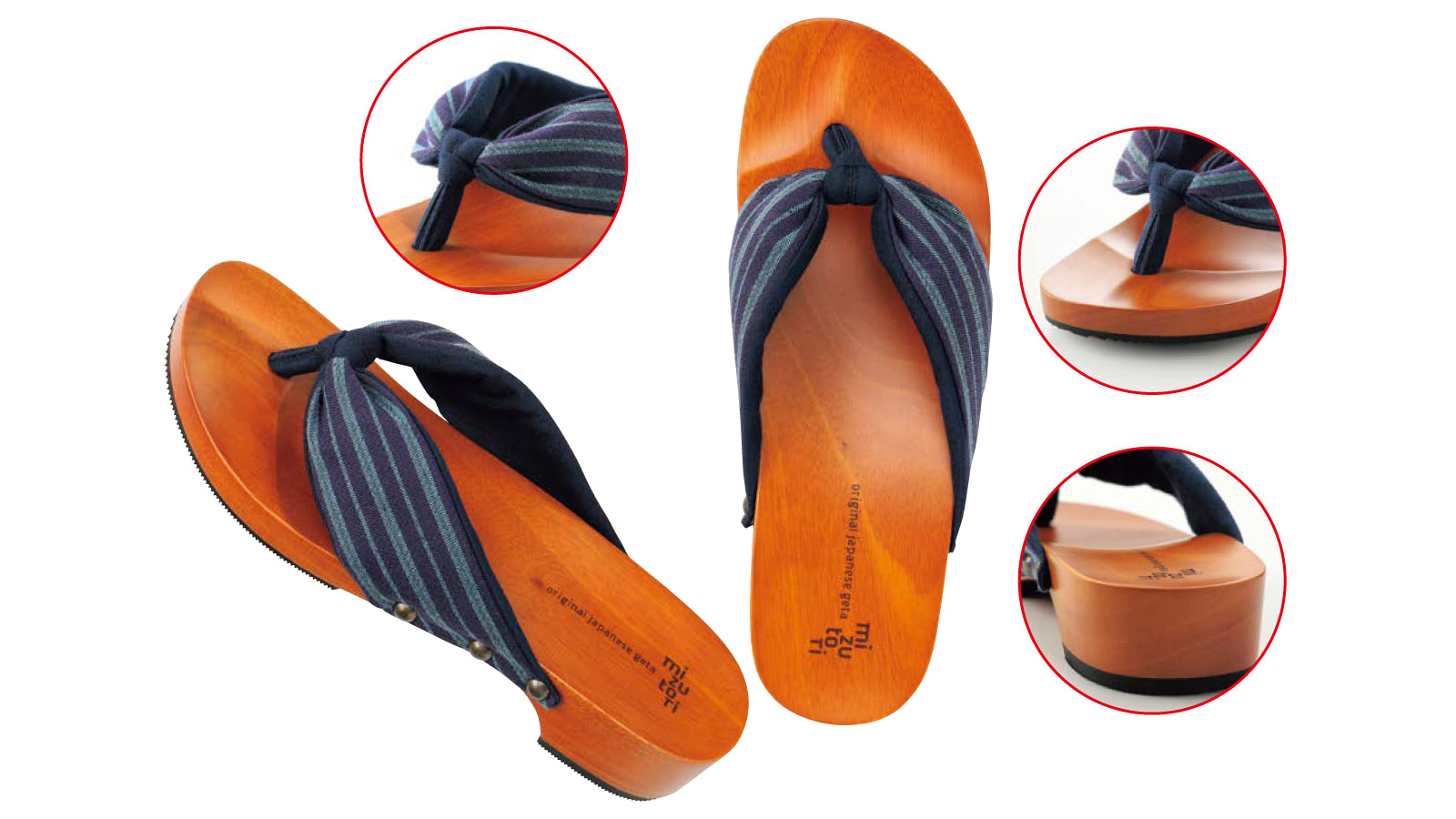
Some designs also feature a contoured upper surface shaped to accommodate the natural curves of the foot.
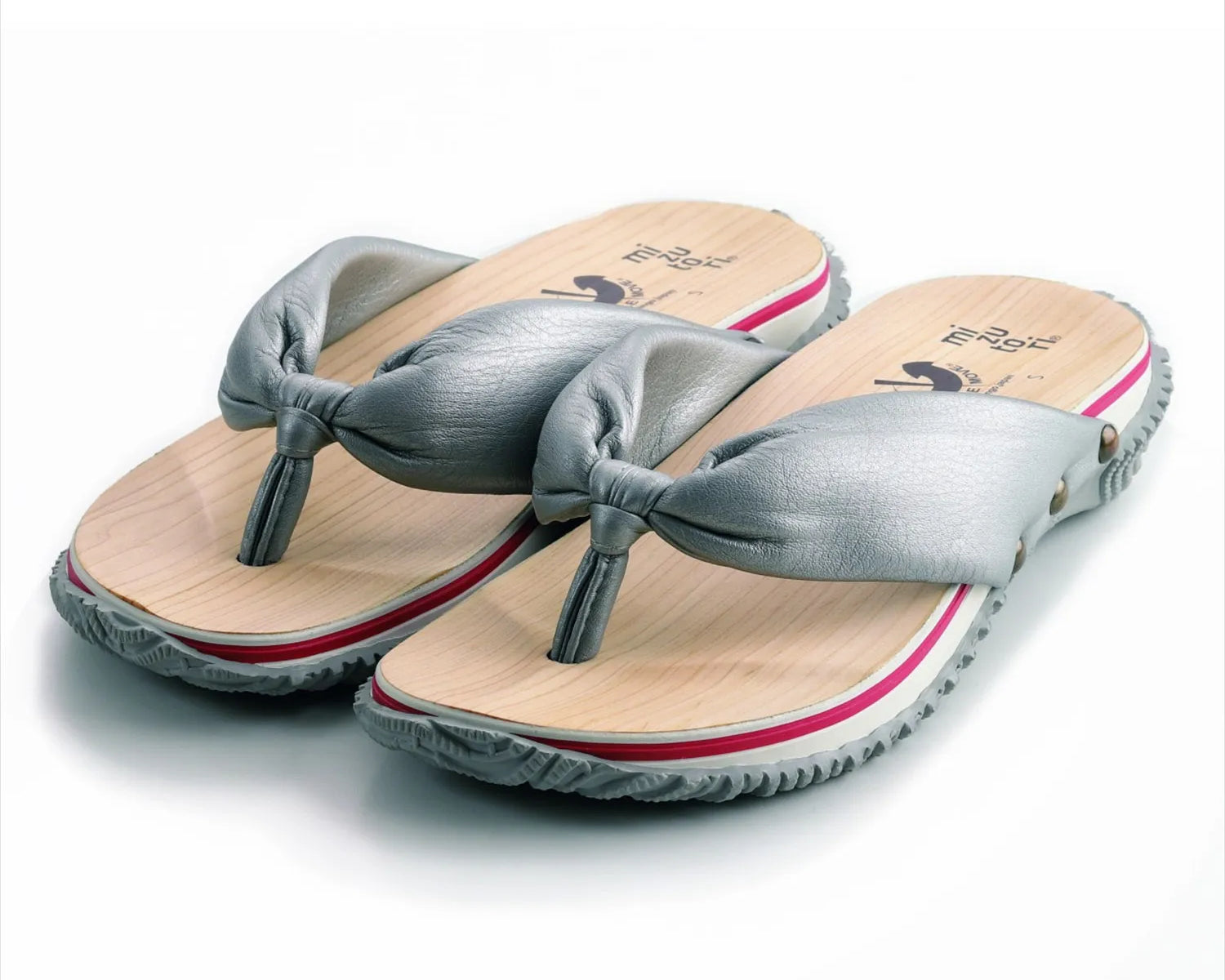
Many ukon geta have rubber or urethane attached to the underside. These materials can help reduce walking noise compared with geta whose wooden teeth come into direct contact with the ground.

History of Ukon Geta
Ukon geta are a relatively recent style of Japanese wooden footwear compared with traditional forms such as koma geta, which have two wooden teeth.
They are believed to have appeared during the Showa period (1926–1989) and are distinguished by the curved design of their soles.
However, there is no widely established explanation for the origin of the name "ukon."
Today, ukon geta are recognized as a distinct style of geta, produced in a variety of materials and finishes.
Differences Between Ukon Geta and Two-Tooth Geta
The main difference between ukon geta and traditional two-tooth geta lies in the structure of the parts that touch the ground.
Two-tooth geta elevate the wooden platform on two separate supports, producing a distinctive sound when walking.
Ukon geta generally have a lower profile, with the front and rear sections of the sole supporting the platform on either side of the central recess.
Neither design is inherently superior. Their different structures create distinct walking sensations and levels of comfort.

The Evolution of Geta in Modern Times
The idea of improving comfort through the shape of the wooden sole, as seen in ukon geta, continues to influence contemporary geta design.
For example, mizutori creates wooden platforms with contours designed to follow the natural shape of the foot, pursuing comfort suited to modern everyday life.
This approach illustrates how traditional geta construction can be adapted and developed into new forms while preserving its essential characteristics.
Conclusion
Ukon geta are a relatively modern style of Japanese wooden footwear, characterized by their sandal-like shape and a recessed section beneath the center of the sole.
Their construction differs from traditional two-tooth geta, and they are widely worn today with Japanese clothing such as yukata.
Understanding their distinctive structure offers insight into the diversity of geta designs and how Japanese footwear has evolved over time.