Geta Glossary
This glossary provides clear explanations of terms necessary for choosing and caring for geta. From part names to foot sizes, materials, and maintenance methods, refer to this glossary for all your geta knowledge.
Table of Contents
■ Basic Geta Structure
【Base Parts】
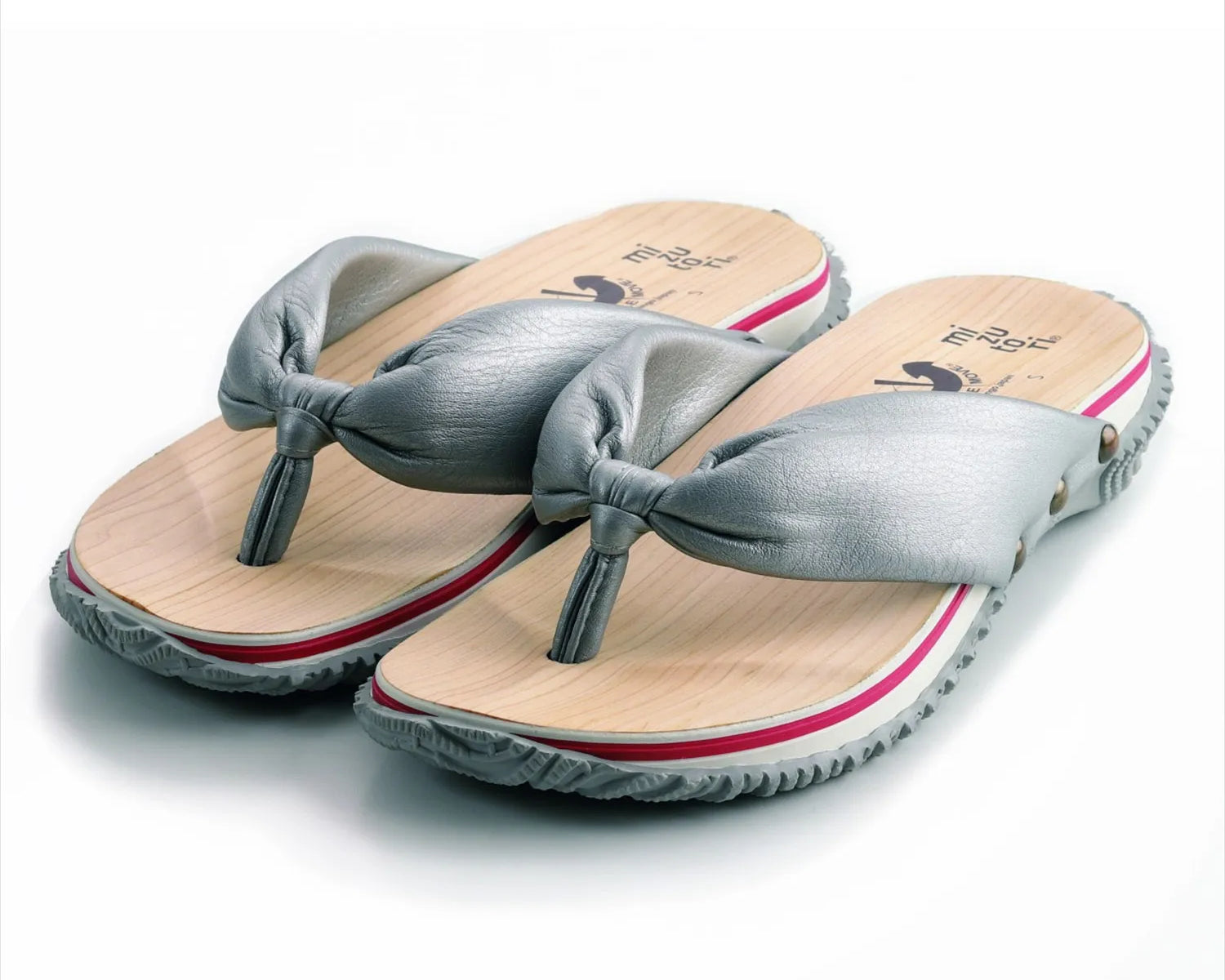
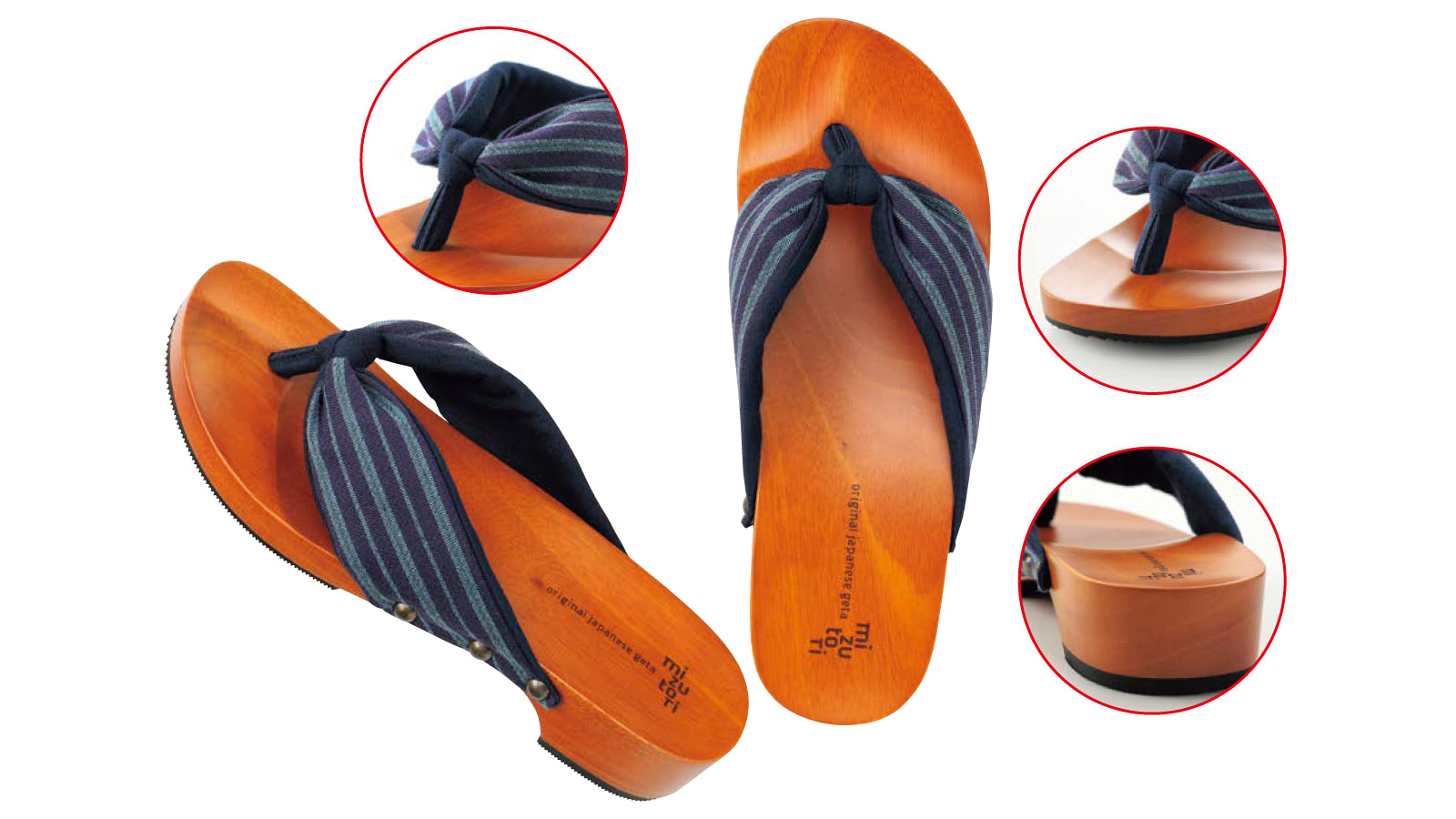
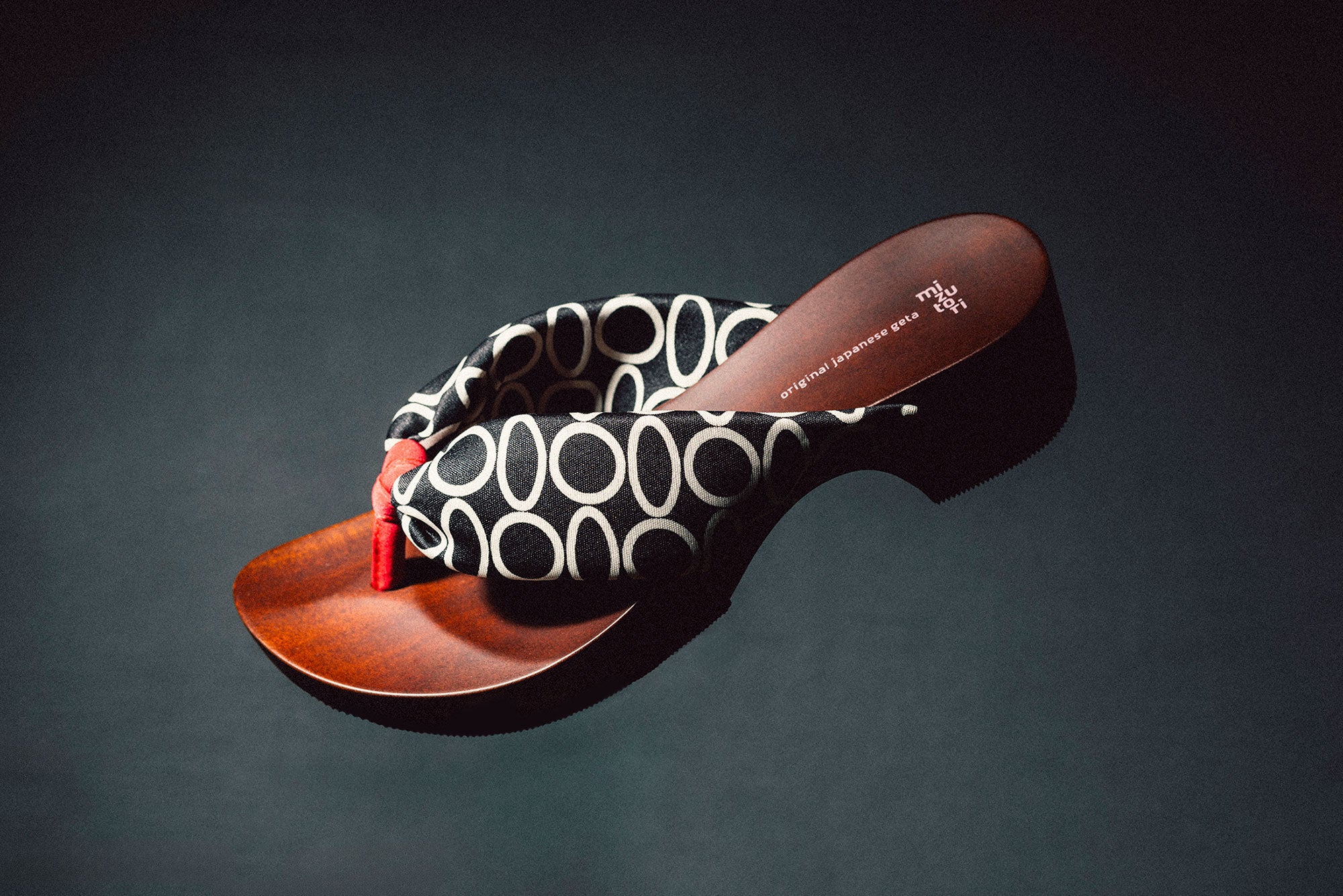
The wooden base where the foot rests. It is the main component that forms the body of the geta.
The carved wooden base before any painting or processing is applied.
The surface of the base that the sole of the foot directly touches.
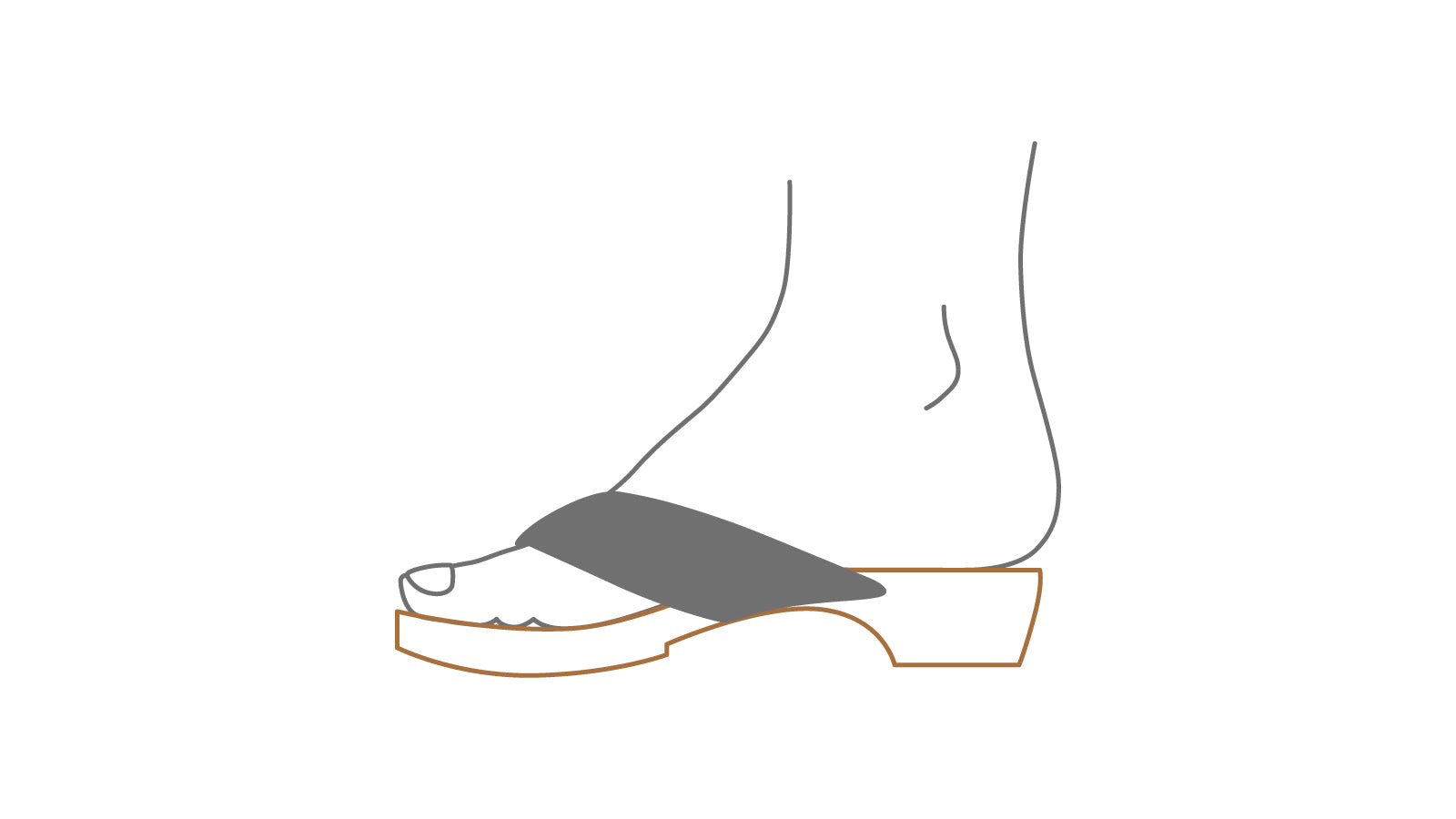
The protruding parts attached to the bottom of the base that make contact with the ground (e.g., two-toothed, single-toothed).
A traditional geta style with two teeth at the front and back.
The part located under the heel, designed to add height.
Holes made in the base to thread the hanao (thong) through (front hole and back holes).
【Hanao (Thong) Parts】
The string-like part threaded through the base to secure the foot.
The outer, visible surface of the hanao.
The underside of the hanao, which directly touches the instep of the foot.
The tip of the hanao that goes between the big toe and the second toe.
The core material inserted inside the hanao to maintain its shape and provide cushioning.
Decorative, round-headed metal studs used to secure the back of the hanao to the side of the base.
【Sole】
Rubber material applied to the bottom of the base to absorb impact during walking and prevent wear and slipping.
Rubber artificially synthesized from petroleum and other materials. Excellent in abrasion resistance and water resistance.
A lightweight, highly cushioned, and water-resistant synthetic resin material (used for soles, etc.).
The part that encloses the foot, excluding the bottom (sole) of the shoe (e.g., the instep part of sandal-type footwear).
The outermost bottom part of shoes or footwear that directly touches the ground.
The intermediate layer sandwiched between the insole and the outsole, which affects cushioning.
【Toe Shapes】
A design with a wide opening at the toe, allowing the toes to be seen.
A design where the toe is cut into a square, straight shape.
A design with a rounded toe, creating an overall gentle shape.
■ Foot Size & Fitting
【Foot Measurement and Shape】
The straight length from the most protruding part of the heel to the tip of the longest toe.
The circumference around the most prominent part of the base of the big toe and little toe. Also known as foot girth or width.
The horizontal straight width of the most prominent part at the base of the big toe and little toe.
The height of the instep of the foot. The vertical height from the ground to the highest point of the instep.
A foot shape where the width of the foot (sokufuku) is wider than the average.
【Foot Shape (Type)】
A foot shape where the big toe is the longest, and the toes gradually decrease in length towards the little toe. This is the most common foot type in Japan.
A foot shape where the second toe is longer than the big toe, said to be relatively common among Westerners.
A foot shape where the toes are almost equal in length, giving the appearance of a square toe.
【Adjustment and Fitting】
The act of replacing old hanao with new ones or changing their design.
Adjusting the tightness (suge-kagen) of the hanao to be tighter or looser to fit the height and width of the wearer's instep.
■ Comfort & Foot Health
【Foot Problems & Characteristics】
Symptoms such as redness or peeling of the skin (between the toes or on the instep) caused by friction from the maetsubo or hanao.
A deformity where the base of the big toe protrudes outward, and the tip bends towards the little toe.
A deformity where the base of the little toe protrudes outward, and the tip bends towards the big toe.
A condition where the toes do not firmly touch the ground when standing or walking, appearing to float.
A foot shape characterized by both a high instep and a wide foot, considered a traditional Japanese foot characteristic.
【Structure and Support Function】
The arched hollow on the inner sole of the foot. Plays an important role in distributing and absorbing impact during walking.
A function that supports the arch of the foot to reduce foot fatigue and maintain correct posture.
The feeling of footwear fitting snugly and integrally with the foot, preventing slipping.
【Walking Motion】
The ideal walking motion where the heel lands first, weight shifts across the entire sole, and finally, the toes push off firmly.
■ Materials & Craftsmanship
【Processing & Craftsmanship】
The skilled craftsmanship of threading the hanao through holes in the base and tying them to fit the foot shape.
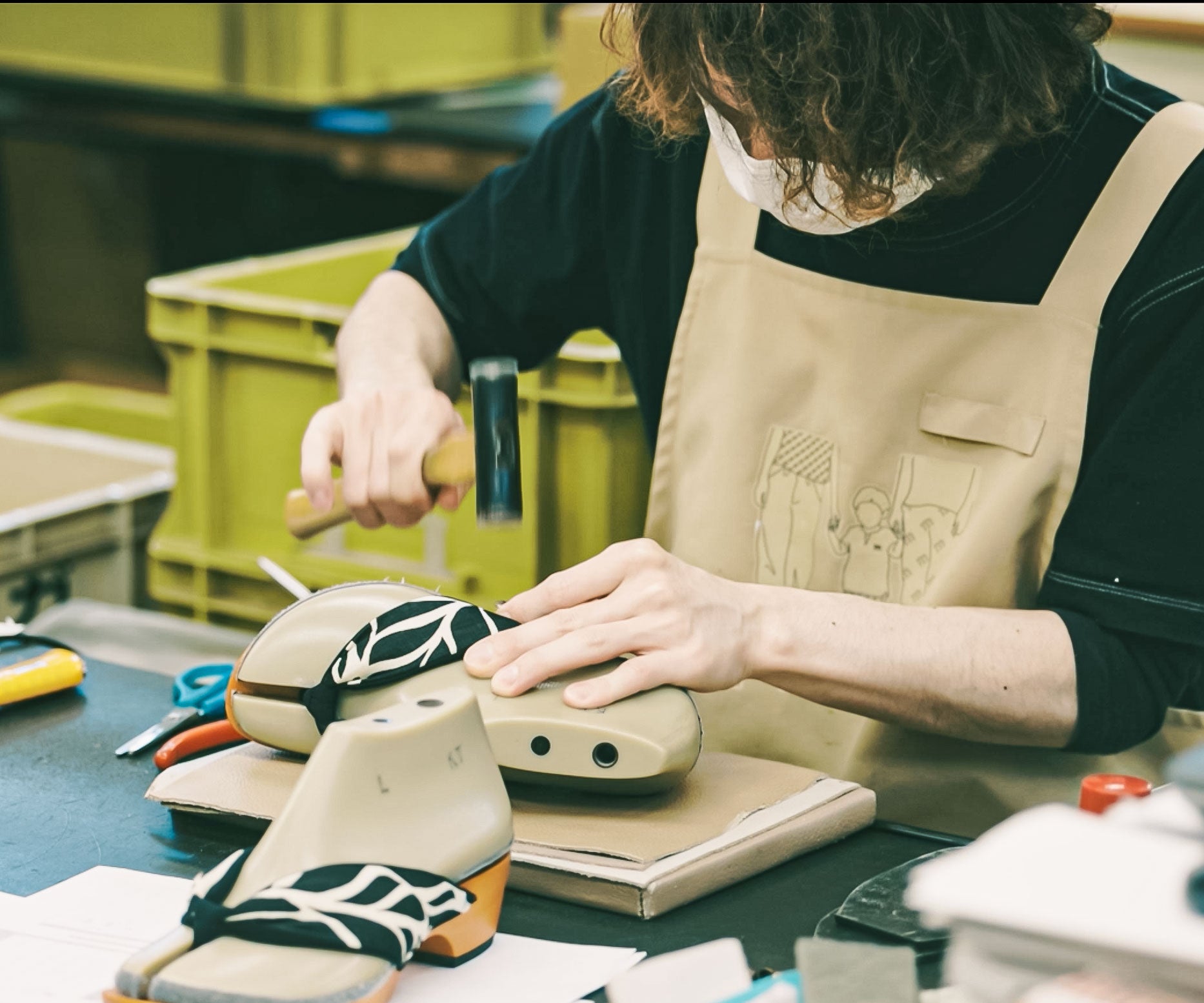
The process of accurately hammering rivets into the side of the base to secure the ends of the hanao.
The process of cutting textiles or leather used for hanao or uppers according to a pattern.
A finishing process that shaves the sharp corners (edges) of the wooden base to improve feel and prevent chipping.
【Wood Grain Characteristics】
The distinctive pattern formed by growth rings (annual rings) and other features on the surface of wood.
Beautiful, straight and parallel wood grain cut from near the center of a log. Less prone to warping.
Varied wood grain cut off-center from the tree, forming bamboo shoot-like or organic curved patterns.
【Painting and Finishing】
Beautiful, glossy geta coated with lacquer, jet black, or colored paint on the wood base.
A modern resin coating that is resistant to scratches, dirt, and moisture, enhancing durability while preserving the wood's texture.
A finish that allows the natural beauty of the wood to be enjoyed, with no paint applied or only a transparent clear coat.
Natural wood cut directly from a single tree, rather than plywood or laminated wood.
【Natural Characteristics of Wood】
Circular patterns formed when the base of a branch is enveloped within the trunk during the tree's growth.
Healthy knots that are firmly integrated with the surrounding tissue during the tree's growth and do not fall out.
Black knots that are not integrated with the surrounding tissue because a dead branch was enclosed, and are prone to falling out.
Patterns where knots appear as elongated ovals or lines, often seen when cut diagonally.
Innumerable tiny bud marks, as small as pinpoints, appearing as speckles.
Black or red streaky patterns left by minerals absorbed during tree growth or traces of wound repair.
【Material Aging and Leather】
The change in color and luster that deepens with use due to sunlight and natural oils from hands, developing a richer texture over time.
Real leather made from tanned animal hides. Characterized by durability and rich texture.
Artificial leather made by coating a fabric with synthetic resin, such as polyurethane, to imitate natural leather.
■ Maintenance and Storage
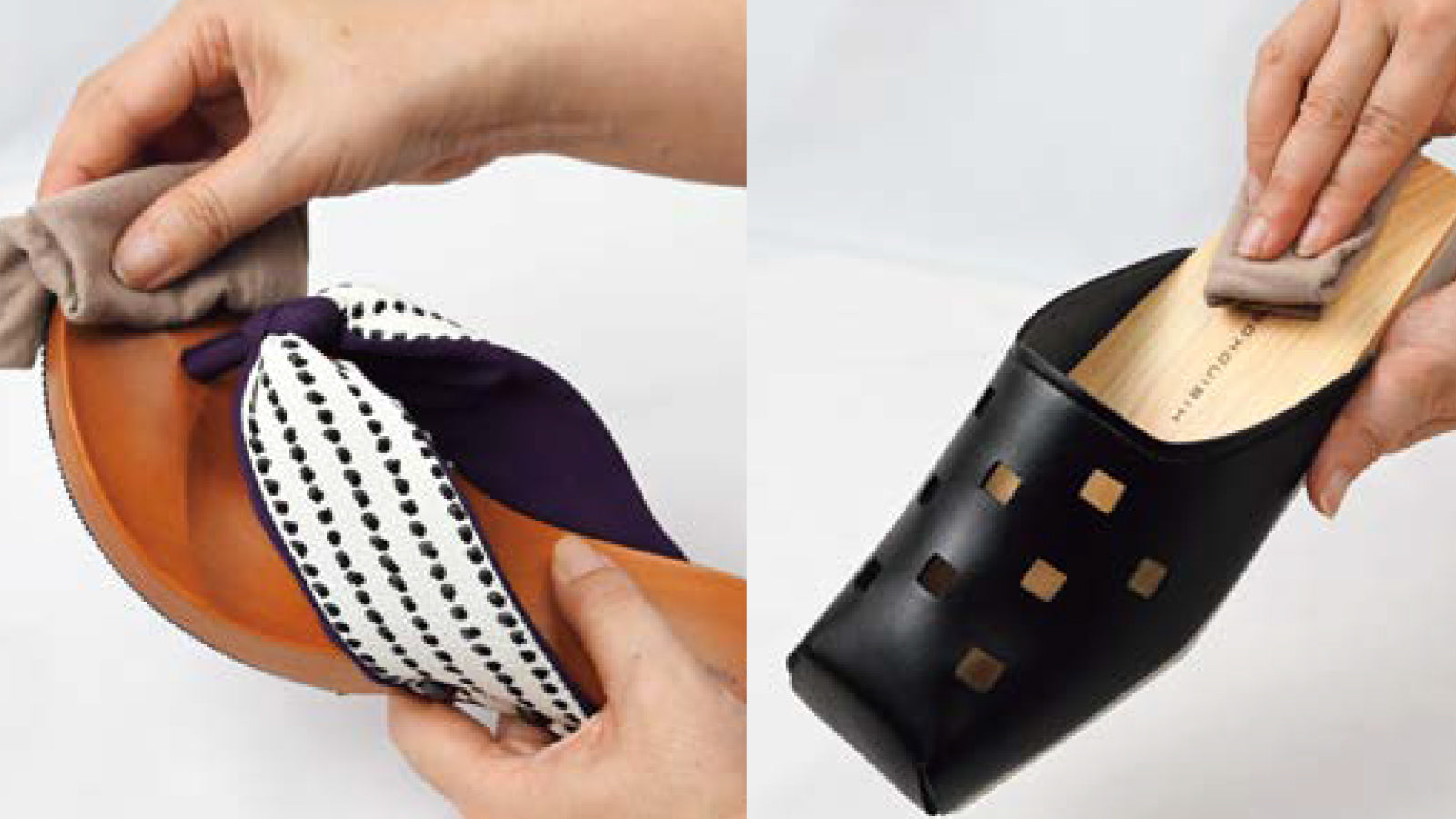
【Care and Maintenance】
Drying in a well-ventilated, shaded area away from direct sunlight. Prevents cracking and sun damage to the wood.
A repair technique where worn-out sole rubber is replaced with new rubber, allowing the geta to be worn longer without damaging the wooden base.
【Issues and Symptoms】
A phenomenon where dyes from the thong or clothing stain another area due to moisture such as rain or sweat, or strong friction.
When the corners or edges of the geta base chip off due to impact, such as hitting a hard object.
A repair technique where repair putty is filled into scratches, chips, or knot holes in the wooden base (dai) and then smoothed.
When the wooden base itself rubs against the ground and wears away because the geta continued to be worn after the sole rubber was worn down.