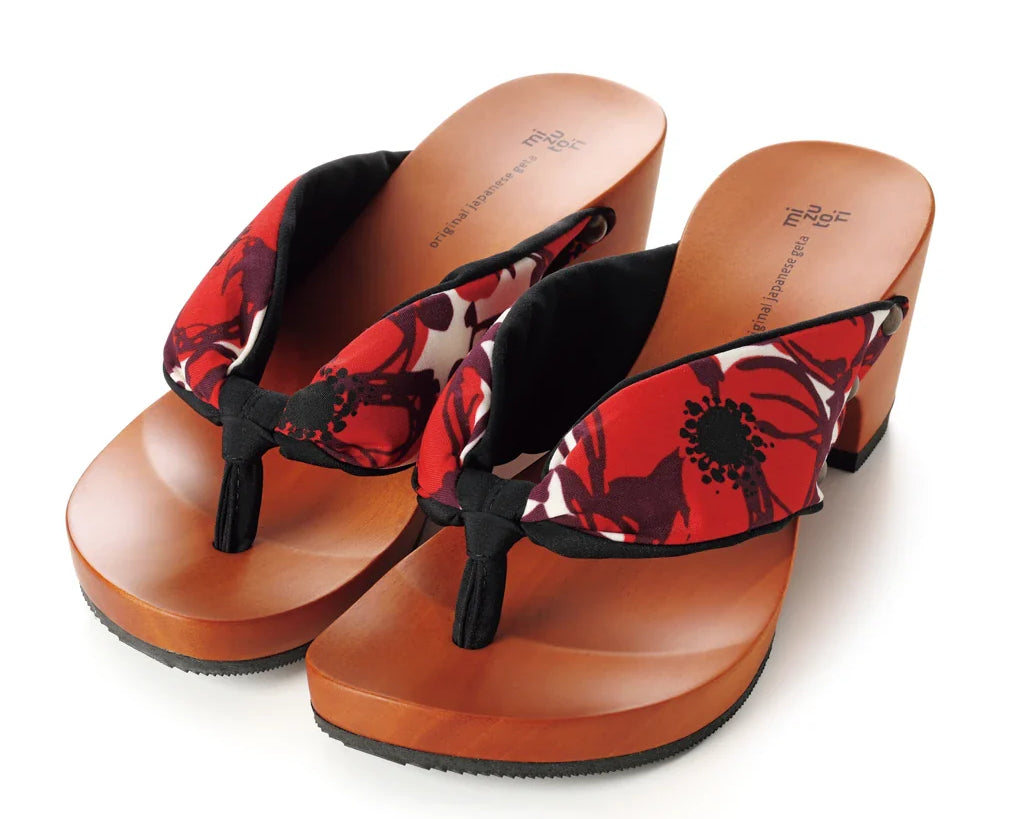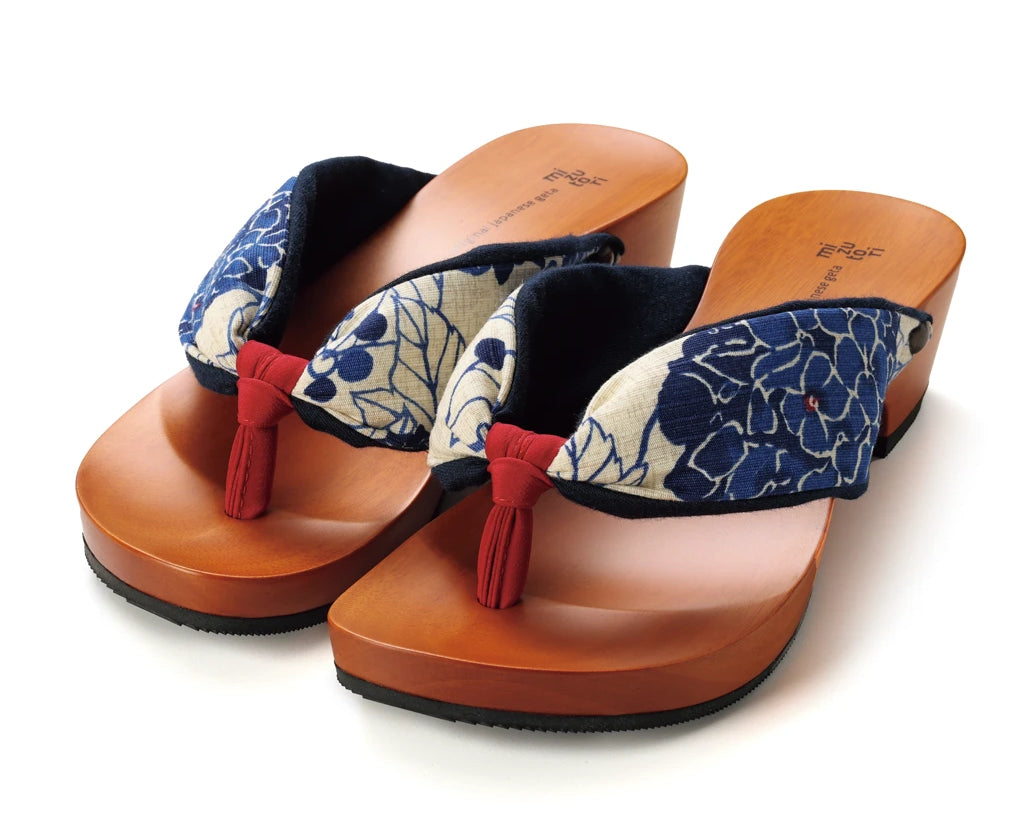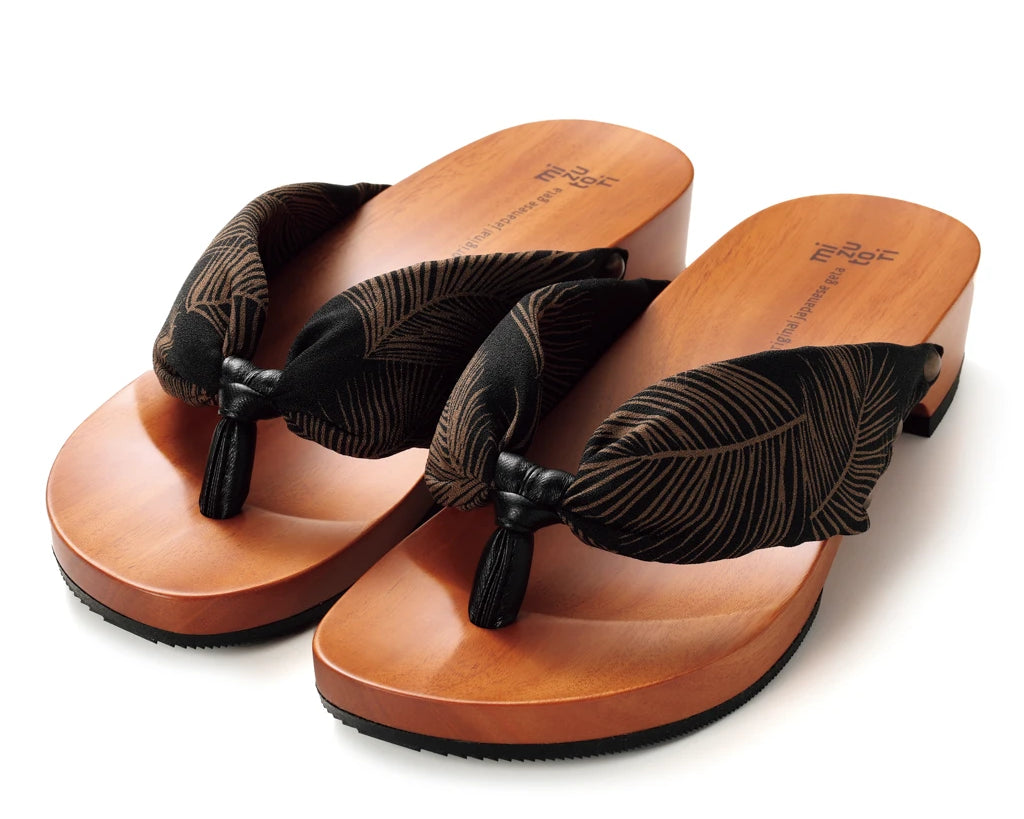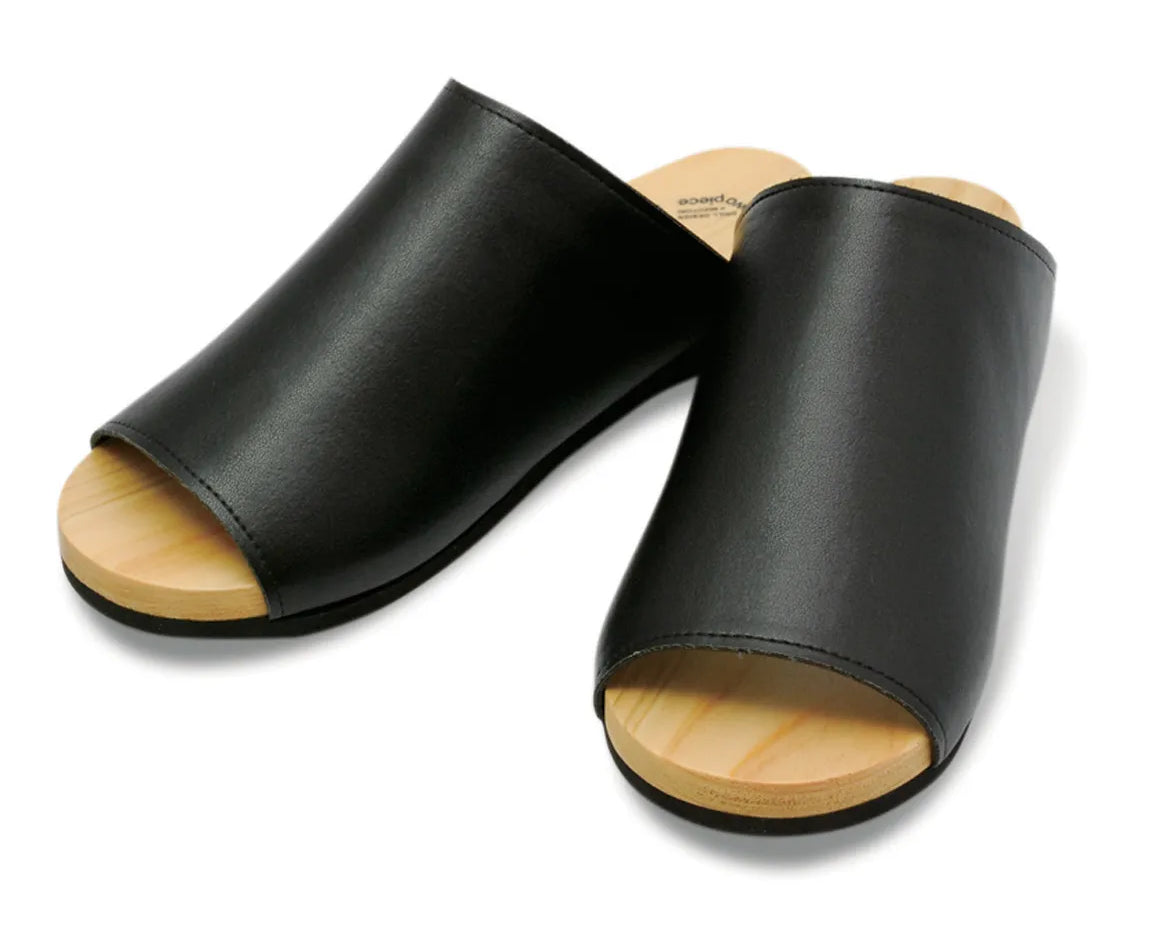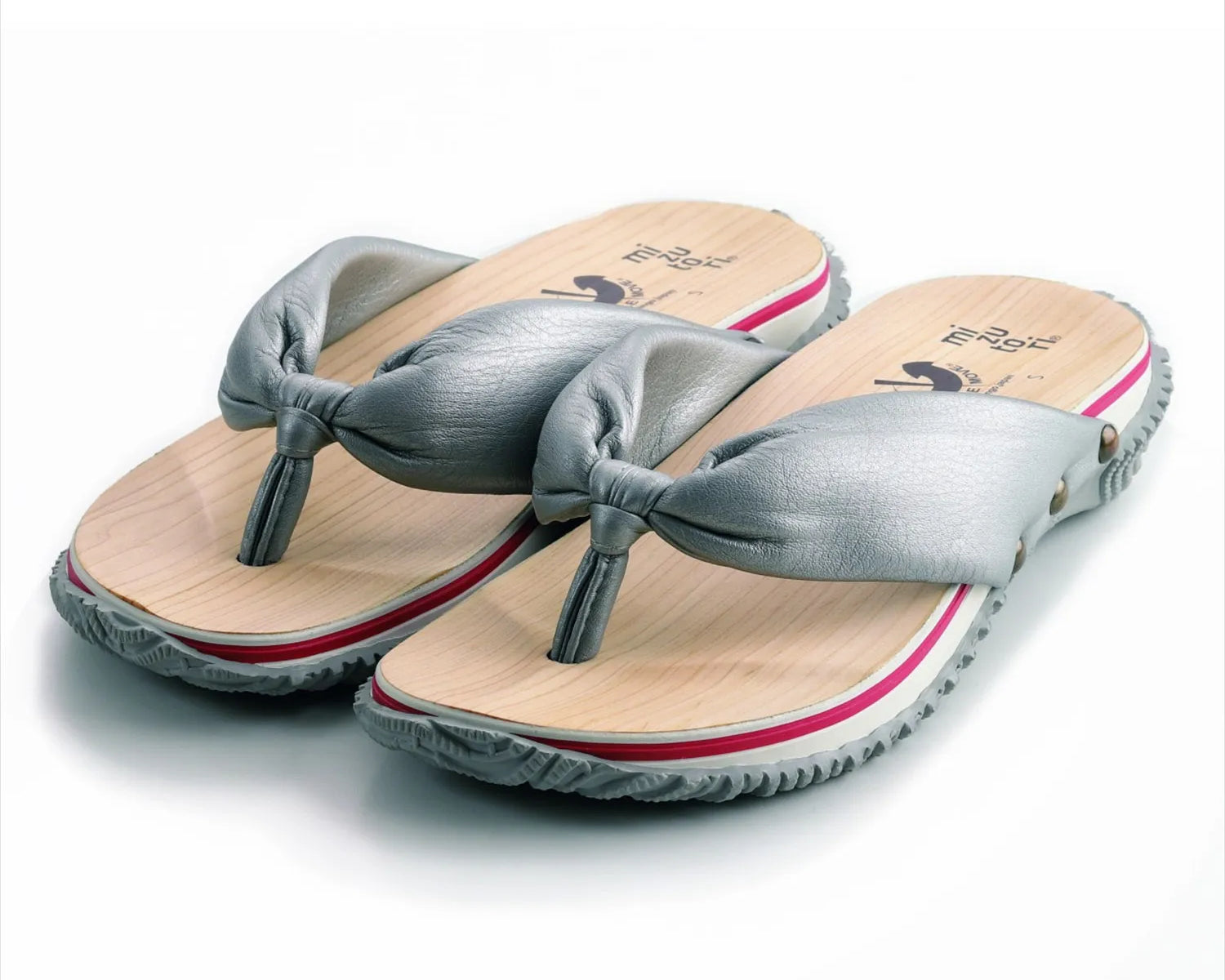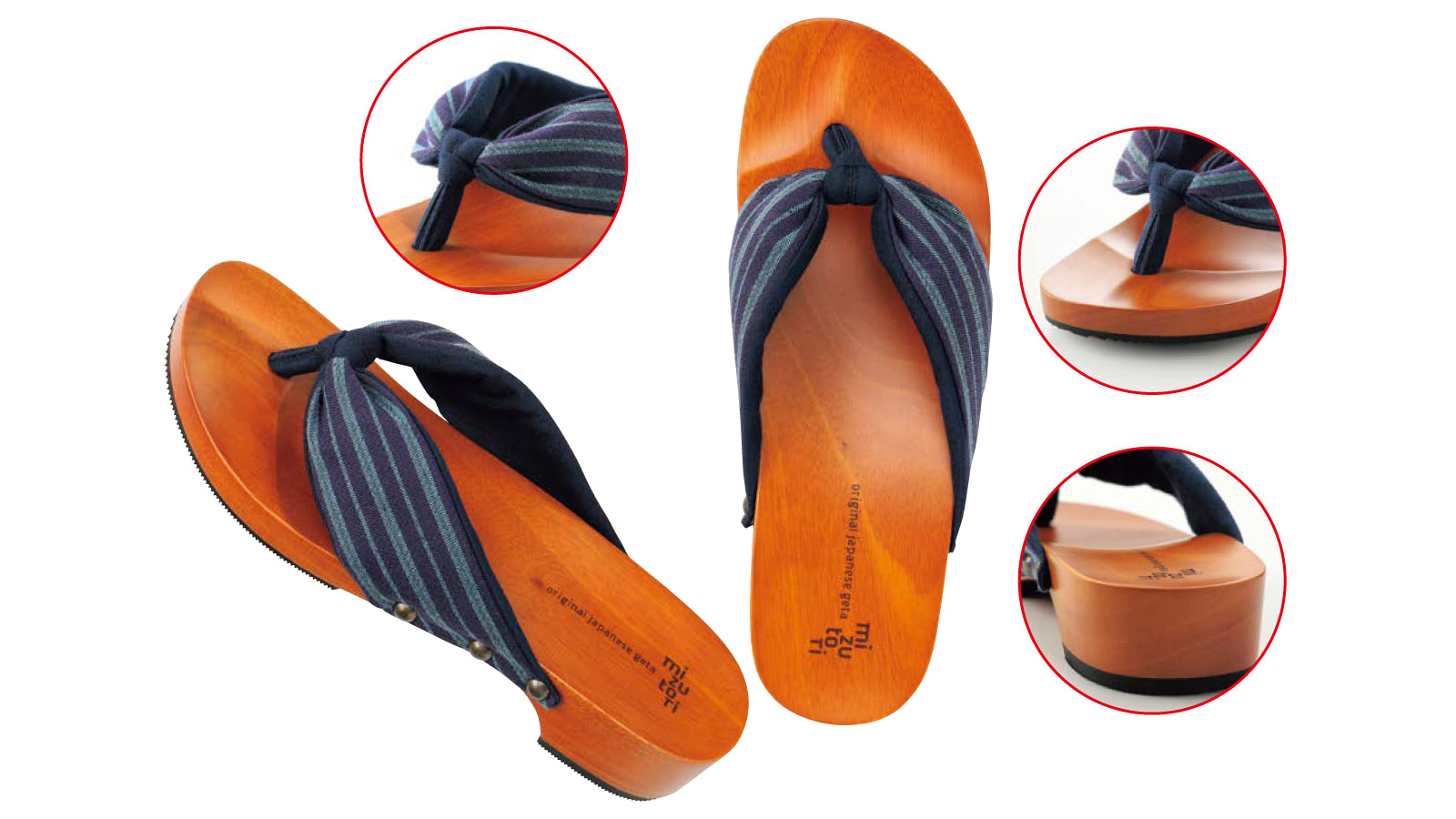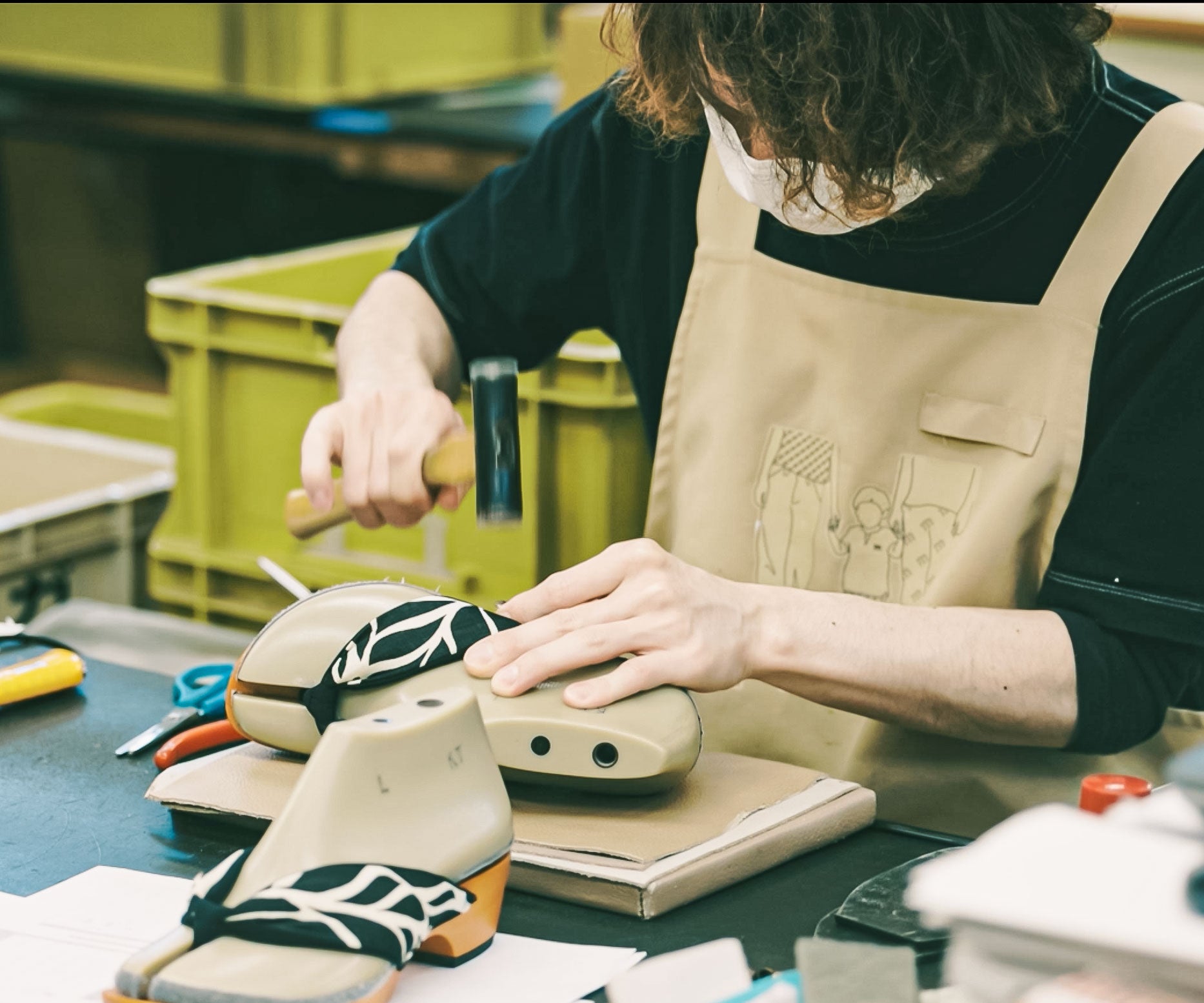
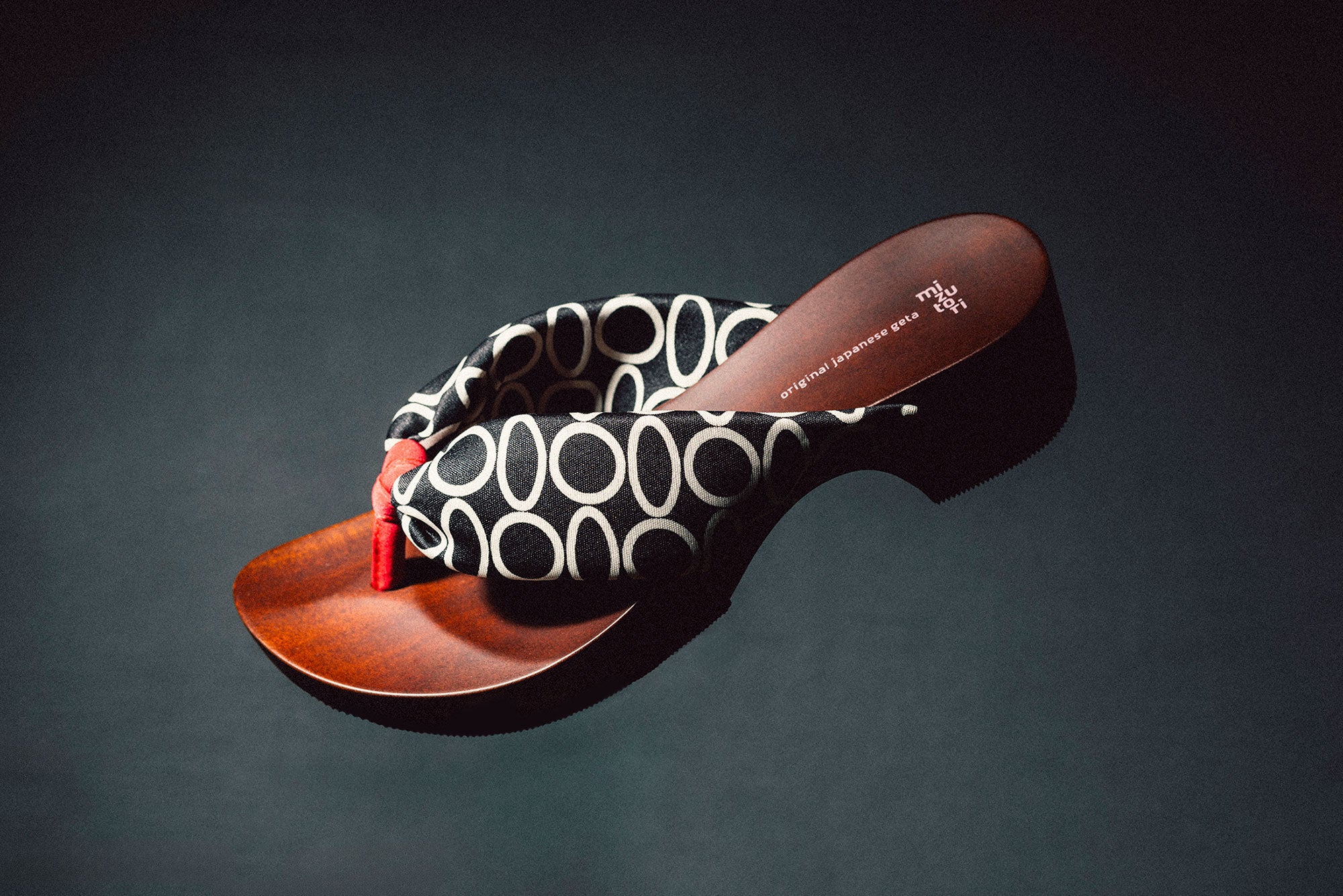

mizutori creates modern Japanese wooden sandals (geta) designed for comfort and everyday wear.
What Is mizutori?
Episode 71
Come Back Again Next Summer! Our Summer-Only Friend
Every summer,
a certain little “friend”
appears
at Mizutori Industrial.
It must have been
three or four years now.
Around the time
the weather
starts getting warmer,
if I look inside
the small shrine
in our workshop garden,
there it is—
a little frog,
perched quietly
on the sakaki leaves
we offer there.
Its body is
a pale, almost whitish gray,
mottled with
bright green.
It looks like
a Japanese tree frog.
Apparently,
tree frogs can change
the color of their bodies
depending on
their surroundings
and other conditions.
Knowing that,
there is something
almost mysterious
about the way
this little frog
seems to blend
into the shrine
and the sakaki leaves.
The first time
I found it,
I assumed
it had simply
wandered in by chance.
But throughout
the summer,
we would see it
quite often.
Then the following year,
and the year after that,
as soon as
the weather grew warm,
there it was again.
The deity enshrined
in this little shrine
is a guardian deity
known locally
as Ji-no-Kami.
Actually,
there are quite a few
deities enshrined
at Mizutori Industrial—
Ōkami-sama,
Inari-sama,
the deity of fire,
Ji-no-Kami,
the deity of the workshop,
Ebisu-sama,
Daikoku-sama,
and others.
Why so many?
The main reason is simply
that my grandfather,
who led the company
two generations before me,
was very fond
of things like
household shrines
and sacred talismans.
But once
you have welcomed them,
you have to
look after them properly.
Every morning,
we replace
the water.
And on the first day
of every month,
we make offerings
of salt,
uncooked rice,
and sakaki,
giving thanks
and offering
our prayers.
Ji-no-Kami,
the deity whose shrine
our little frog visits,
is one of the traditional
guardian deities
that families
in central
and western Shizuoka
have long enshrined
at their homes.
Believed to protect
the land and the home,
and to watch over
the people who live there
and their livelihoods,
Ji-no-Kami has long
been cherished
in this region.
And every year,
a frog appears
at this deity’s shrine.
And really,
it is
quite adorable.
When one of our staff
comes to change
the water for the sakaki,
the frog moves over
to the edge
of the shrine
and waits quietly.
Once the water
has been changed
and the sakaki
is put back,
the frog returns
to its usual spot.
Talking with
the staff member
who changes the water—
“It was there
again today!”
—has become
one of our
little pleasures
of summer.
Whenever I find it,
I can’t help
talking to it too.
“You’re here
again today?”
“It’s so hot
every day, isn’t it?”
For a geta maker,
summer is
the busiest time
of the year.
With so much
happening every day
in the heat,
there are times
when I have
very little room
to breathe.
But on days
like that,
I sometimes
look over
at the shrine
of Ji-no-Kami.
And when I see
that little frog
sitting
in its usual place,
I find myself
letting out
a quiet breath,
and my shoulders
relax a little.
It doesn’t
do anything
for us.
It simply
sits there,
quietly.
But every summer,
it appears
and stays
nearby.
Before I knew it,
the frog had become,
for me,
something like
a little companion
who shares
the hot summer months
with us.
In Japan,
frogs have also
long been regarded
as symbols
of good fortune.
There is a little
play on words
behind this.
The Japanese word
for frog, kaeru,
sounds the same
as the word meaning
“to return.”
So frogs have
come to be associated
with wishes such as
returning home safely,
good fortune returning,
and money returning.
Because of this
play on words,
frogs have long
been cherished
as symbols
of safe travel,
good luck,
and prosperity
in business.
There are also cultures
outside Japan
where frogs
are associated
with good fortune,
prosperity,
and abundance.
And here is
this one little frog,
appearing
on the sacred
sakaki leaves
at the shrine
of the deity
who watches over
the land
and our business.

When I think
about it that way,
I sometimes
find myself wondering,
“Could this little frog
somehow be
Ji-no-Kami
in another form...?”
Of course,
that is entirely
my own interpretation.
But somehow,
it feels like
more than simply
an adorable
little frog.
I can’t help feeling
there might be
something sacred
about its presence.
And whenever
I see it,
I feel
just a little happier.
Lately,
perhaps because
the weather
has grown cooler,
we haven’t
seen it anymore.
And when
it disappears,
I can’t help
worrying.
What if
a snake ate it?
What if
it finally reached
the end of its life?
I hope
it wakes safely
from hibernation,
and next summer,
finds its way
back once again
to its usual place
at the shrine
of Ji-no-Kami.
We’ll be waiting
for our
summer-only
little friend
to come back.