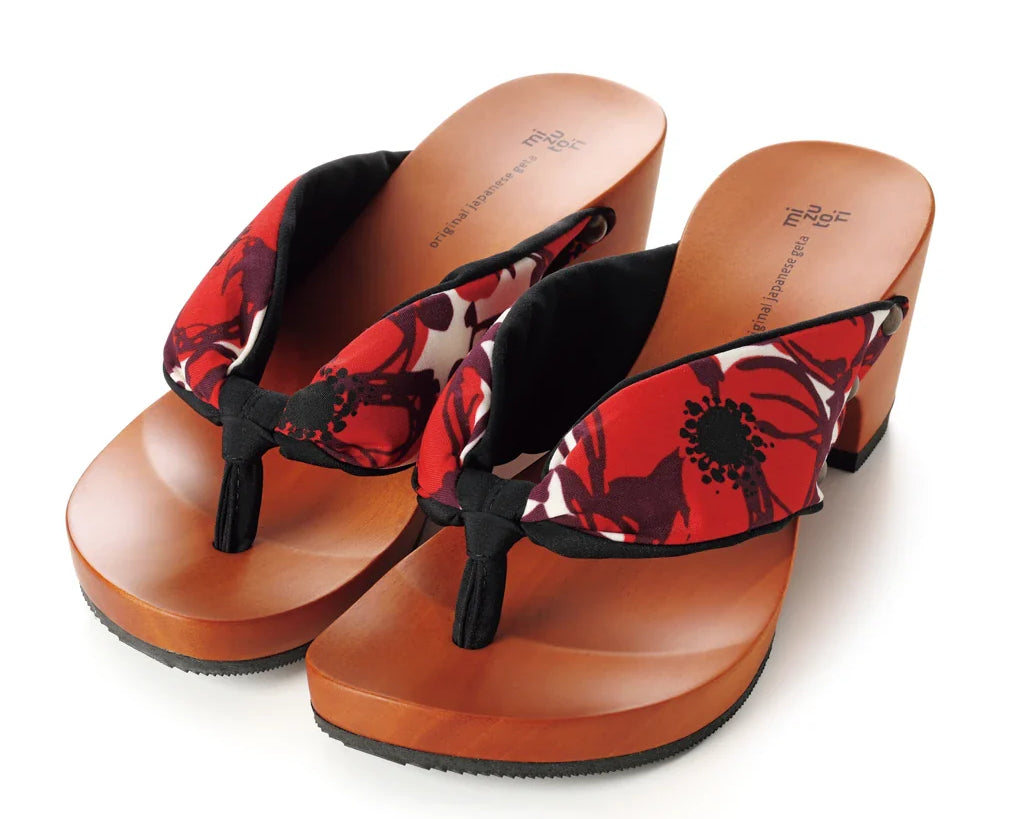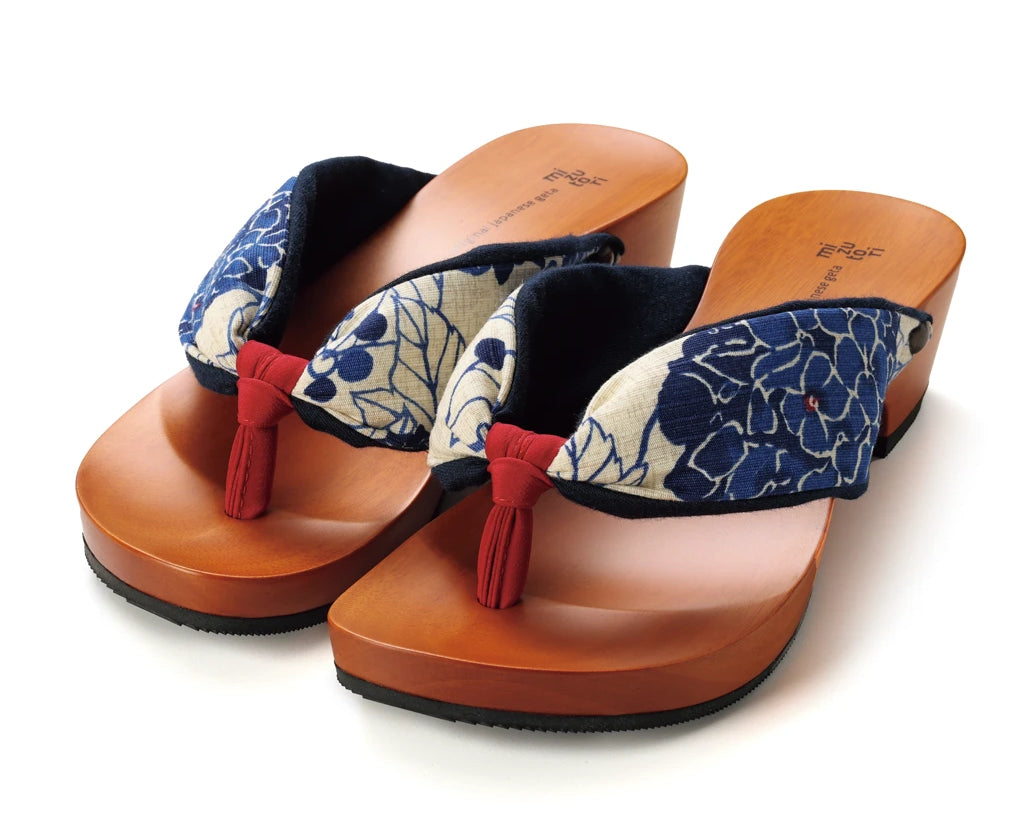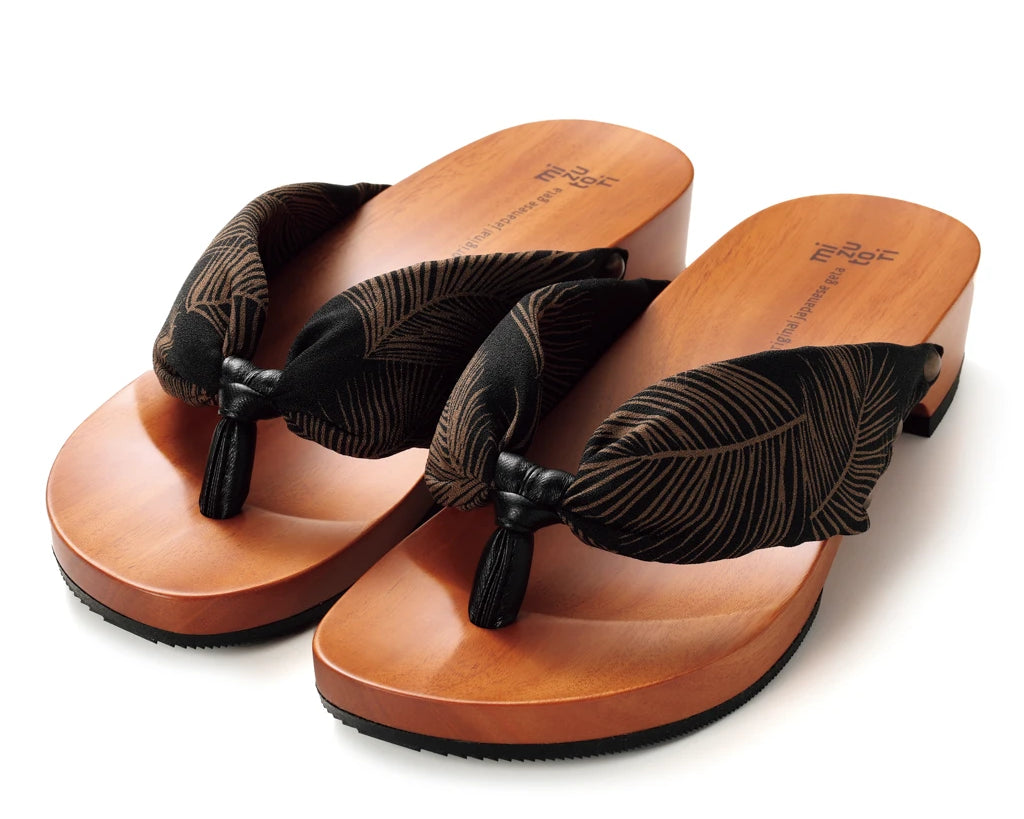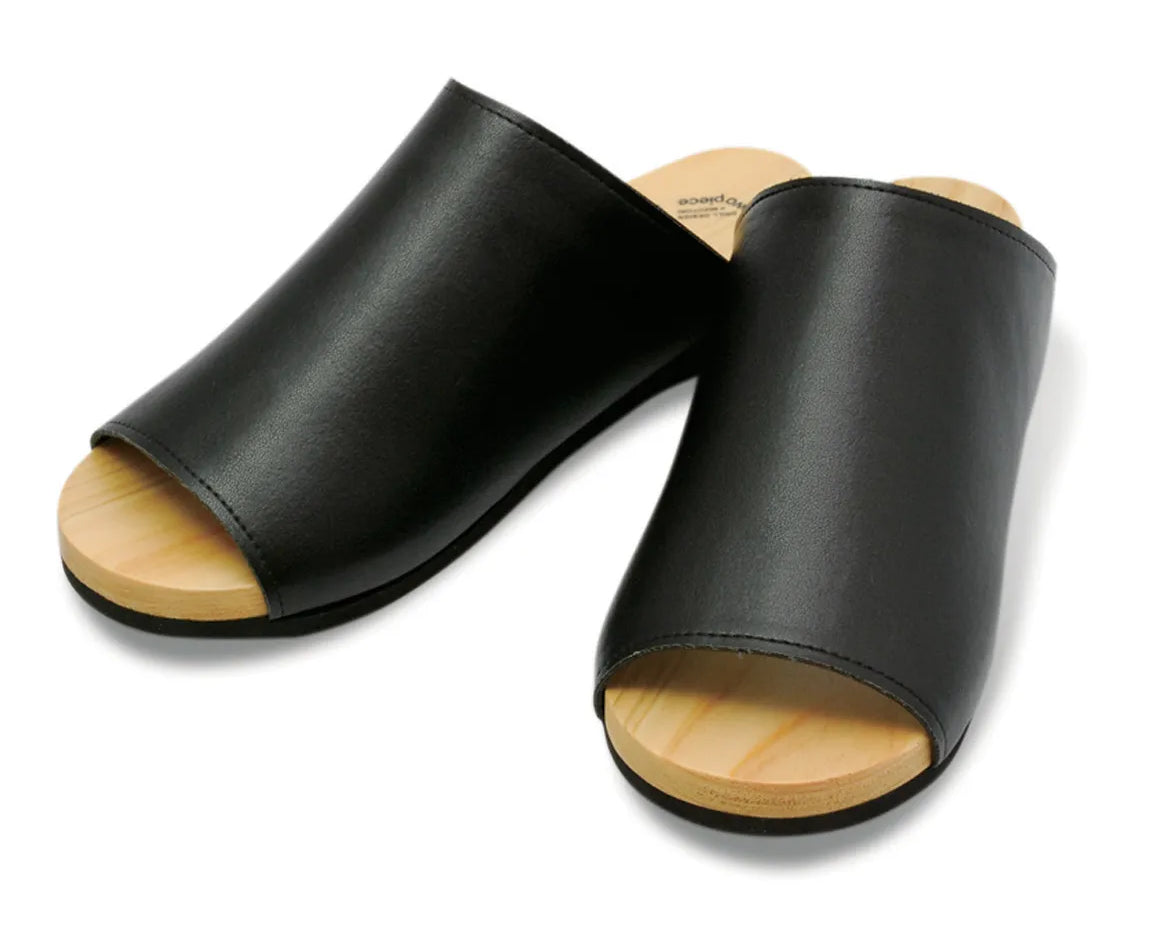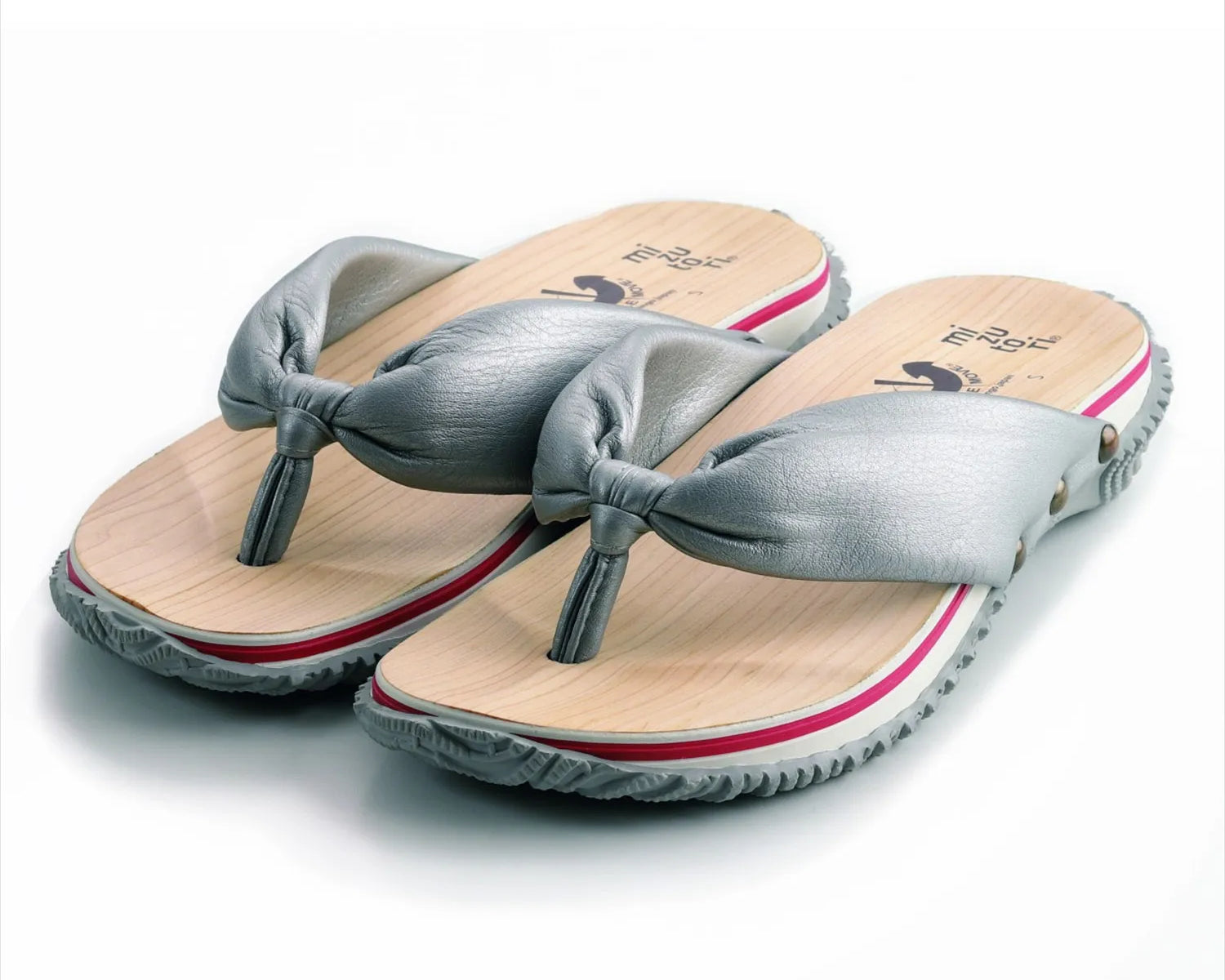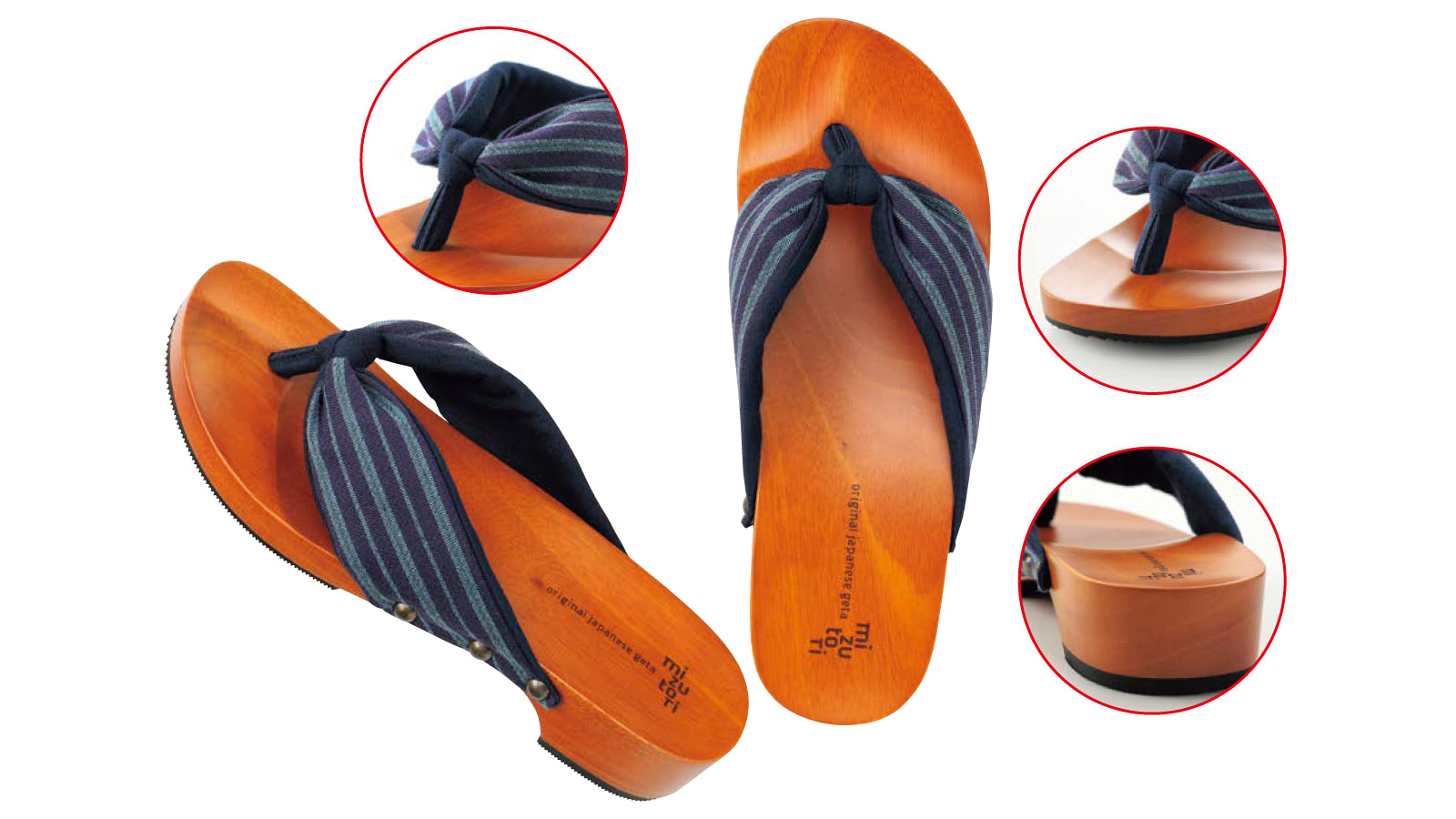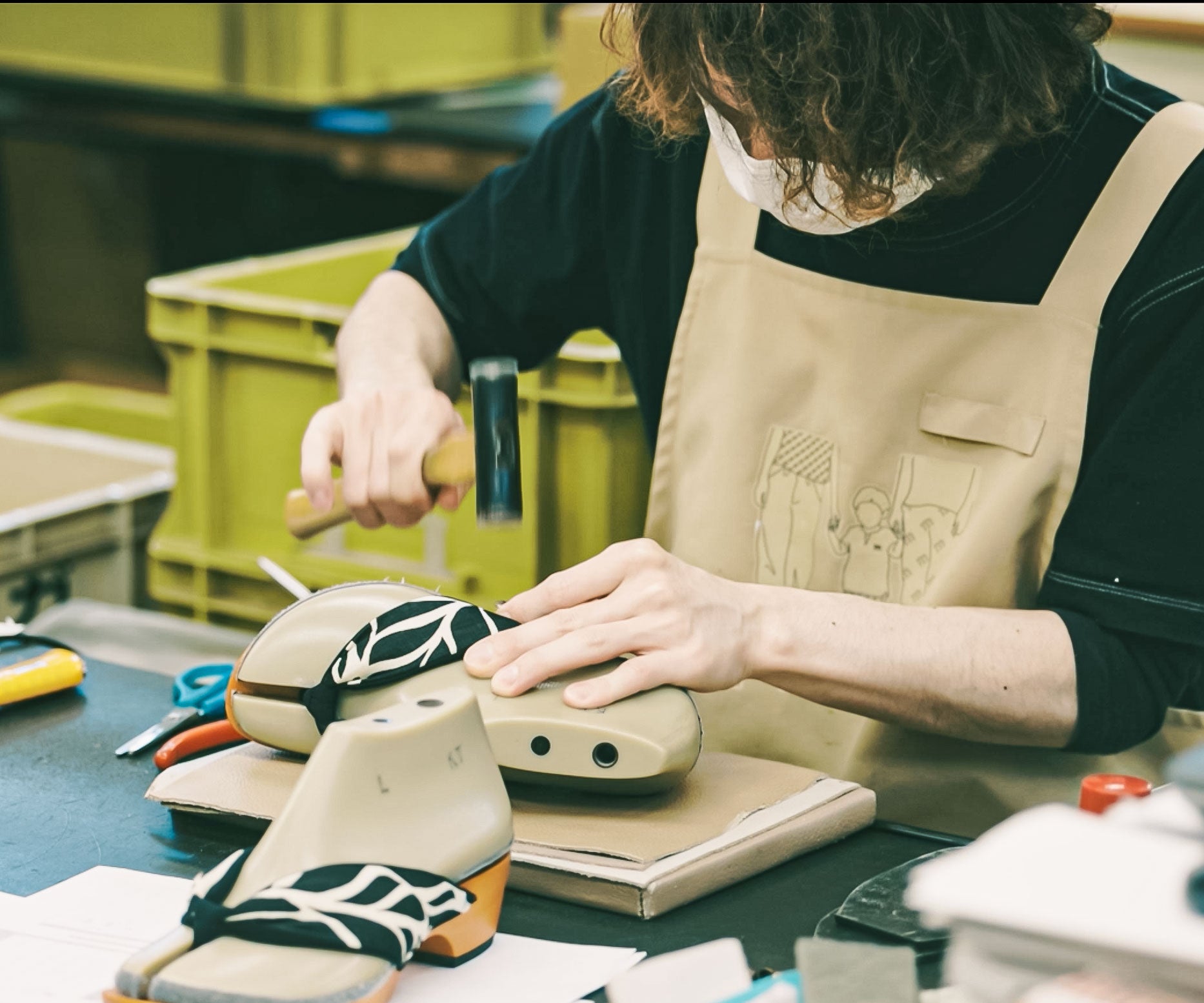
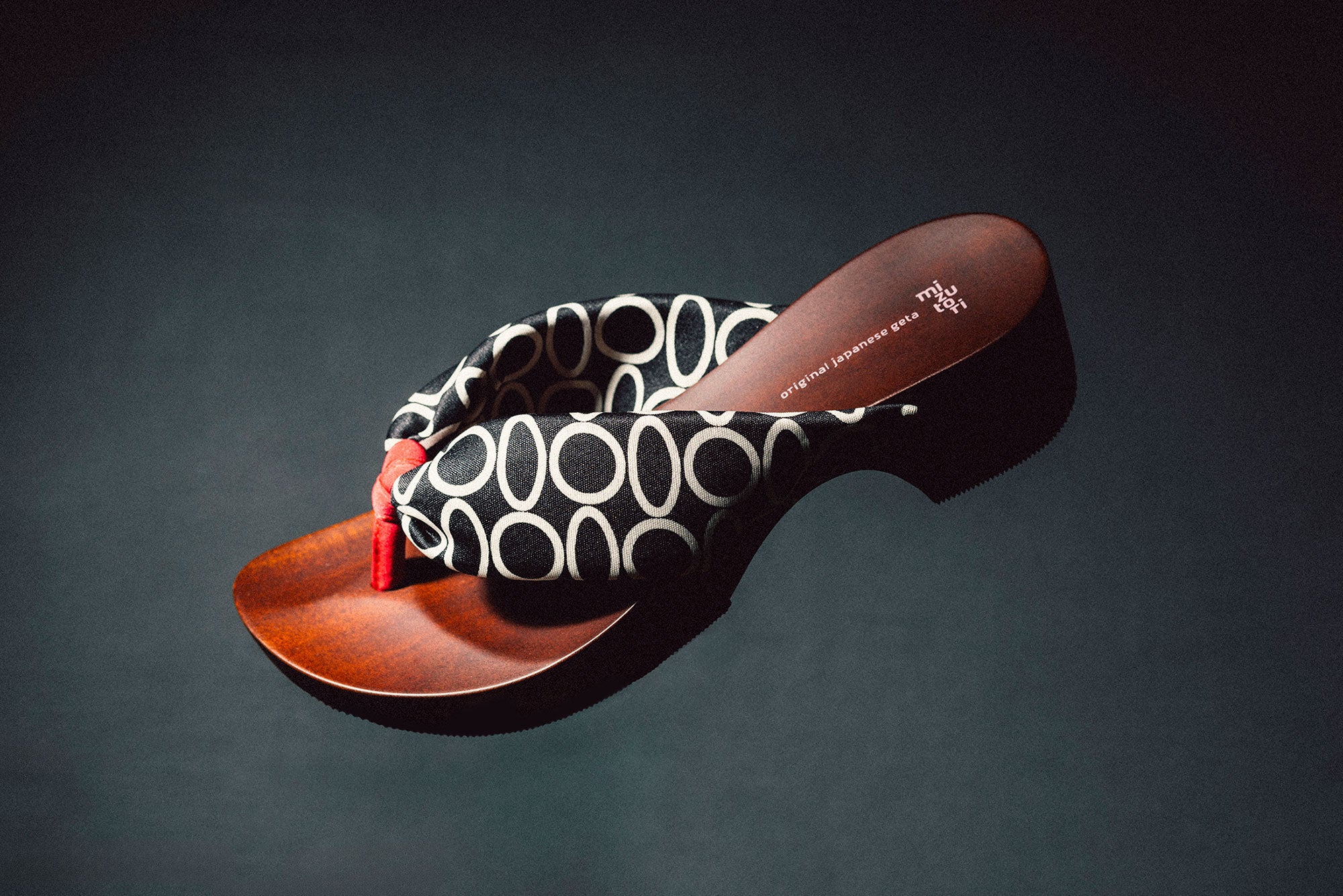

mizutori creates modern Japanese wooden sandals (geta) designed for comfort and everyday wear.
What Is mizutori?
Episode 56
The One-Tooth Geta That Can No Longer Be Made
Recently,
a customer visited our shop
because they wanted to try wearing geta.
The style they had in mind
was the traditional type of geta
with two wooden supports underneath—
the classic style many people imagine
when they think of Japanese geta.
As we talked, however,
they shared a concern about their feet.
They had very little arch
in the soles of their feet,
and walking often caused pain.
The arch of the foot
helps absorb impact
and distribute body weight.
Because of that,
they had almost given up on the idea of wearing geta.
After all,
geta are made of wood
and are much firmer than shoes.
Even so,
“Perhaps I can wear mizutori geta.”
With that hope,
they came to visit us.
First,
we invited them to try
our Geta Monogatari
and Sajin styles.
Unfortunately,
their feet began to hurt almost immediately.
We encouraged them to take their time
and walk around a little longer,
but the discomfort remained.
They loved the idea of wearing geta,
yet it seemed
their feet might not allow it.
That was the feeling
settling into the room.
The customer mentioned
that they especially liked
traditional geta with raised supports underneath.
At that moment,
my husband happened to have
a personal pair of one-tooth geta with him.
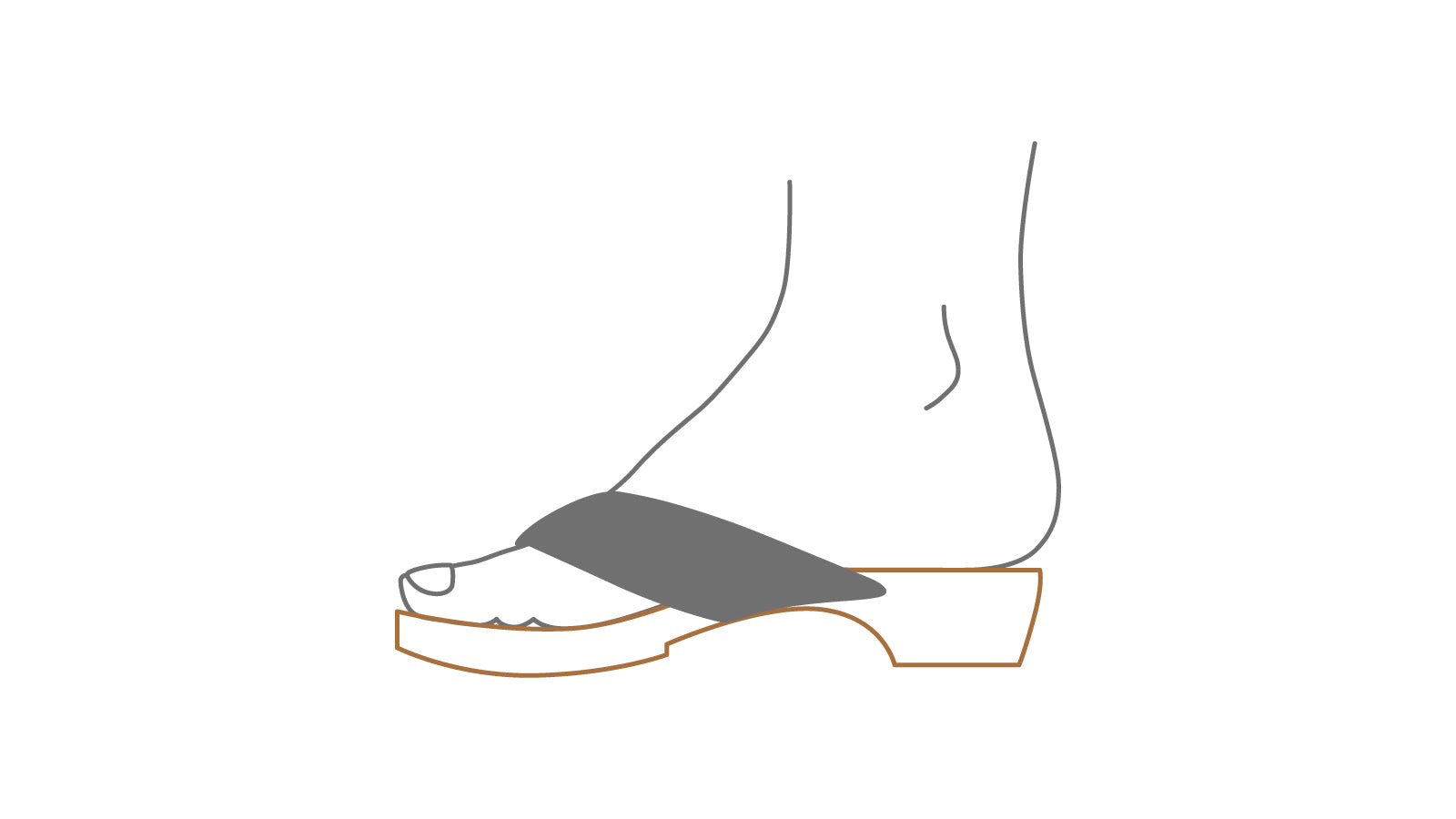
A one-tooth geta
balances on a single wooden support beneath the foot,
creating a unique feeling
somewhat like walking on stilts.
It was not a product we sell.
Still,
“Since you're here,
would you like to try them?”
we asked.
I had never forgotten
the unusual and fascinating sensation
of wearing one-tooth geta myself,
and I wanted this customer
to experience it as well.
They slipped them on
and began walking slowly.
Then they smiled and said,
“These don't hurt the soles of my feet.”
And a little later,
“If I can find a pair like these,
I'd love to have one.”
Hearing that
made us very happy.
It wasn't a mizutori product.
And yet,
I was genuinely delighted
that someone who had almost given up on wearing geta
had found a pair that seemed right for them.
I promised
to look up where the geta had been purchased
and send them the information later.
Of course,
we want more people
to wear mizutori footwear.
But just as importantly,
we hope that geta themselves
will continue to be appreciated
by more people.
However,
when I began searching for the shop,
I discovered that the product
was already sold out.
Not wanting to give up,
I contacted the seller directly.
That was when I learned
that the craftsman who had made the one-tooth geta
had already retired from the trade.
The geta could no longer be made.
It was a difficult feeling to describe.
I felt disappointed
that I could not bring good news
to the customer.
But beyond that,
I felt a deep sadness
knowing that a product
someone loved so much
could no longer be made.
And there was something else as well.
Another geta craftsman
had quietly brought his work to an end.
That reality stayed with me.
For those of us involved
in Shizuoka's local industries,
it is not someone else's story.
It is something very close to home.
At the same time,
it strengthened my determination.
There are people
who tell us they love mizutori.
There are people
who want to wear our footwear.
If mizutori were ever to disappear,
perhaps there would be people
who would feel the same sense of loss.
Thinking about that
reminded me once again
why continuing to make things matters.
And fortunately,
we are geta makers.
Right now,
we do not yet know how.
But perhaps someday,
just as this one-tooth geta did,
we may be able to create footwear
that helps people
with similar concerns about their feet.
I later contacted the customer
and explained that the one-tooth geta
could no longer be purchased.
And I promised them something else:
If we ever found another pair of geta
that might suit them,
I would let them know.
As long as there are people
who want to try wearing geta,
I believe there is still a future
for geta culture.
That is why we will continue making geta—
to meet those hopes,
and to help carry this culture
into the future.