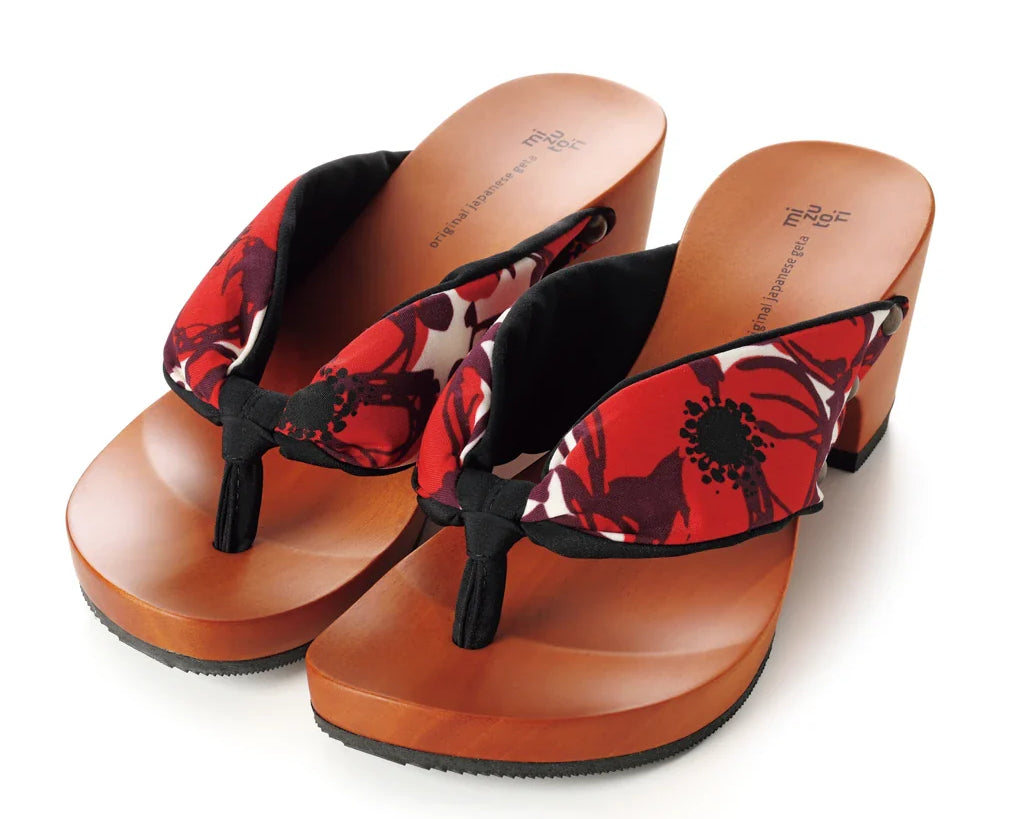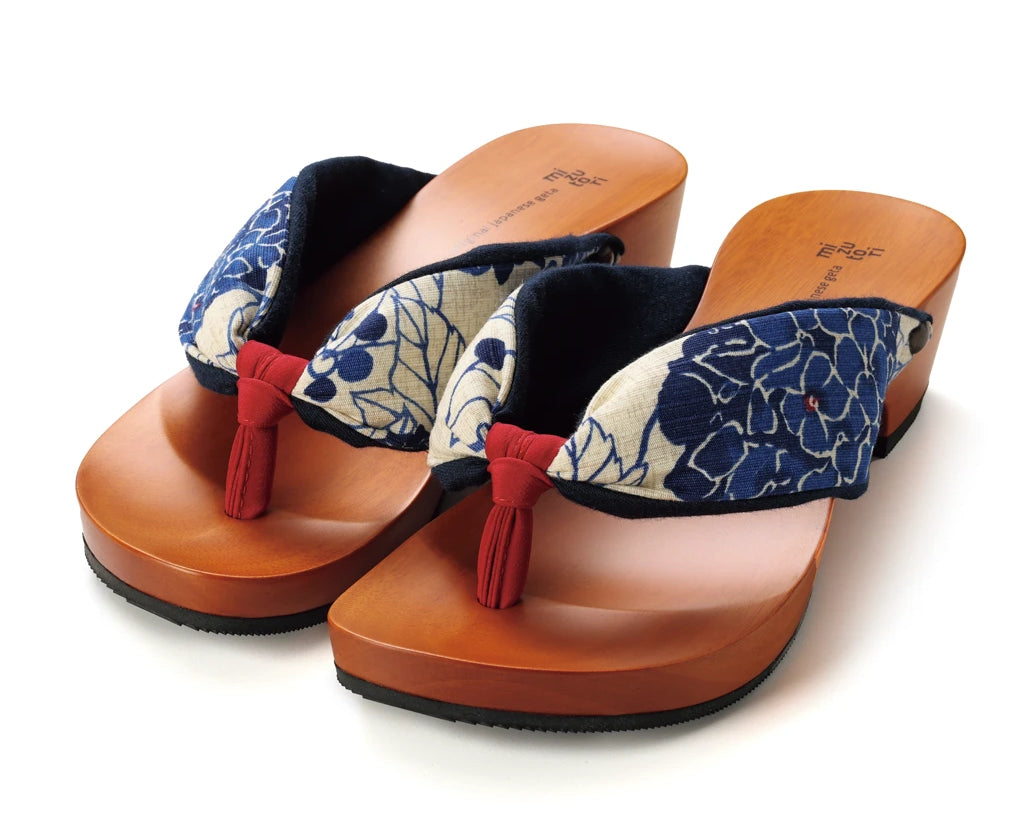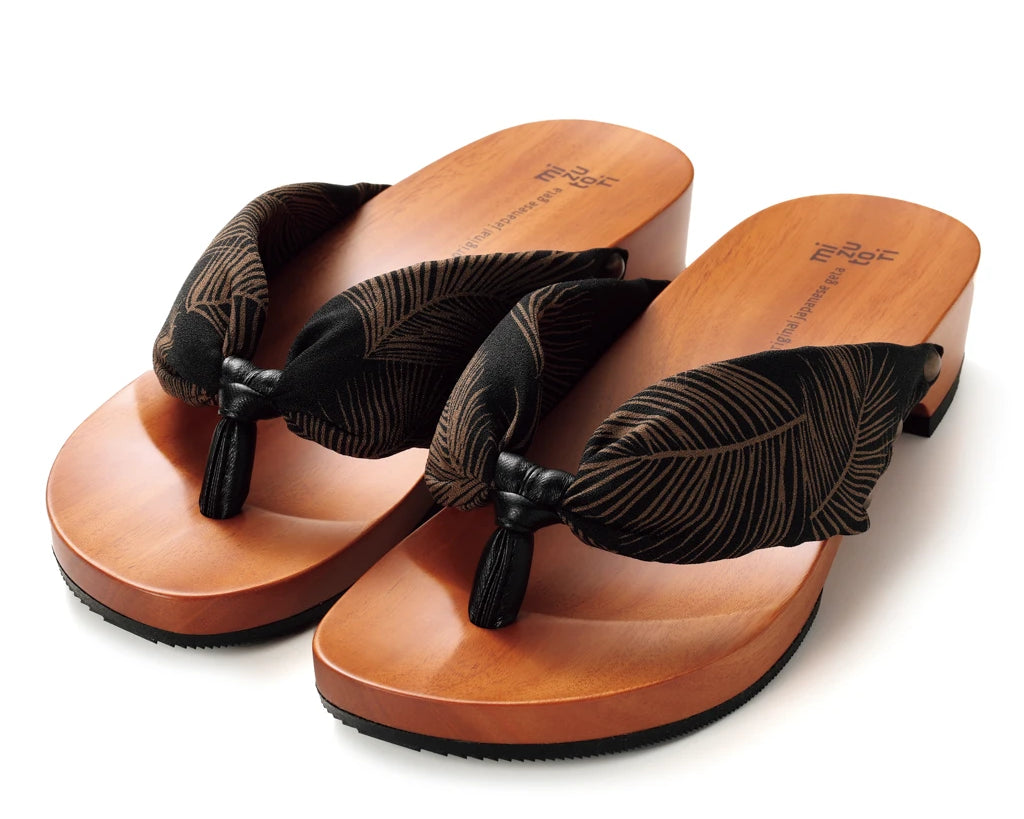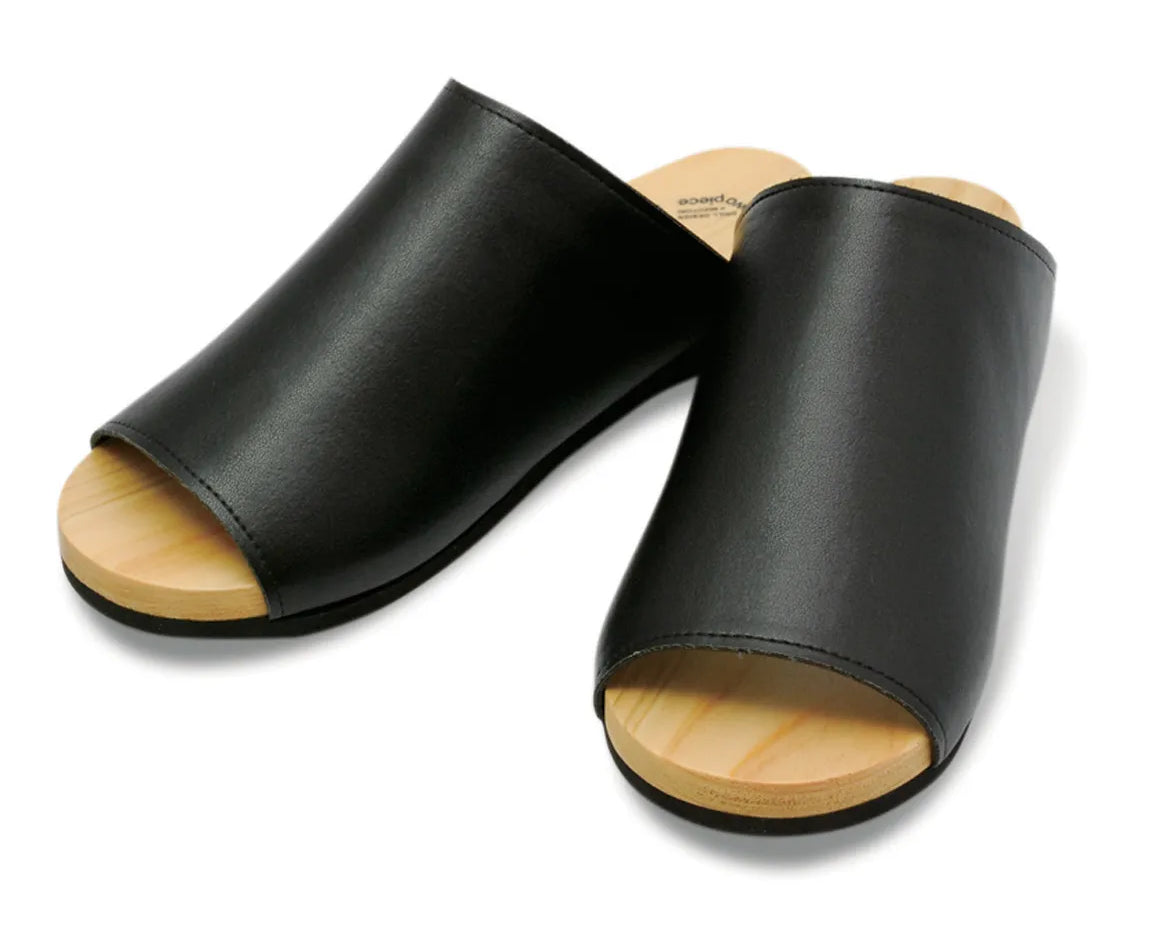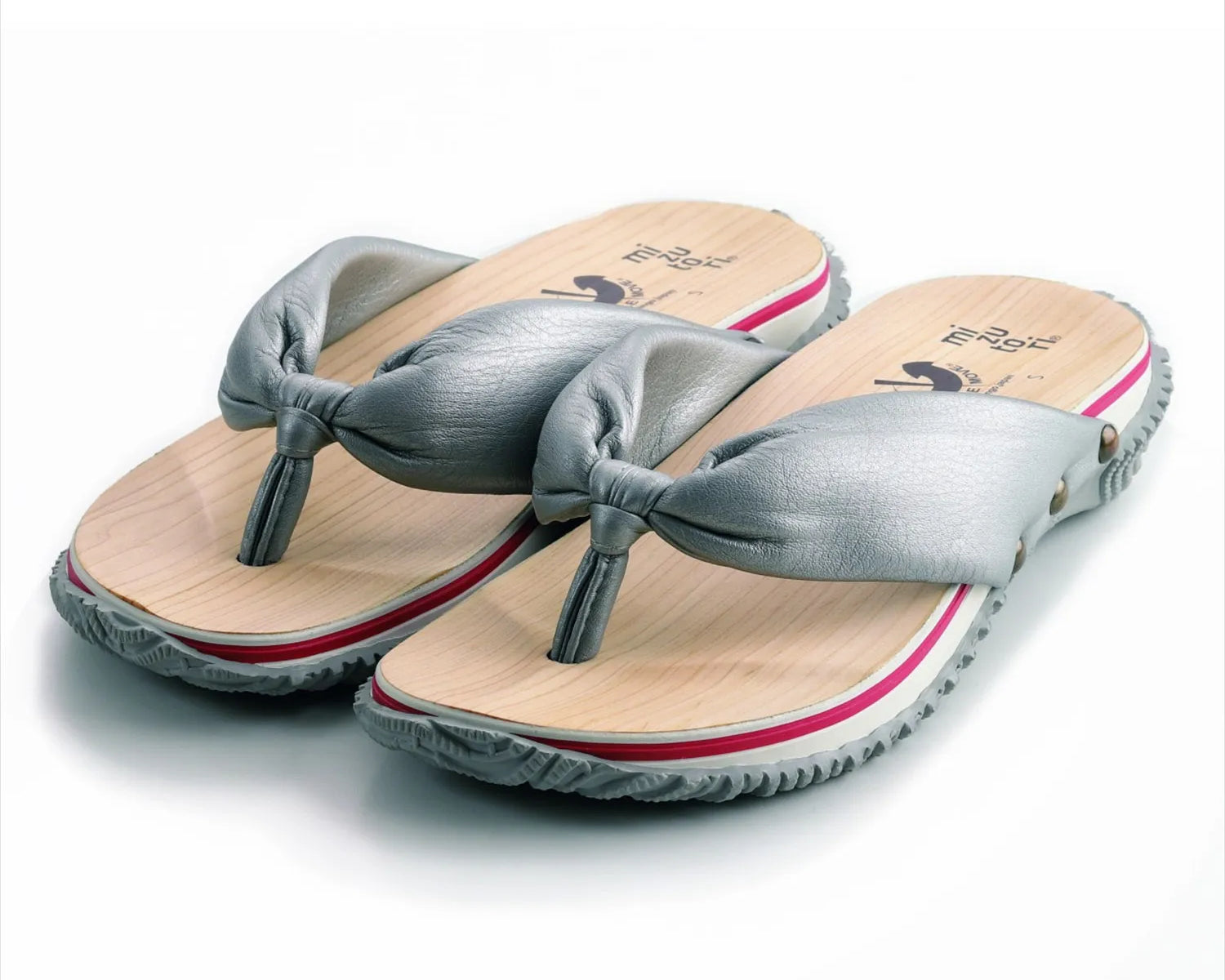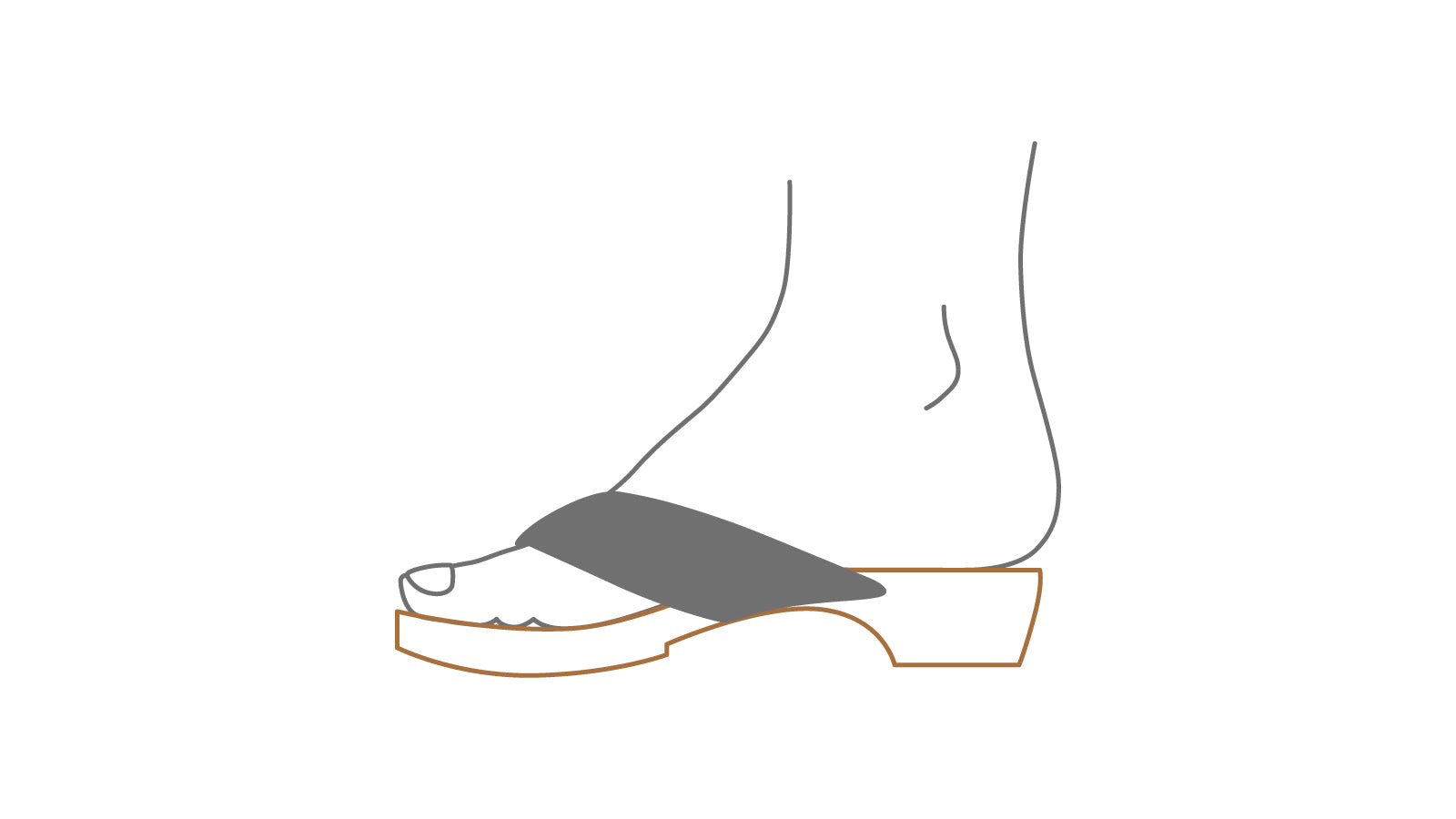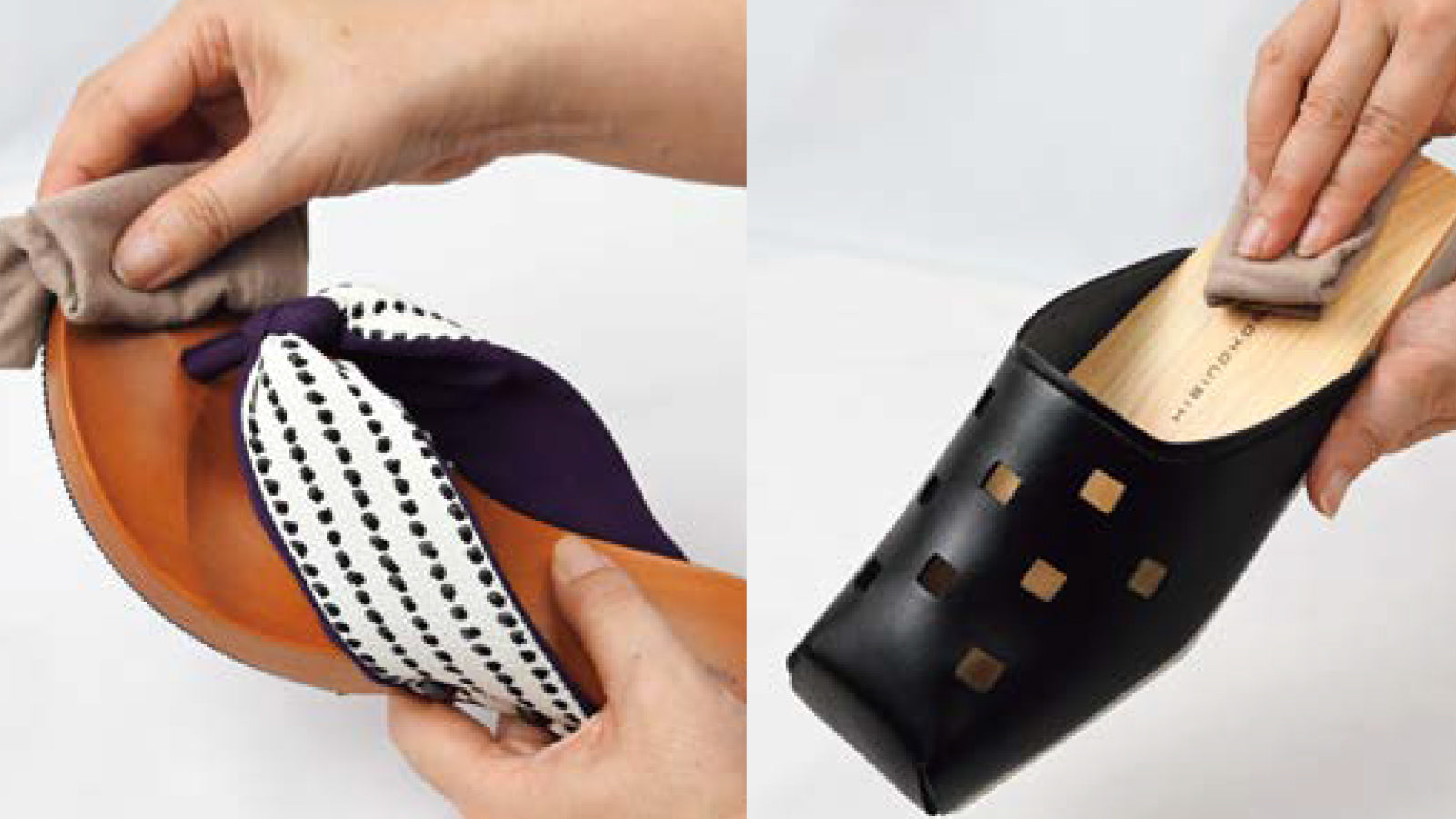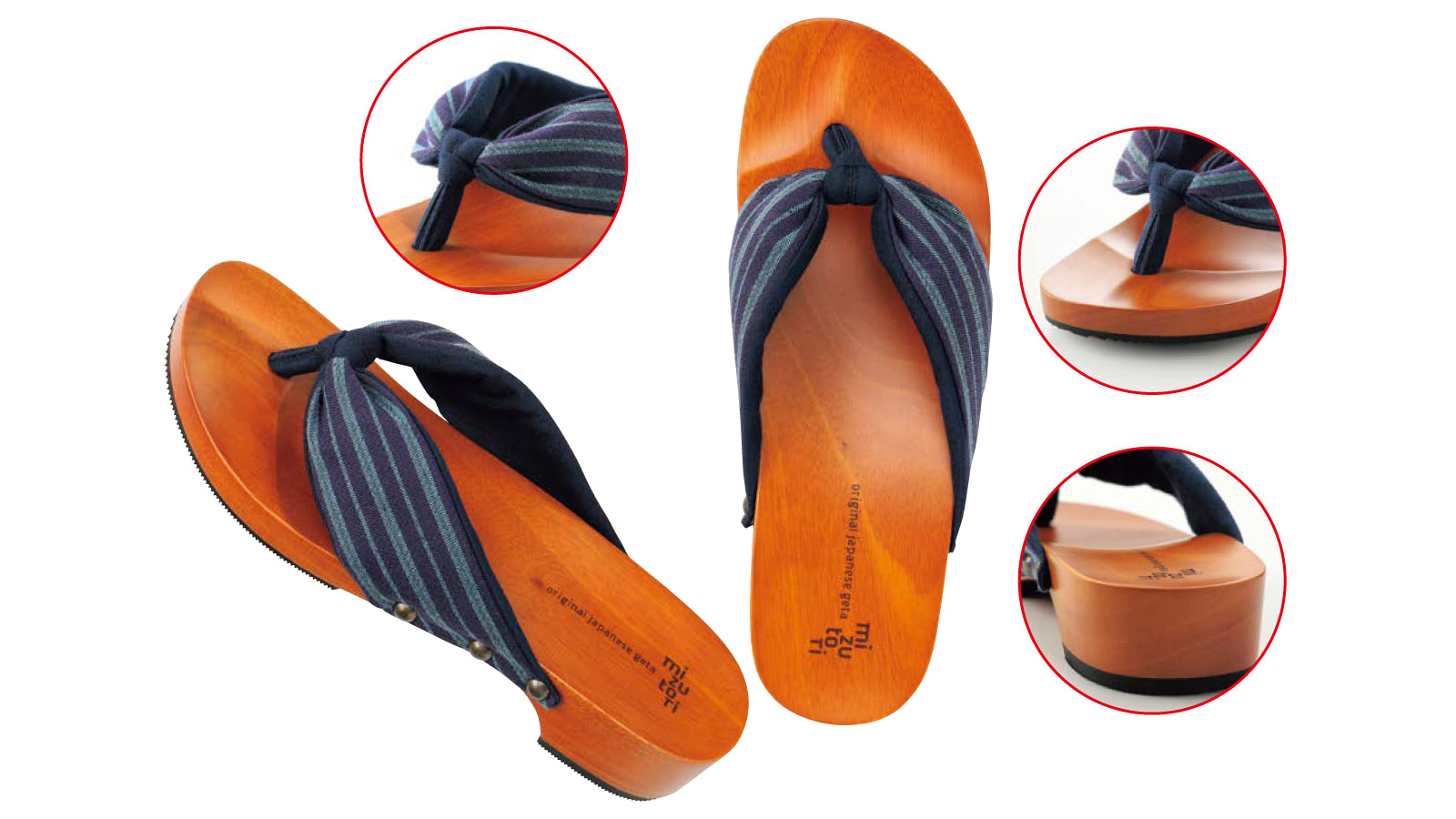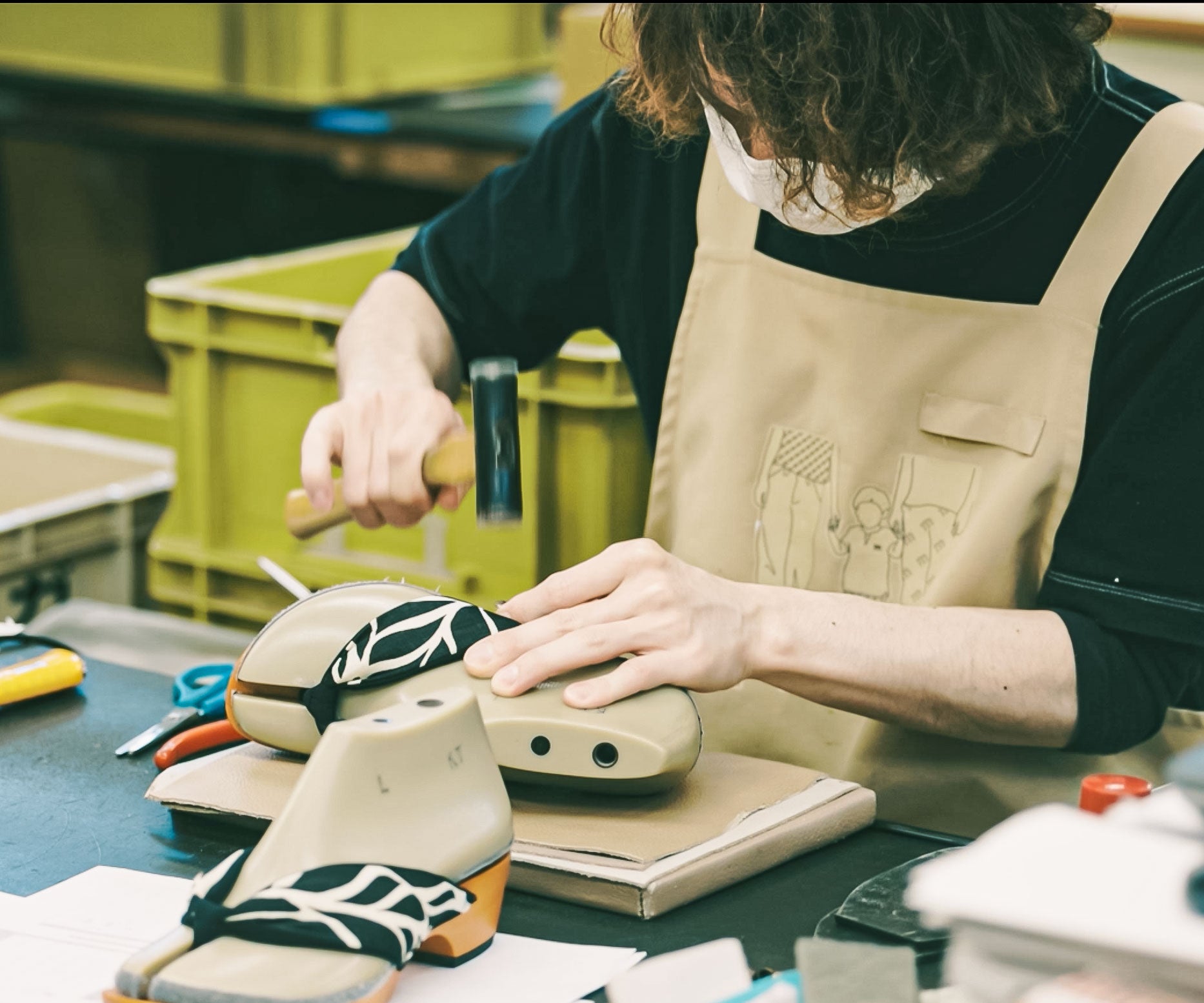
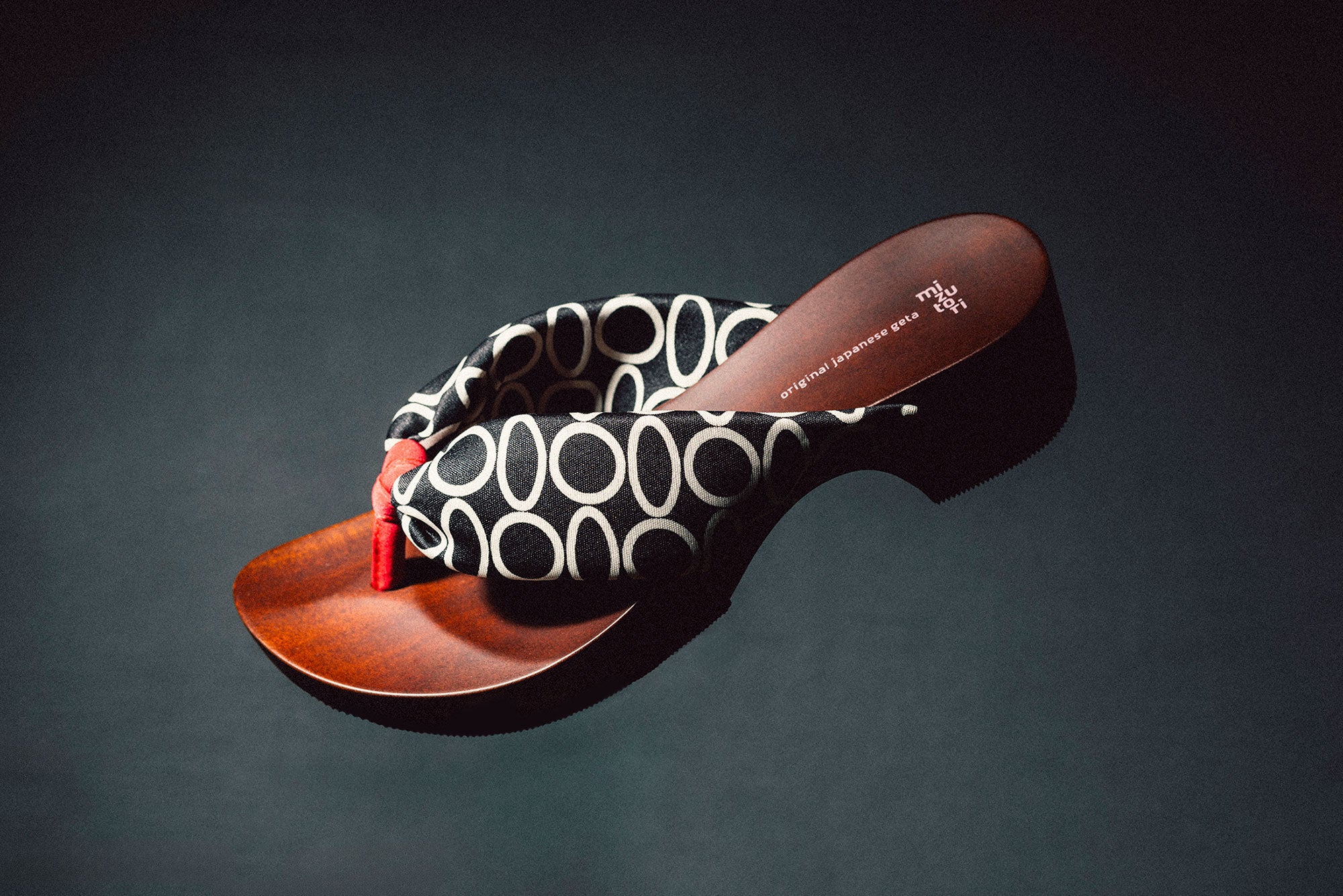

mizutori creates modern Japanese wooden sandals (geta) designed for comfort and everyday wear.
What Is mizutori?
Episode 53
Growing Up in the Workshop
When I was little,
the workshop was my playground.
Back then,
we were not yet making geta
the way we do today.
Instead,
the factory produced insoles
for sandals and shoes.
Inside the workshop,
there were large sheets of material called “balls”—
thick board-like sheets,
about the size of two tatami mats,
stacked everywhere.
Some stacks were taller than others.
I would climb on top of them,
jump from one stack to another,
and leap from high places to low ones.
Looking back now,
I realize it was probably dangerous.
But to me at the time,
it was the greatest playground imaginable.
There was also a machine
used to grind rubber soles for sandals.
I would gather the rubber dust,
dig holes in the dirt paths,
line them with plastic sheets,
fill them with water,
scatter the rubber dust across the surface—
and make trap pits.
The workshop yard
was filled with trees and plants as well,
so I would collect leaves and seeds,
crush them with stones,
and pretend I was running
a little herbal medicine shop.
Everything around me
became part of play.
Because I grew up in that environment,
I think that while I was playing,
I was also naturally watching
the work happening around me.
As I grew a little older,
I was sometimes asked
to help with simple tasks.
And even as a child,
I somehow felt
that I already understood
what needed to be done.
Perhaps work existed
as a natural extension of play.
If I saw children today
jumping around on top of materials like that,
I would absolutely scold them.
“Stop that—it’s dangerous!”
I would say it one hundred percent.
And besides,
even if they were materials,
they would eventually become products
for customers.
Playing on top of them
would be unthinkable.
Of course,
I would get told to be careful back then too.
But the people working there
never had the feeling of saying,
“Absolutely no playing.”
Instead,
there was always a sense
that they were quietly watching over us.
Perhaps that was simply
the atmosphere of Japan's Showa era—
a more relaxed and forgiving time.
Back then,
families working together
to run a family business
were simply part of everyday life.
Even children
were asked to help
when extra hands were needed.
I would sometimes go along
for deliveries too,
helping unload products.
And the best reward of all
was getting a bowl of ramen
from a roadside food stand
on the way home.
Time has changed.
The workshop has changed.
The people who work there—
and I myself—
have changed too.
Parts of the workshop
have since been renovated.
The garden has fewer trees than before.
Little by little,
the scenery has changed
from what I remember as a child.
And yet somehow,
I still feel that atmosphere
of a family workshop
I knew as a child
lingering somewhere even now.
Perhaps you could also say
that we still have not completely escaped
the mood of a small Showa-era workshop.
But to me,
that too feels like part of
what makes Mizutori what it is.
The world of craftsmanship
faces many challenges—
rising material costs,
shortages of skilled workers,
and many other obstacles
that make continuing difficult.
Even so,
one reason we continue making geta
is, of course,
our wish to bring mizutori’s footwear
to more people.
But underneath that feeling
is another one as well:
a desire to protect
the warm memories and environment
that were built together
with family and the people around us.
Today,
my family has retired,
and we no longer work together.
That is why,
together with the people beside me now,
I hope we can continue carrying forward
the story of this workshop
for as long as possible.
And actually—
there is still a place on the workshop wall
where one of my childhood doodles
remains to this day.
If you ever visit us,
please try to find it.