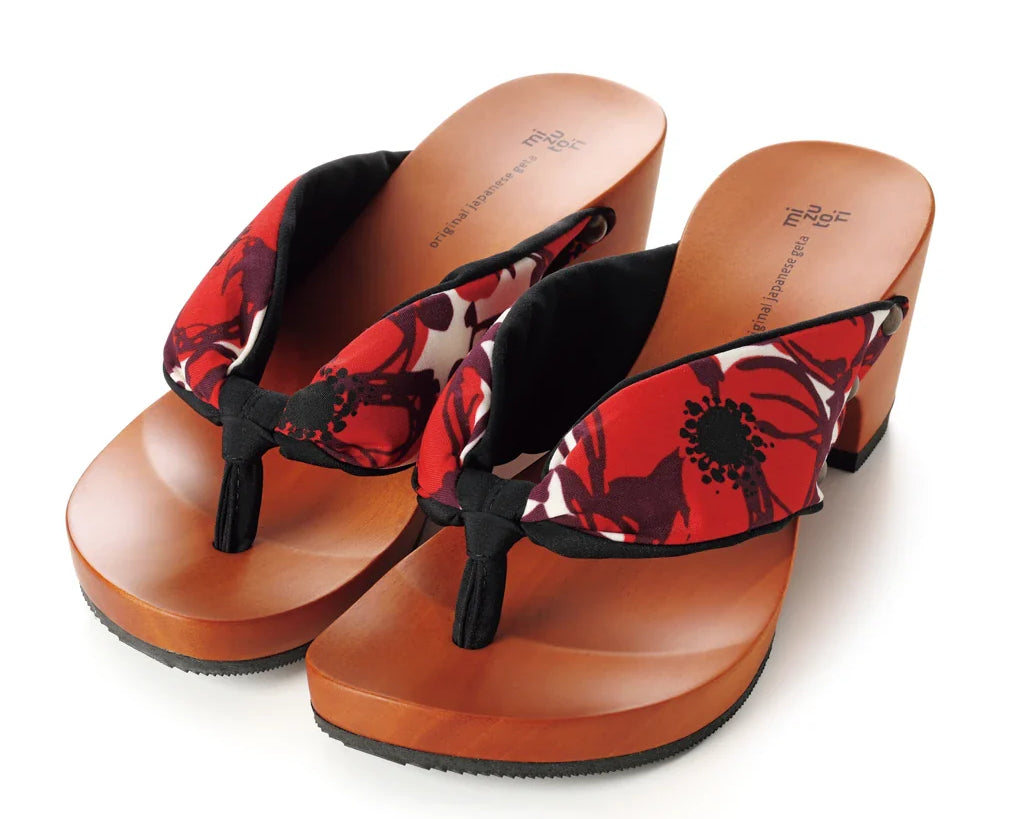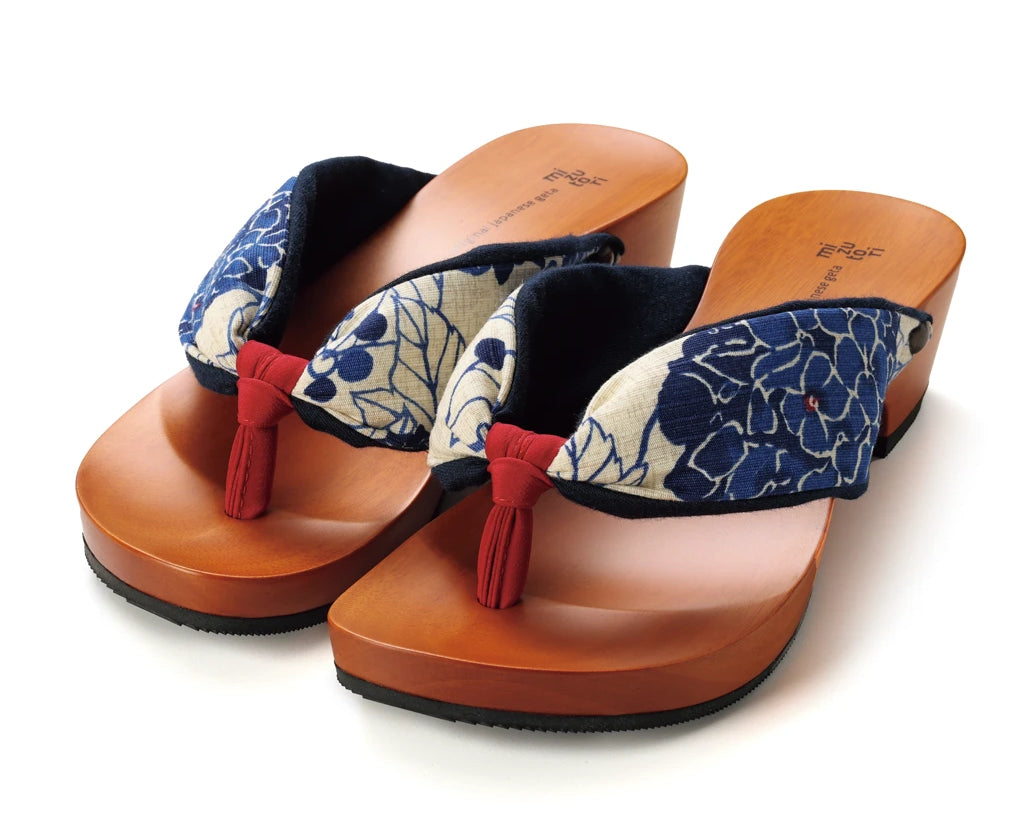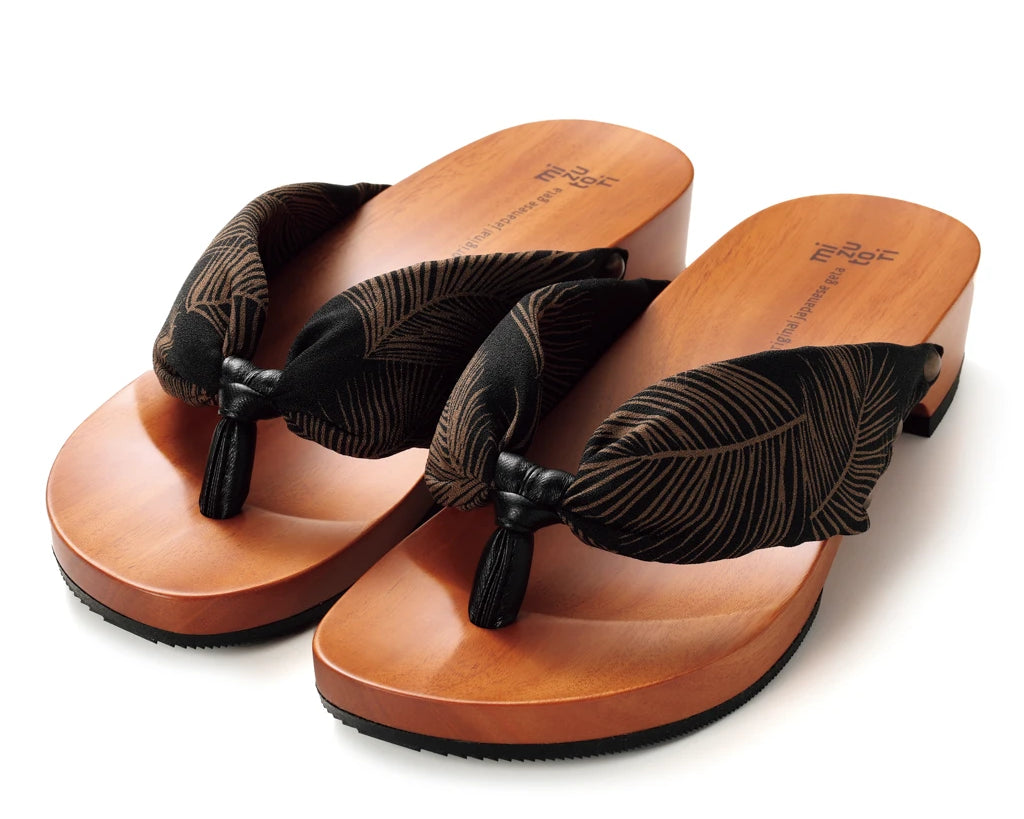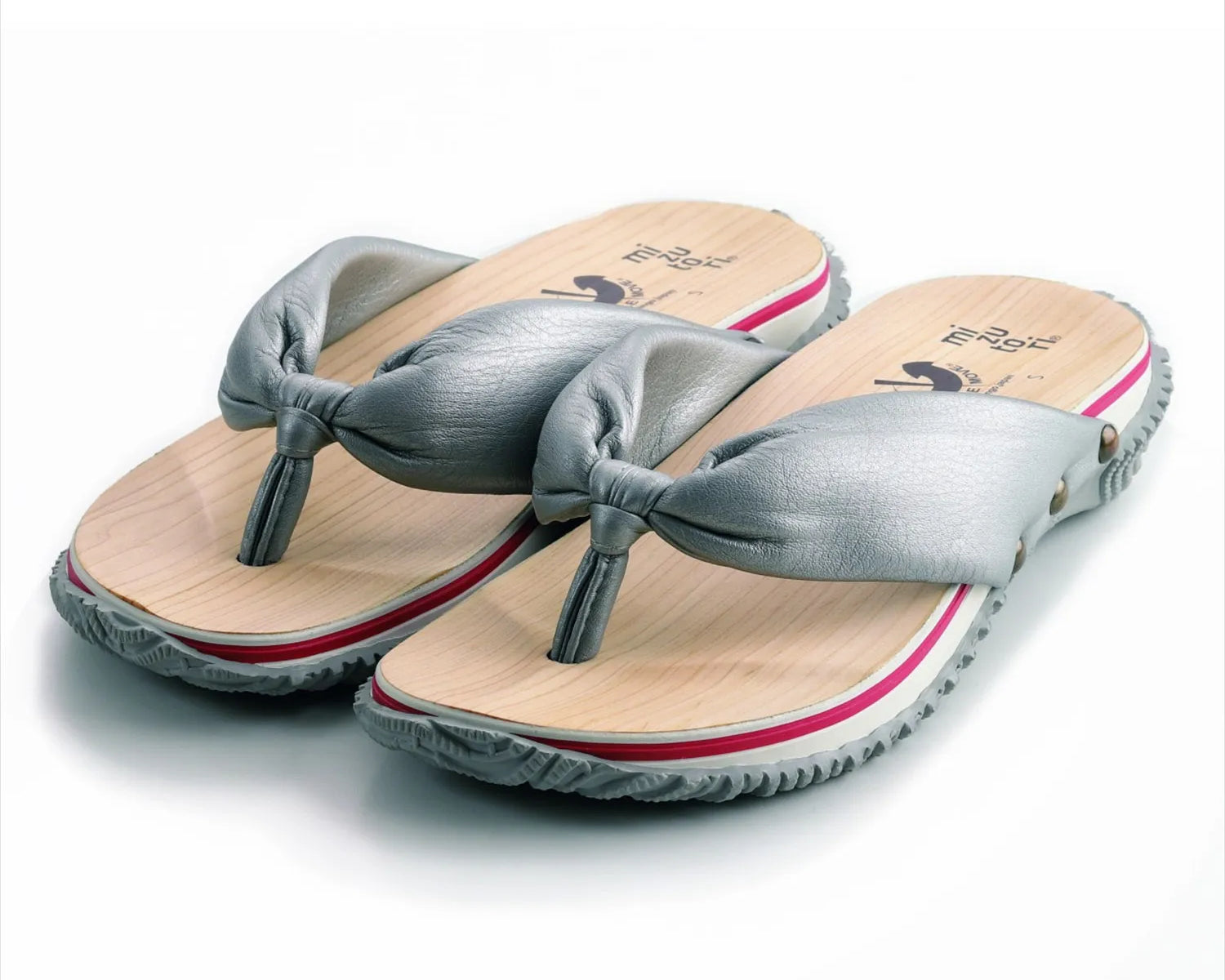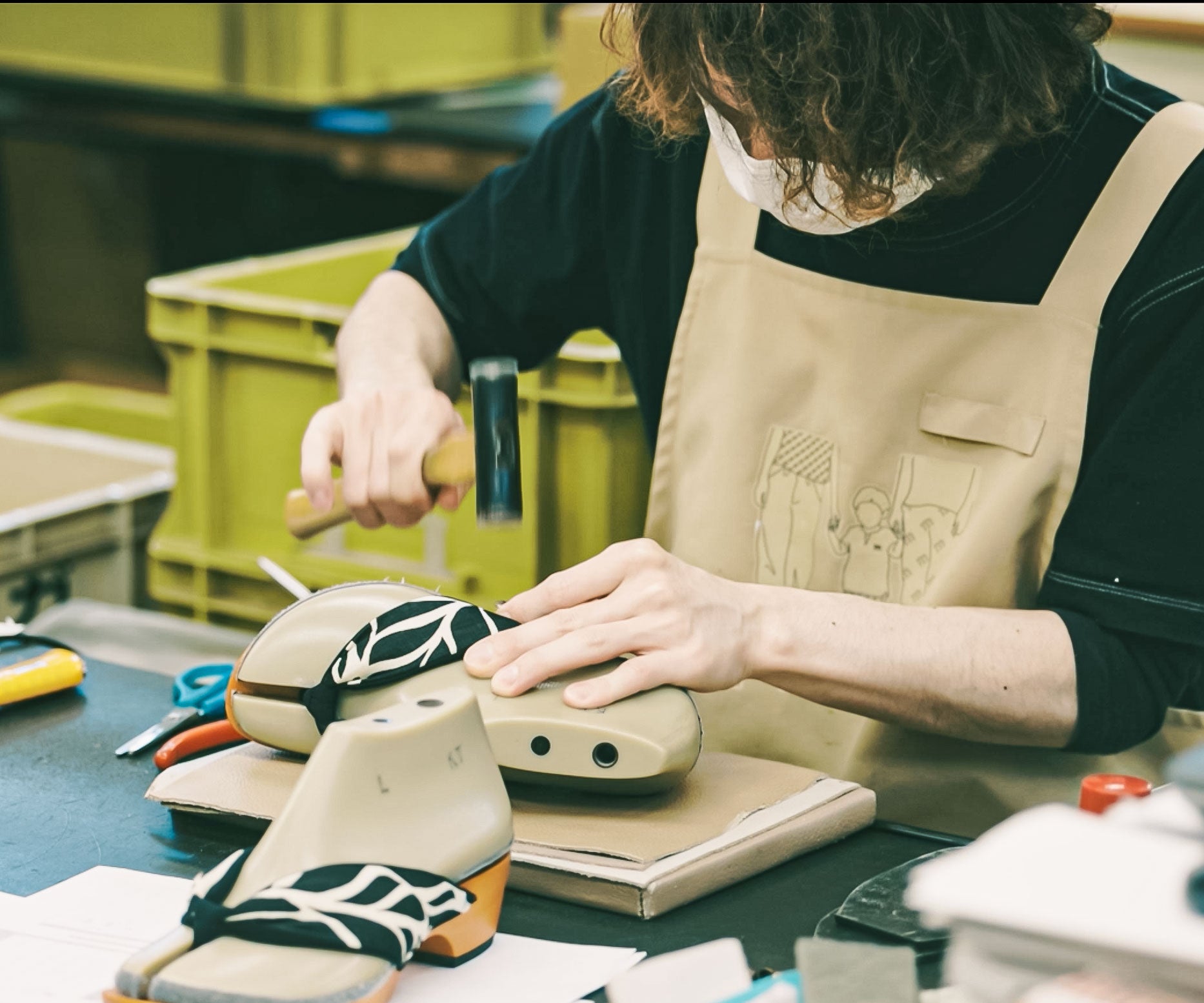
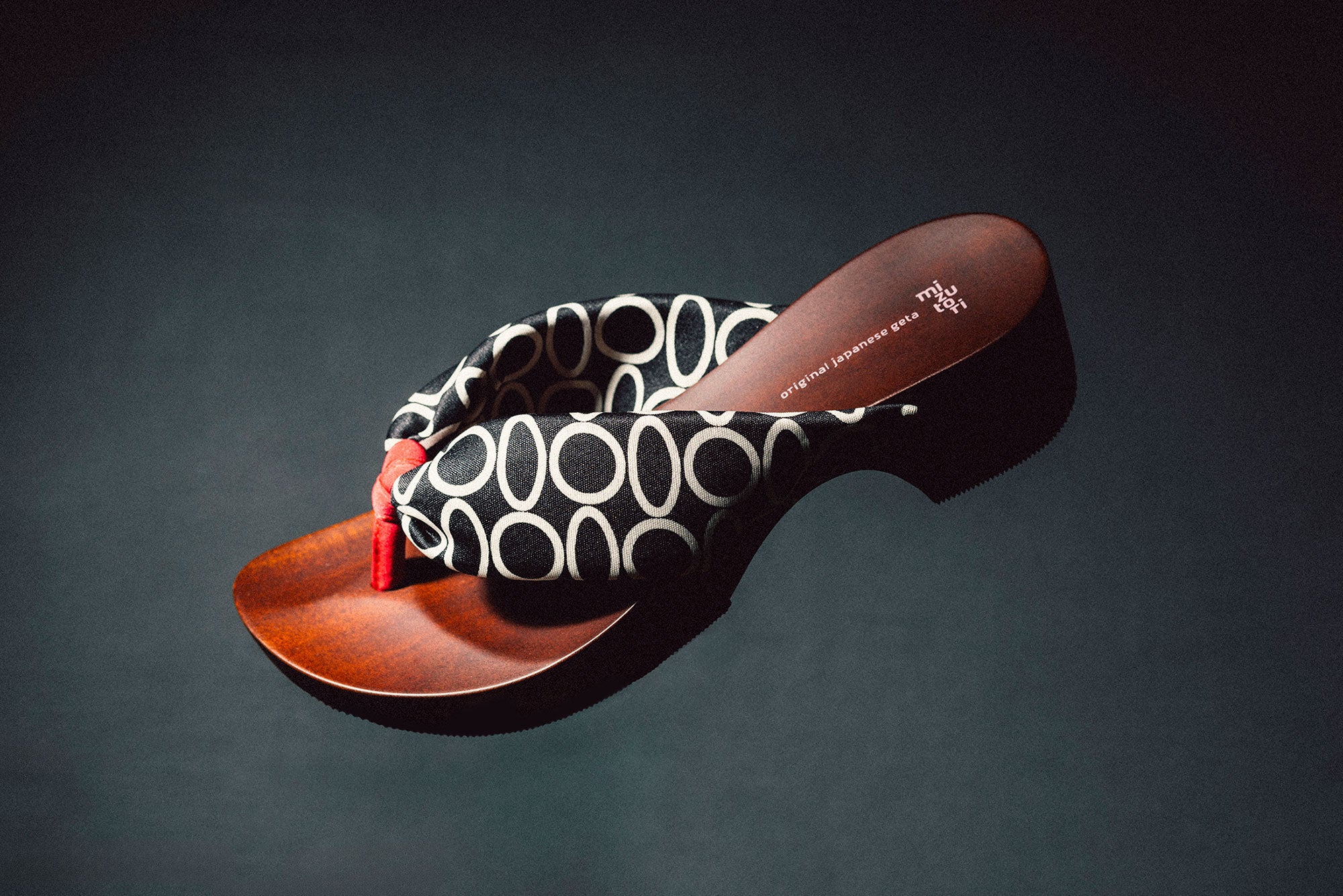

mizutori creates modern Japanese wooden sandals (geta) designed for comfort and everyday wear.
Episode 43
Geta as a Completed Form
Every day,
we continue to explore new ideas
and develop new products.
It has now been more than thirty years
since the very first mizutori geta,
“Geta Monogatari,”
was created.
Over those years,
we have introduced
many different designs.
After “Geta Monogatari,”
we developed heeled geta—
“hitete 4.5” and “hitete 6.5”—
in response to our customers’ voices.
With a raised heel,
much like women’s shoes,
they offered a new level of comfort
and became a modern style of footwear
that could be worn in everyday life
as a kind of wooden sandal.
In terms of comfort alone,
we still feel that “hitete”
may be one of the most refined.

Since then,
we have continued to explore
different expressions within the form of geta,
through designs such as
“SHIKIBU,” “Sajin,” “BLADE,”
and “COLOR GETA.”
Of course,
in every development,
we have approached our work
with care and without compromise.
“Could this be improved further?”
“Is there a new form waiting to be discovered?”
With these questions in mind,
we have continued to experiment and refine.
And yet,
no matter how many ideas we explored,
we always seemed to arrive
at the same place.
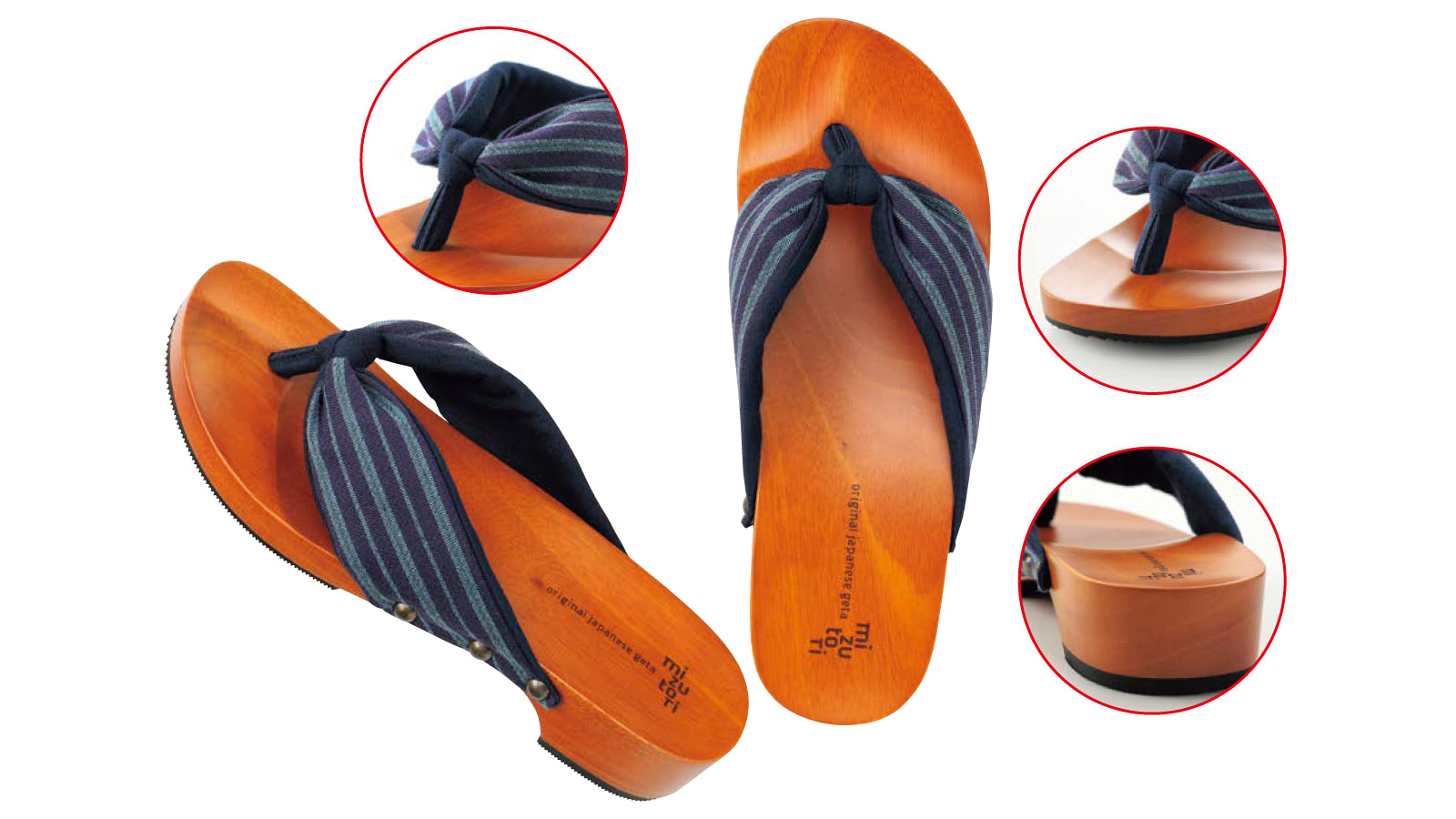
A wooden base,
and a pair of straps.
Perhaps nothing more is needed.
It is a form
that has existed for generations—
simple, and familiar.

Over a long history,
this structure has been passed down,
and it is remarkably free of excess,
beautifully complete in its design.
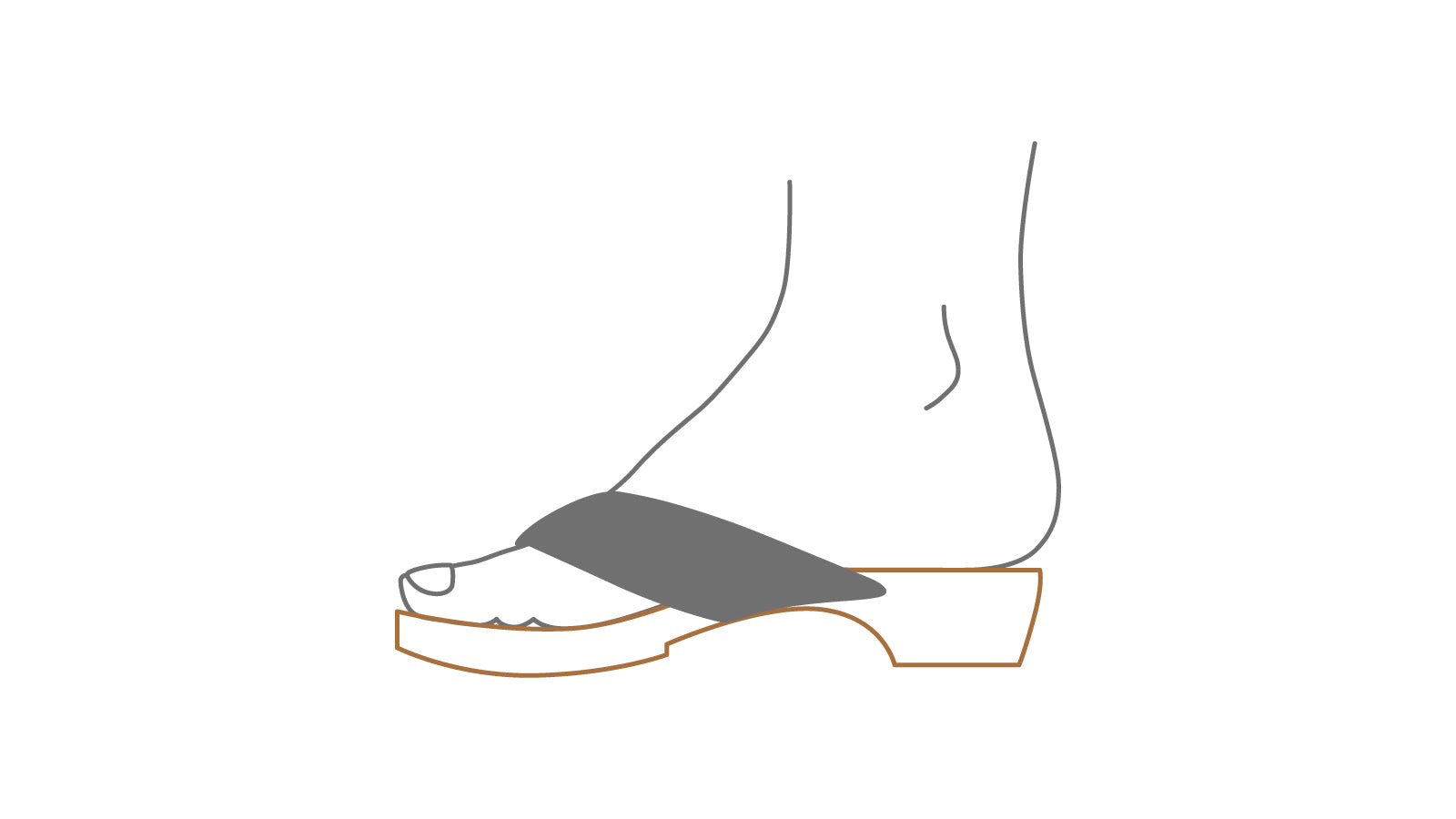
You place your foot upon it,
lightly hold the straps between your toes,
and you can walk naturally.
Without requiring special techniques,
it functions perfectly as footwear.
At times,
we find ourselves rediscovering
just how complete this form truly is.
Of course,
when worn in modern life,
there were aspects that required adjustment.
For those unfamiliar with geta,
they could sometimes feel uncomfortable.
And when paired with contemporary clothing,
they could feel slightly out of place.
At mizutori,
we have carefully addressed these points—
refining the shape of the footbed,
the structure of the straps,
and creating designs
that harmonize with both Japanese and Western styles.
To allow the geta
to feel gentle on the foot.
To make walking feel natural and effortless.
In seeking this kind of comfort,
we have gradually shaped them
into their present form.

What we have arrived at today
is not something entirely new,
but rather something that preserves
the essence of the original form
while gently refining what is needed.
And because of that,
we have come to feel
that there may be no need
to force further changes.
Of course,
mizutori continues to value
a spirit of exploration.
If there are ways
for this simple form of footwear
to become even more naturally part of daily life,
we would like to continue exploring them.
However,
this does not mean making the form more complex,
or losing what makes geta special.
Instead,
we believe there is still much to discover
in how they are expressed—
through the materials of the straps,
the colors and textures of the base,
and the way they are presented.
Rather than adding something new
to what is already complete,
it may be about discovering
how to bring out what is already there.
That, too,
is one way of approaching craftsmanship.
Change is not always about making something bigger.
Perhaps true evolution
can also be found
in continuing to reveal
the quiet beauty of what is already complete.
Geta,
though complete in their form,
may be a kind of footwear
whose charm can continue to unfold
with each passing era.