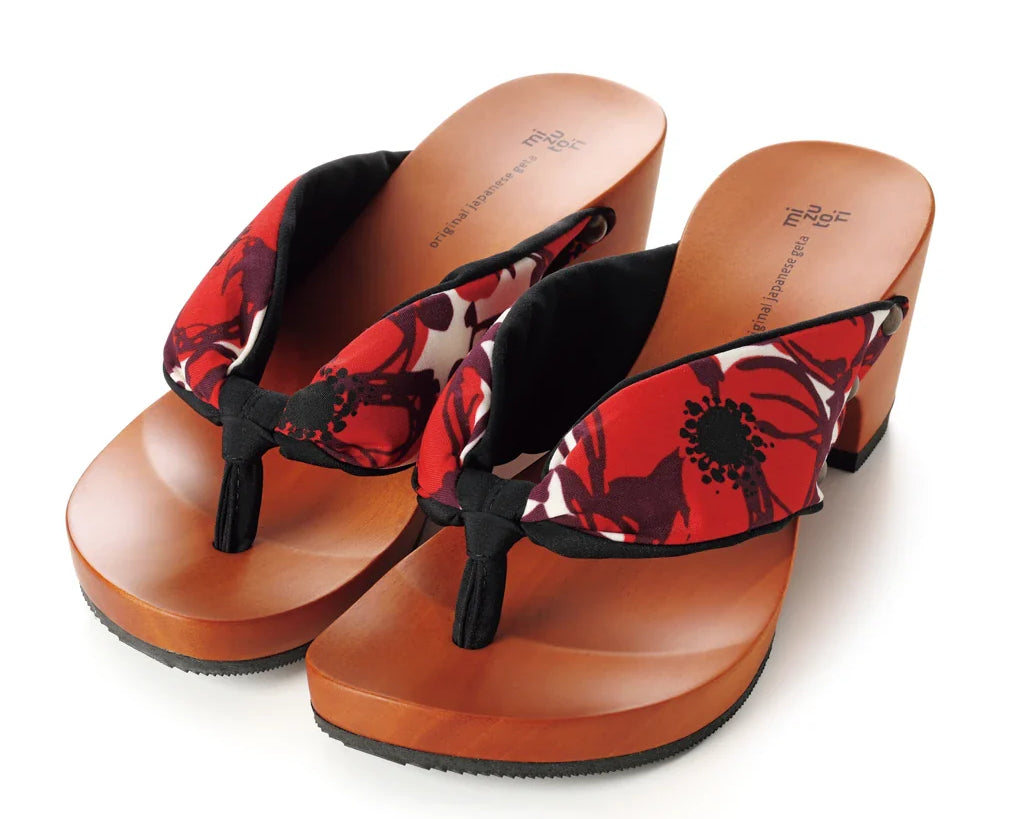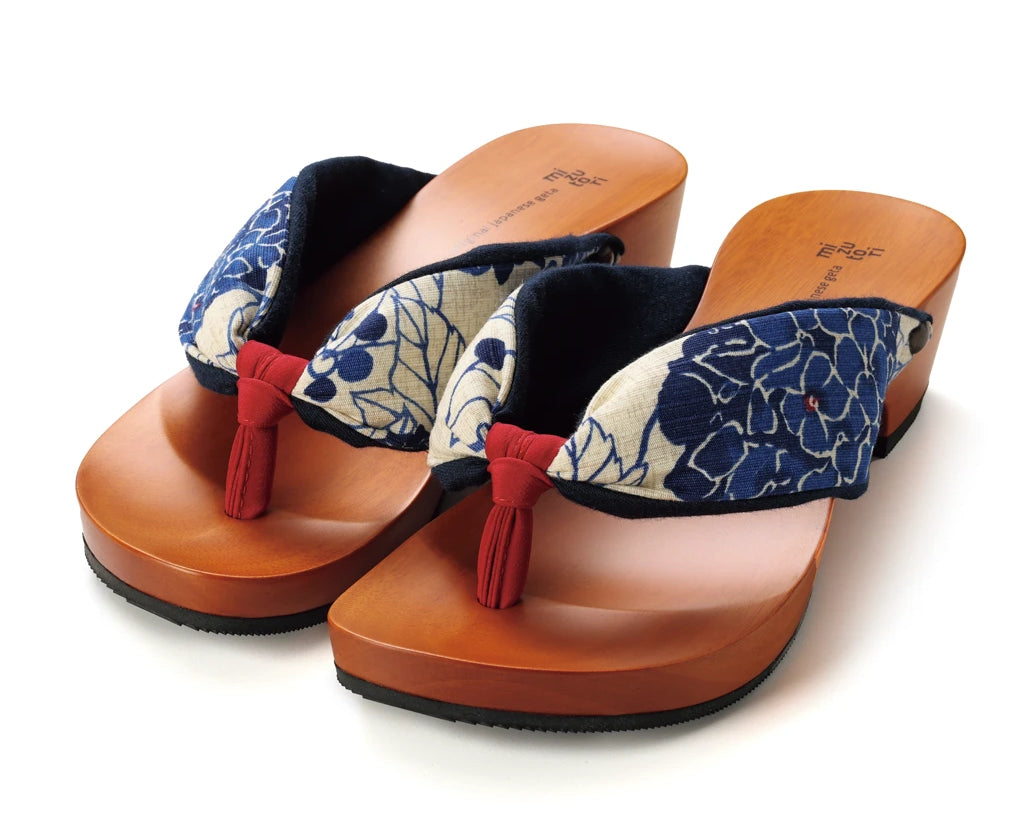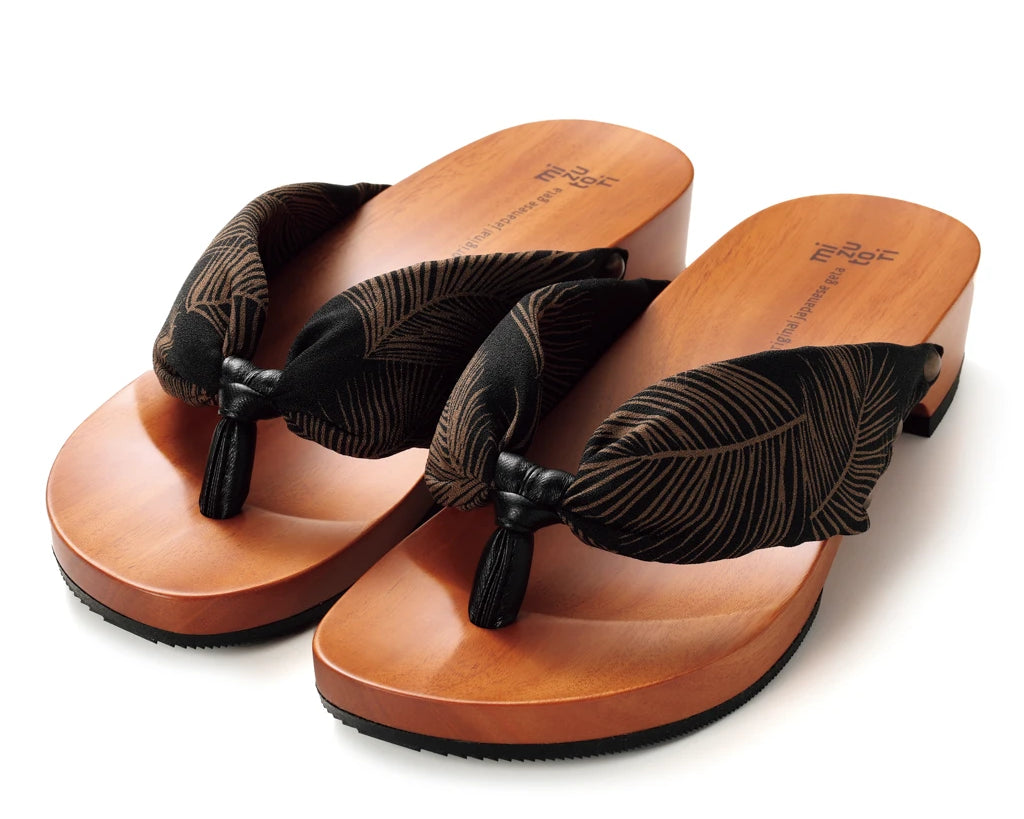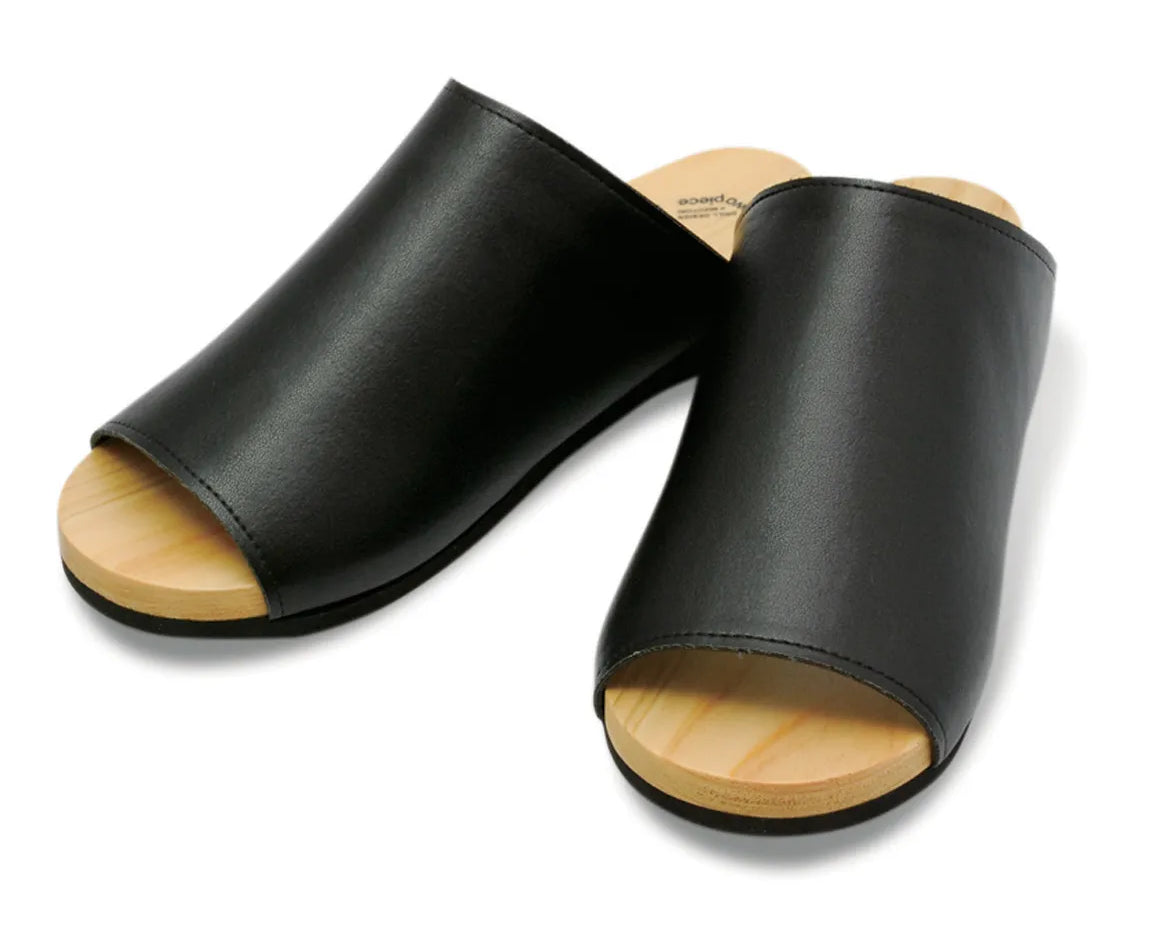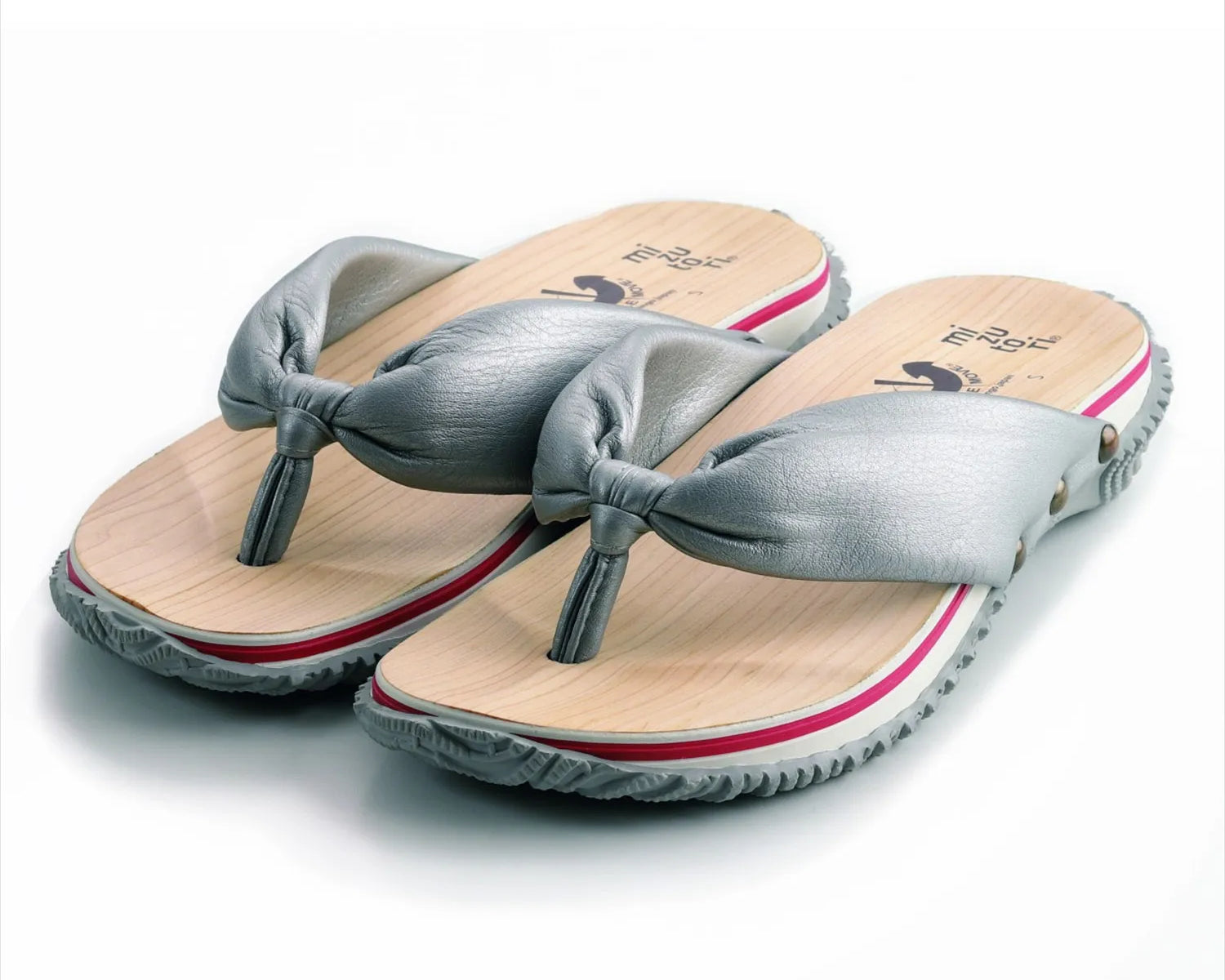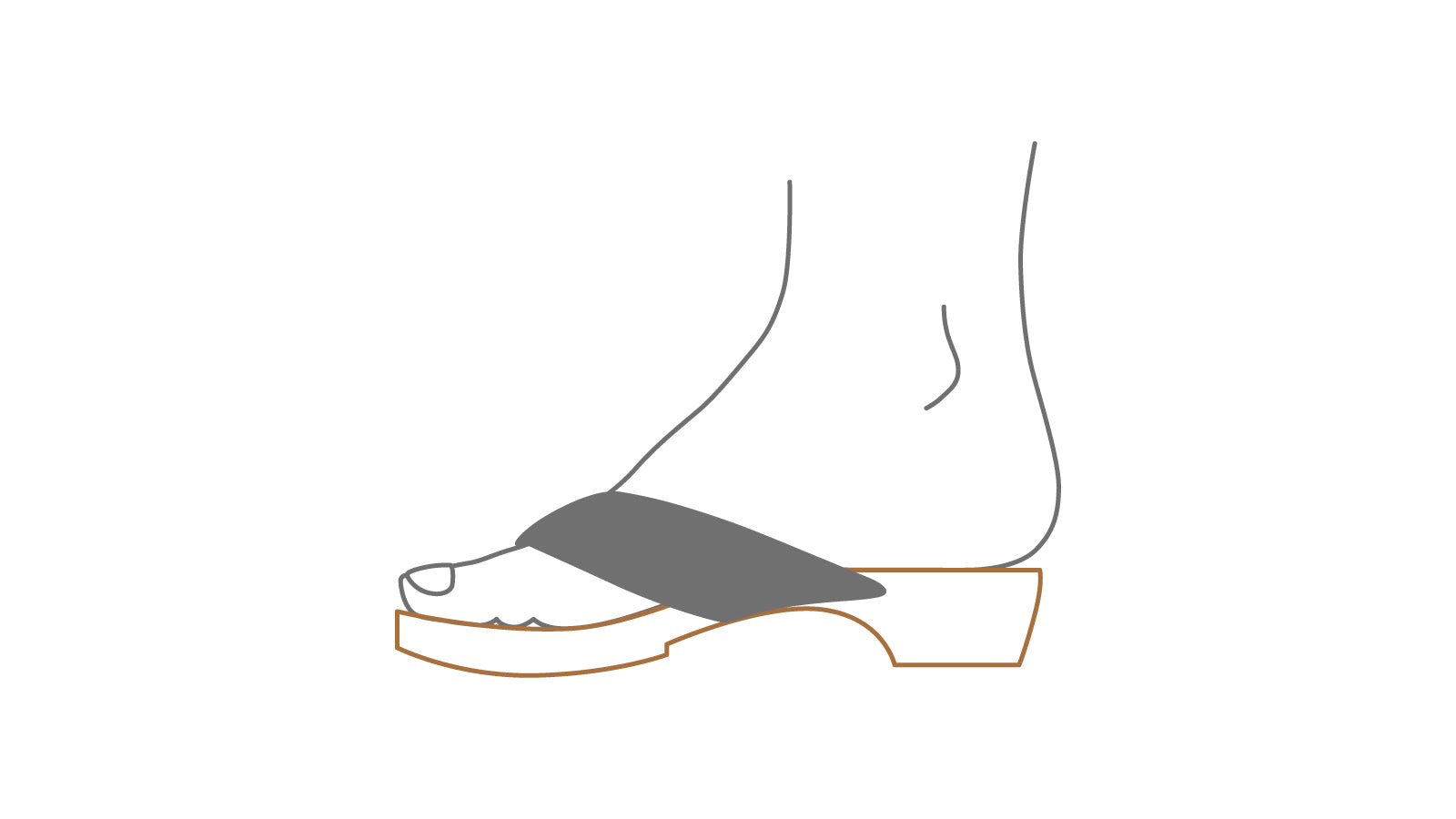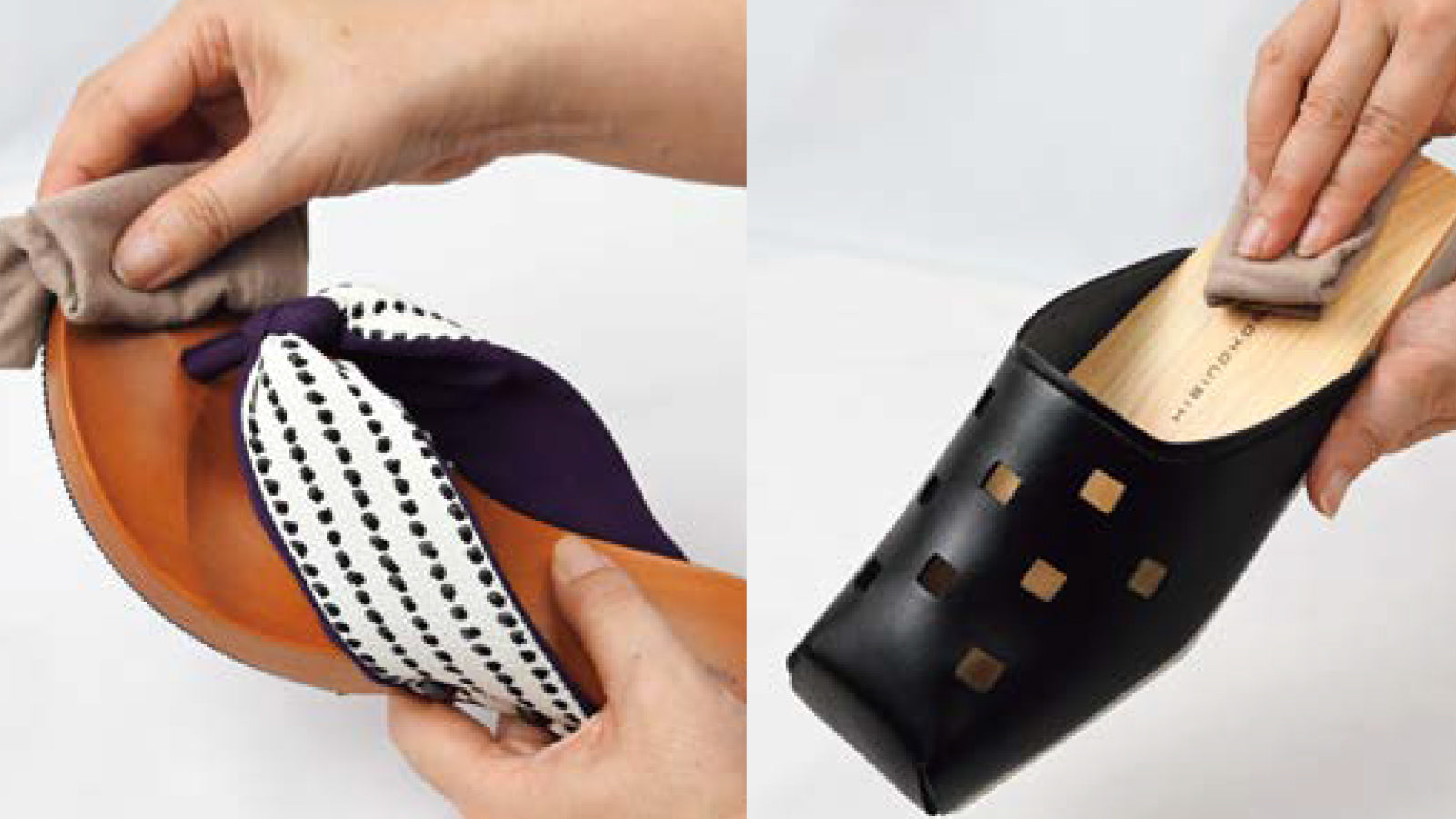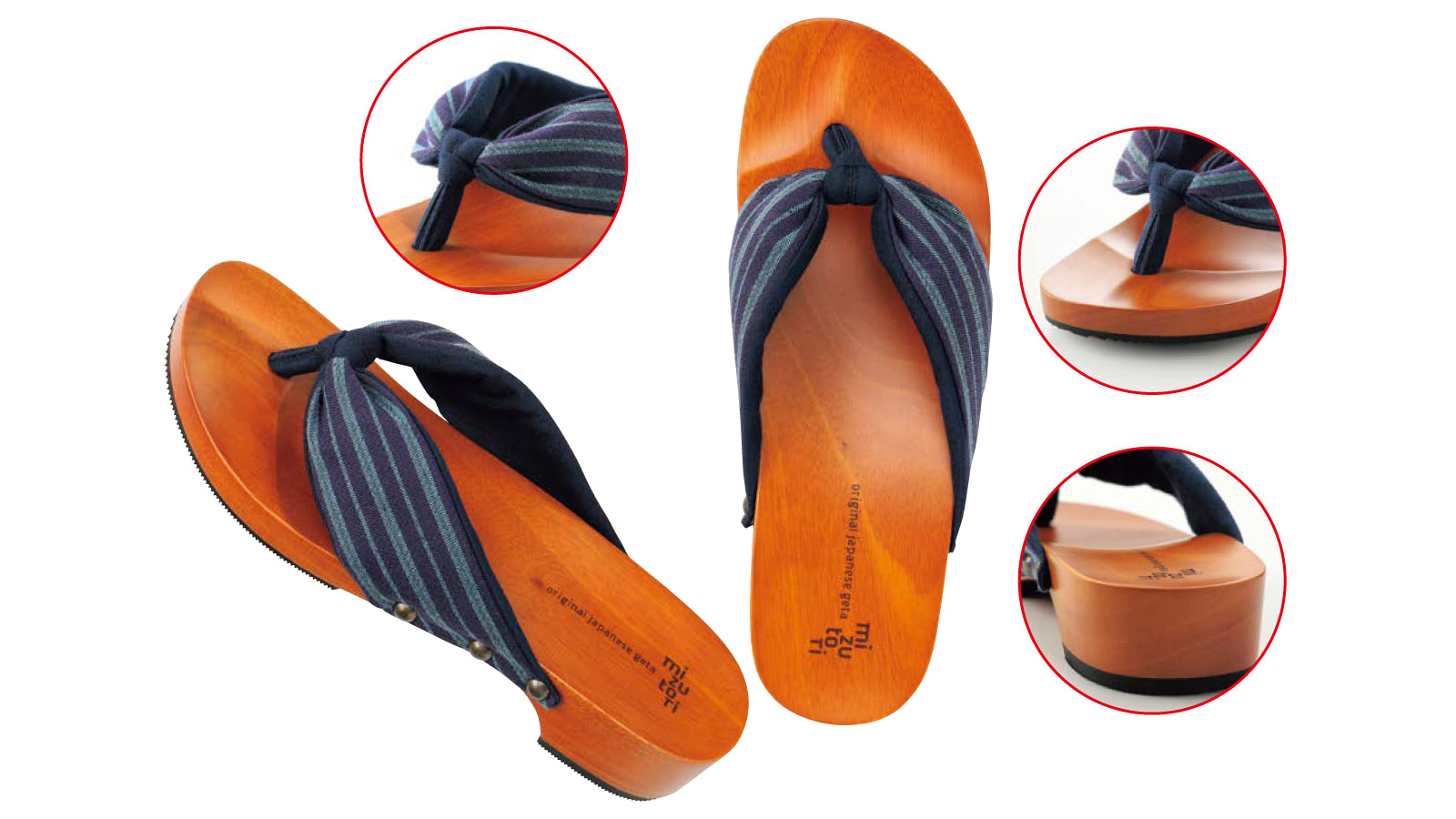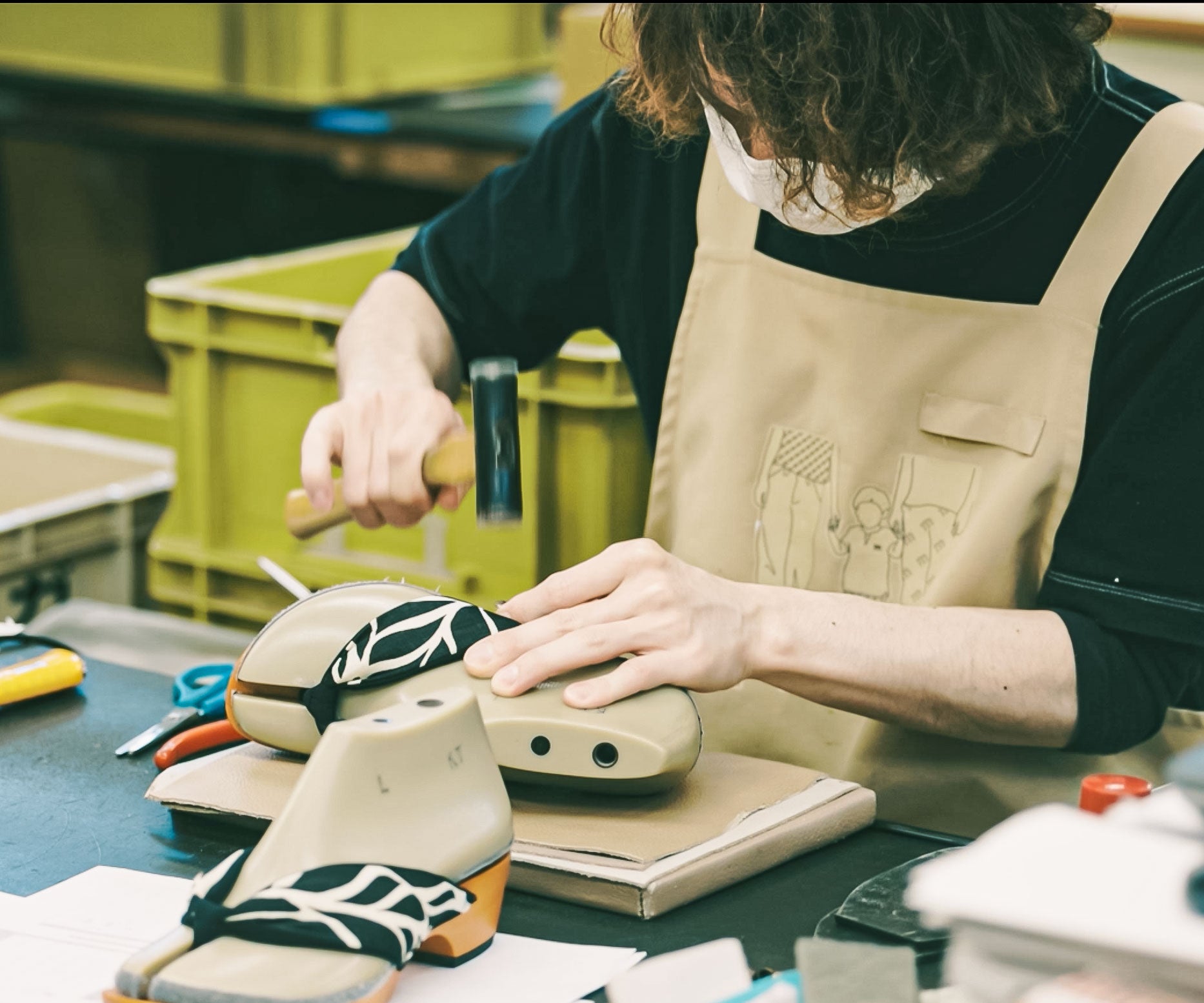
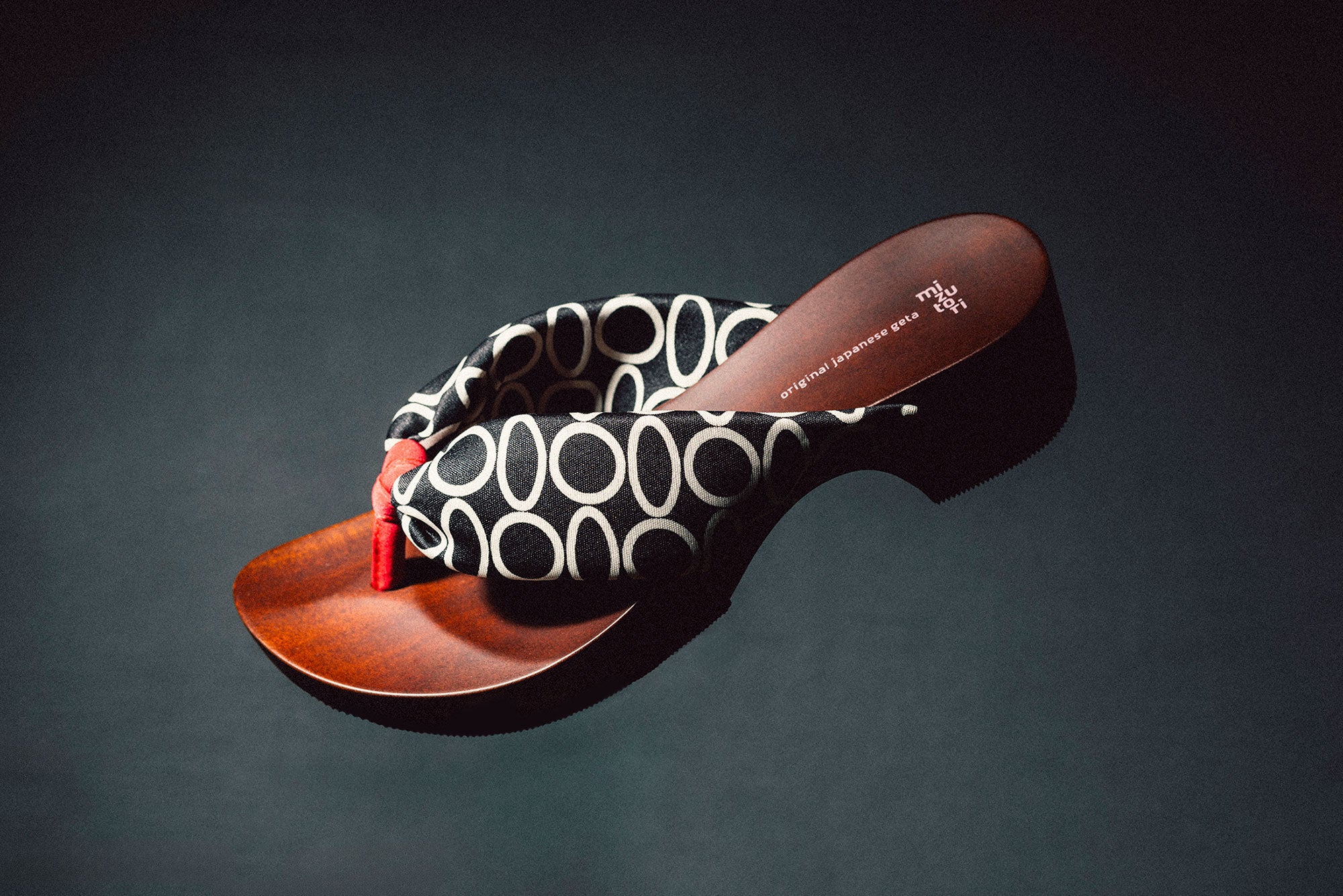

mizutori creates modern Japanese wooden sandals (geta) designed for comfort and everyday wear.
Episode 42
A Companion Called Geta
A pair of geta worn over many years
gradually becomes something that fits the foot perfectly—
almost like a trusted companion.
When a pair of geta returns to us for repair,
we can often tell immediately
how much time it has spent together with its owner.
The wooden surface of the footbed
has taken on a gentle sheen.
The sole has slowly worn down,
and small marks and scratches appear here and there.
We like to think
these are the traces
of the journeys those geta have taken.

Sometimes a customer will hand them to us and say,
a little shyly,
“They’ve become quite worn…”
But for us,
that is actually something that brings great happiness.
Because it means
that our geta have been worn and loved
for a long time.
And when someone says,
“I’d like to repair them and keep wearing them,”
we feel deeply grateful.
That is why
we always try our best
to honor those feelings.
No matter how much time it may take,
we work carefully
to restore the geta
so that they can be worn again.

Of course,
if the wooden base has worn down too much
and it is no longer safe to wear,
there are times when we must explain
that repair is no longer possible.
Parting with a pair of geta
that has been worn for many years
can feel a little sad.
Footwear that has grown familiar to your feet
truly becomes a kind of companion.
Yet at the same time,
it can also be the moment
when you meet a new companion.
Many people,
as they say goodbye to one pair,
choose another pair
with which to begin walking again.
Because geta are handmade
from natural materials,
a new pair will never feel exactly the same
as the companion that came before.
And yet,
as you continue to wear them,
they gradually begin to fit your feet.
Before long,
they too become a new companion,
walking with you
through the days ahead.

mizutori’s geta
are made to be worn for many years,
with repairs along the way.
However,
there is one important thing
when it comes to repair.
Timing.
By caring for them
before the damage becomes too great,
geta can last much longer.
One way to notice
when it might be time to replace the rubber soles
is simply to listen to the sound of your footsteps.
When the rubber becomes thin
or begins to peel away,
the wood underneath begins to touch the ground,
and the sound changes.
If one day you find yourself thinking,
“Something sounds a little different today,”
take a moment
to check the soles of your geta.
Some of our customers also rotate
two or three pairs of geta,
wearing them in turn.
By doing so,
the wear is not concentrated on a single pair,
allowing each pair to last longer.
A well-worn pair of geta
returning after repair.
Even the time spent waiting for them
can become part of the quiet pleasure
of living with geta.

And a new pair, too,
gradually begins to fit your feet
as you walk together through new days.
Perhaps wooden geta are footwear
that grow into companions over time—
something that walks beside you
through the long journey of life.