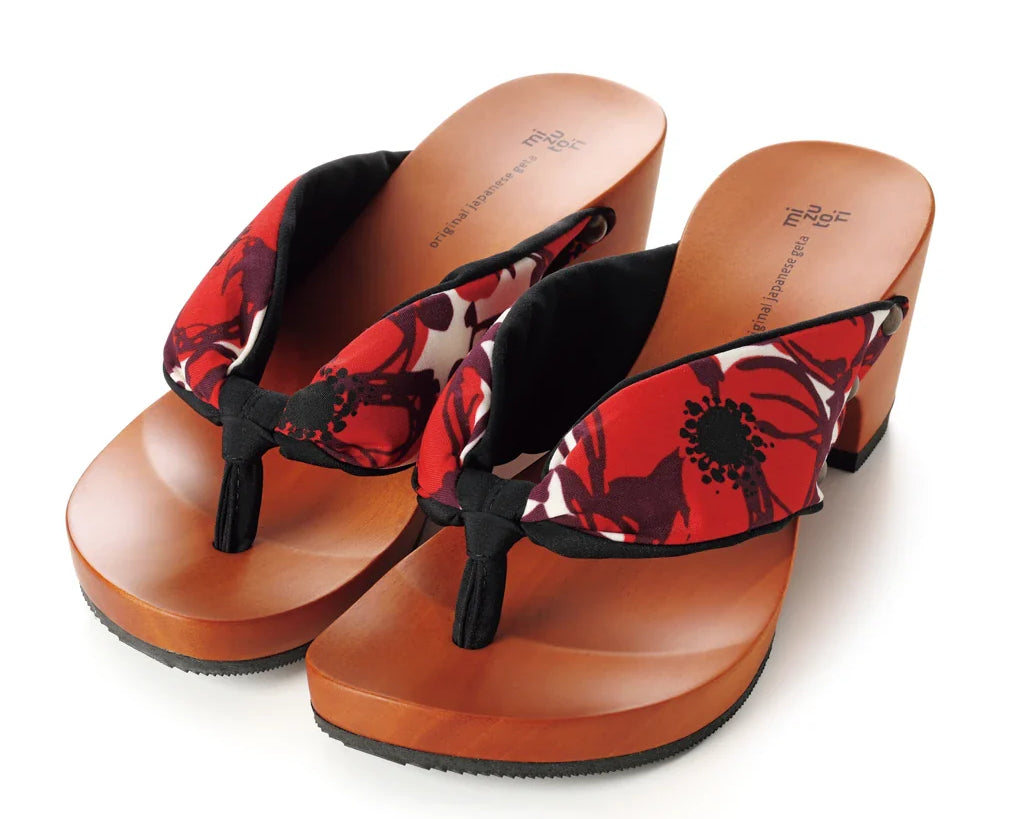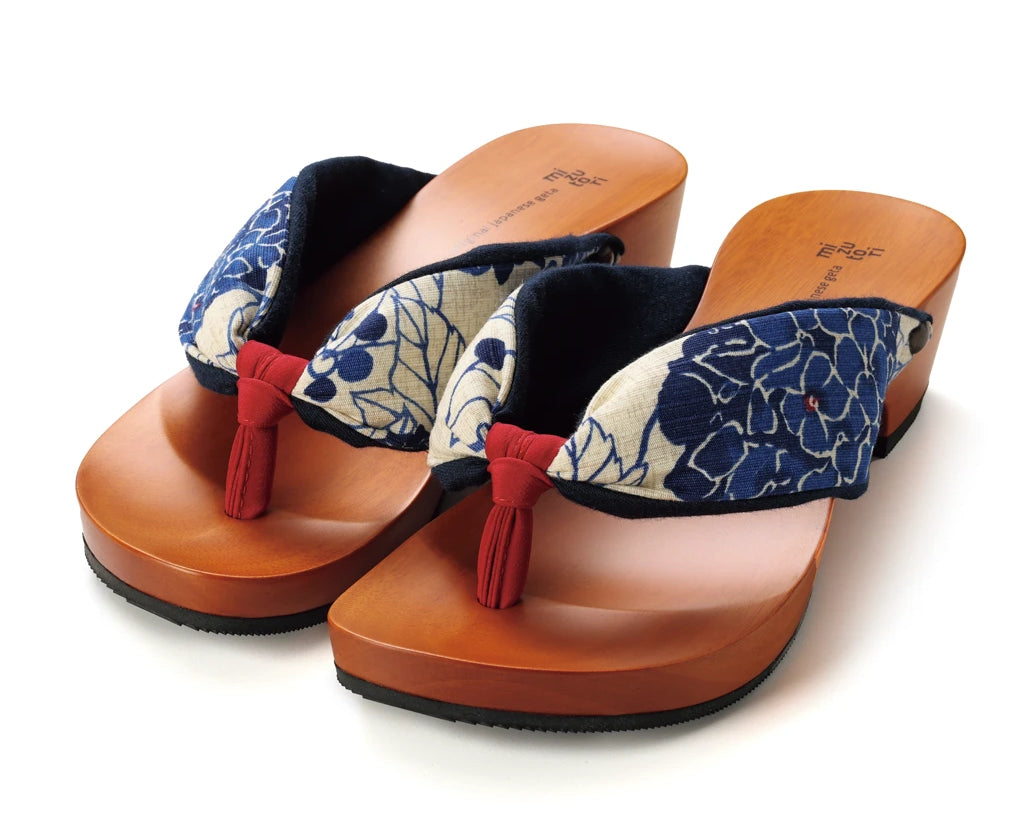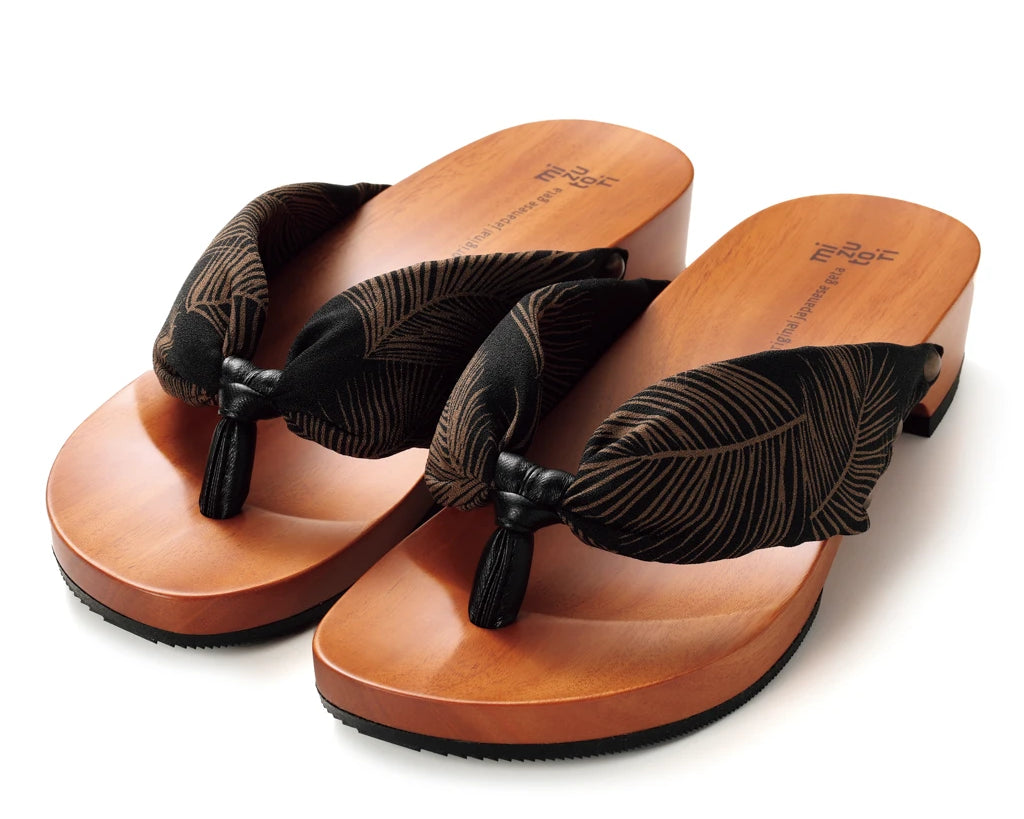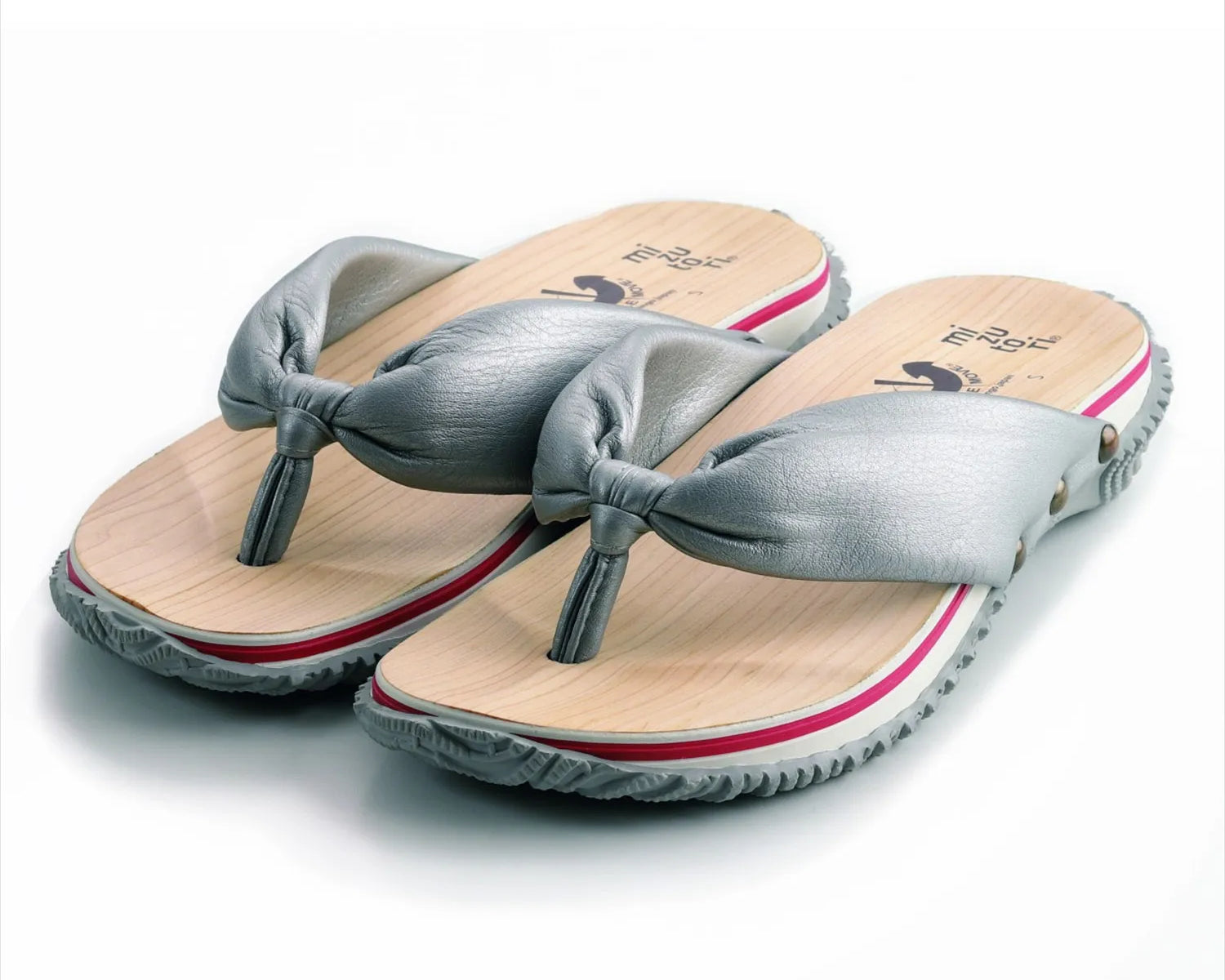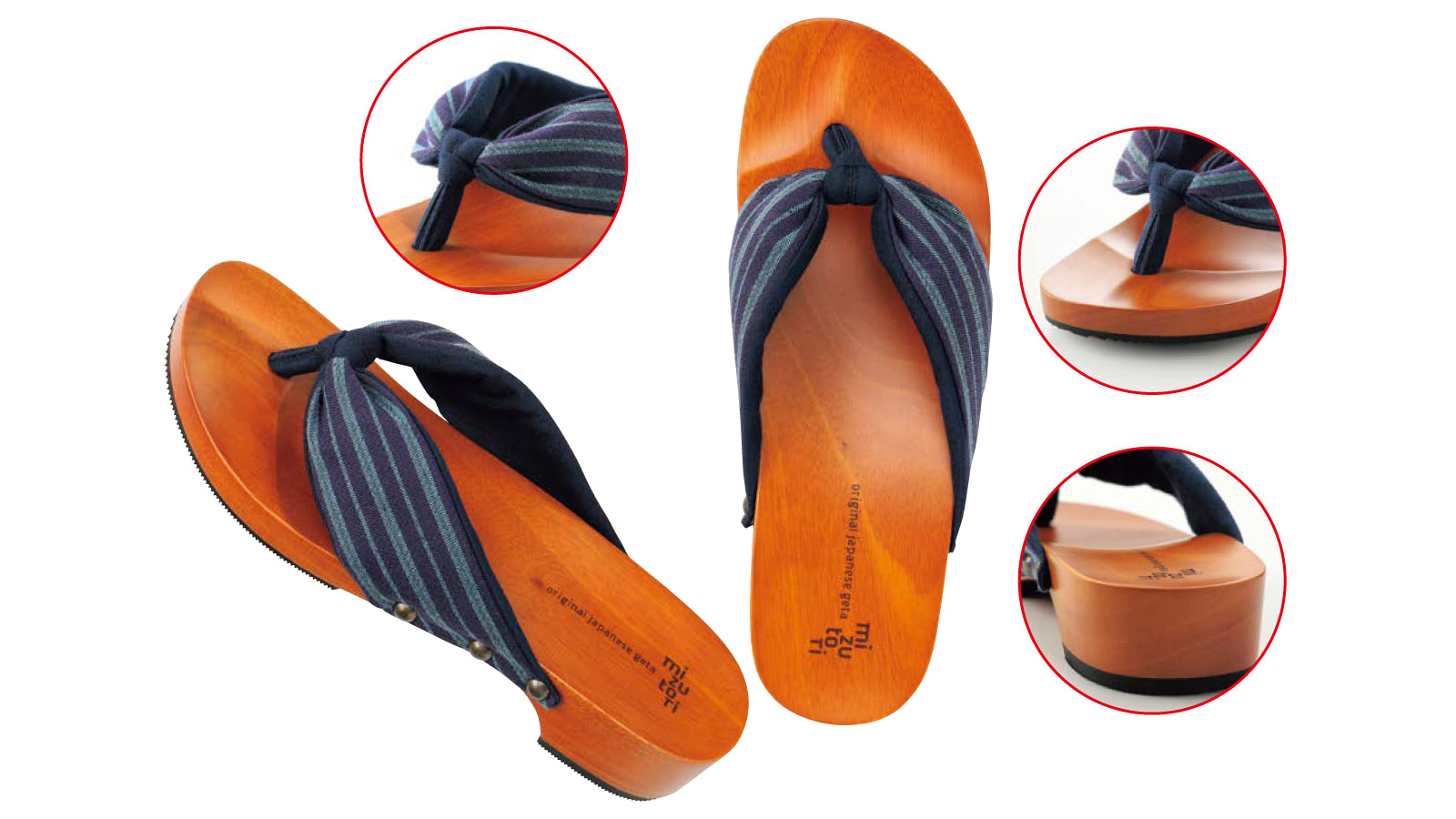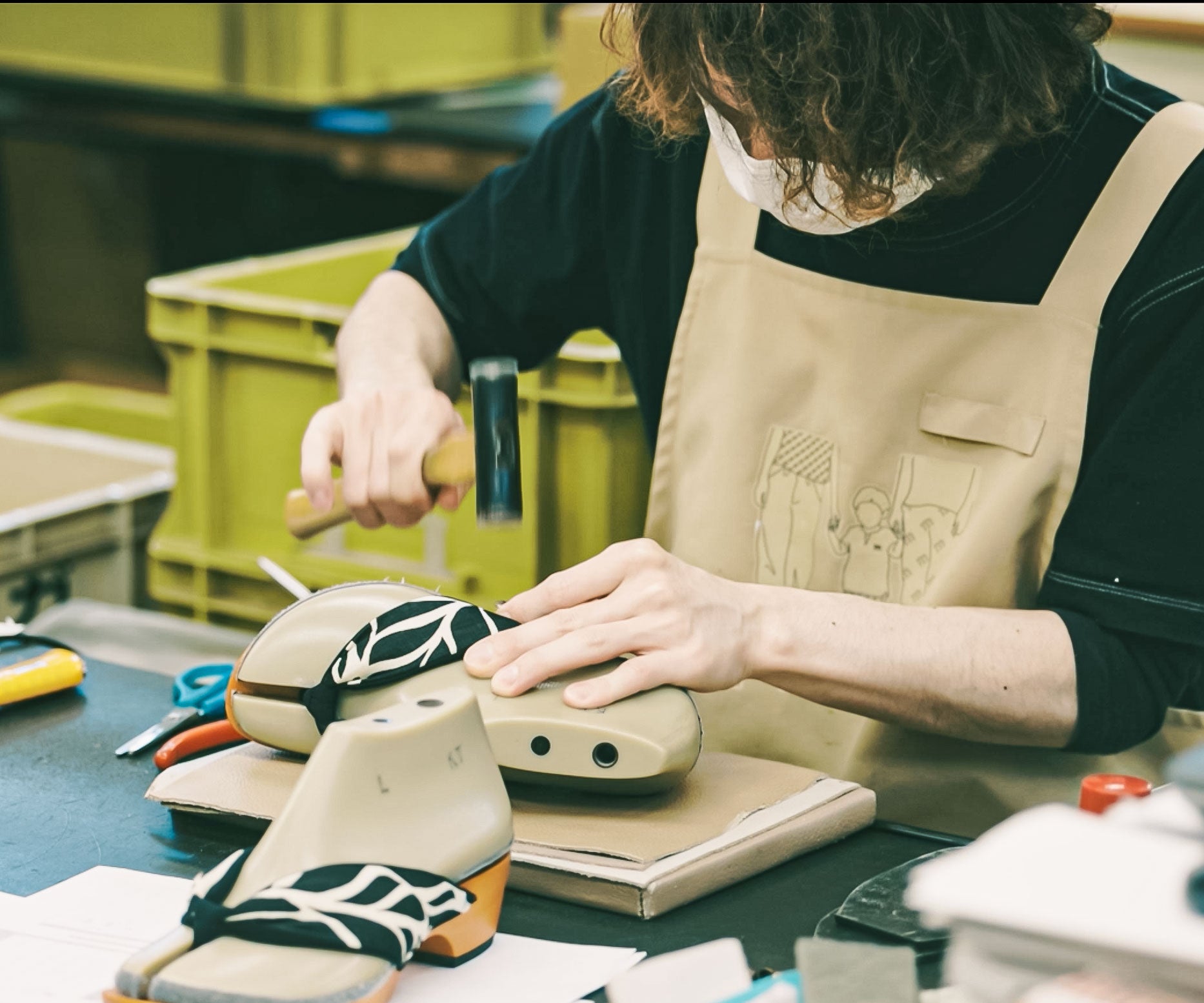
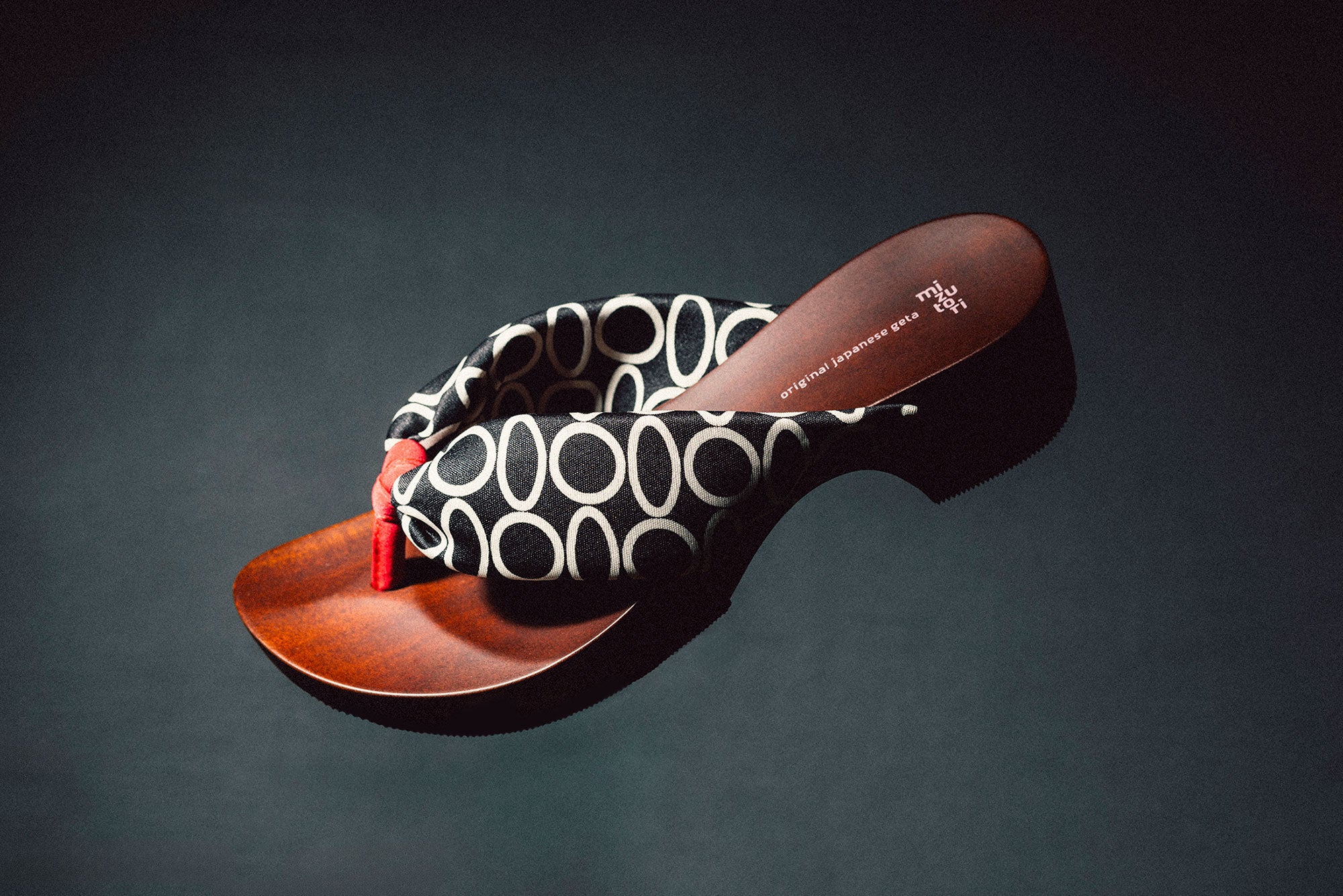

mizutori creates modern Japanese wooden sandals (geta) designed for comfort and everyday wear.
Episode 41
Creating Scenes Where Geta Belong
The feet resting on a veranda.
The feet of people shopping along a neighborhood street.
At every doorway, a pair of geta waiting by the entrance.
Not so long ago in Japan,
such scenes were simply part of everyday life.
When watching old dramas and films,
not only historical period pieces,
but also stories set as recently as the mid-Showa era,
people can often be seen wearing geta.
Geta were not special footwear.
They were simply something close to daily life.
The sound of “karon-koron” —
that light wooden rhythm
as geta strike the road.
There was a time
when such sounds of everyday living
felt much closer to us than they do today.
And somehow, that world carries
a quiet sense of longing.
Of course,
we cannot resist the flow of time.
Today we live in an age
where almost anything can be obtained,
where saving time is often considered a virtue,
and where even human work
is increasingly carried out by AI.
Information is easily available to anyone,
and the world has certainly become more convenient.
Yet from time to time,
we find ourselves feeling that something is missing —
that daily life has grown
a little distant
from the sounds and warmth of human living.
Sadly,
geta have now become
a somewhat uncommon sight.

When standing in our shop,
we are often asked,
“When do people actually wear geta?”
Among Japanese footwear,
geta are no longer something worn casually every day.
They are often regarded instead
as something a little special.
Of course,
this may not be true for everyone.
But there are probably many people
who do not own a pair of geta at all,
or who have never even thought
about wearing them.
Still,
if the feet of people walking along streets and alleys
were to lose the presence of geta entirely,
something in the landscape of Japan
might begin to feel
a little incomplete.

Even if a world without geta
would cause no real inconvenience,
it would feel lonely.
And perhaps
we are not the only ones
who feel that way.
Scenes where people wear geta
may hold for many Japanese
a quiet sense of reassurance —
as if returning
to something close to our beginnings.
Young people who have never known the nostalgia of geta,
or visitors from overseas
who come from entirely different cultures,
may simply enjoy wearing them
as a part of fashion.
That too is perfectly welcome.
Geta have existed in Japan
for more than two thousand years.
To carry this footwear
into the future.
To ensure that geta
do not disappear from the landscape of Japan.
This, perhaps,
is one of the reasons
why we continue making them.

And if, from now on,
in the small moments of everyday life,
the sight of people wearing geta
were to gradually increase again —
not simply as nostalgia,
but as something carried forward
within the present.
If we could create such scenes
together with all of you,
nothing would make us happier.