
Should Your Heels Hang Off the Back of Geta? Traditional Japanese Footwear and Modern Sizing
"You should wear geta with your heels slightly hanging off the back."
Have you ever heard this advice?
With ordinary sandals, if your heels extend beyond the back, you would probably assume they are too small. Yet with traditional Japanese footwear such as geta and zori sandals, wearing them with the heels slightly extending beyond the sole has long been recommended.
There are reasons behind this traditional practice, related not only to appearance but also to the practicalities of walking in a kimono.
Why Are Geta and Zori Traditionally Worn with the Heels Exposed?
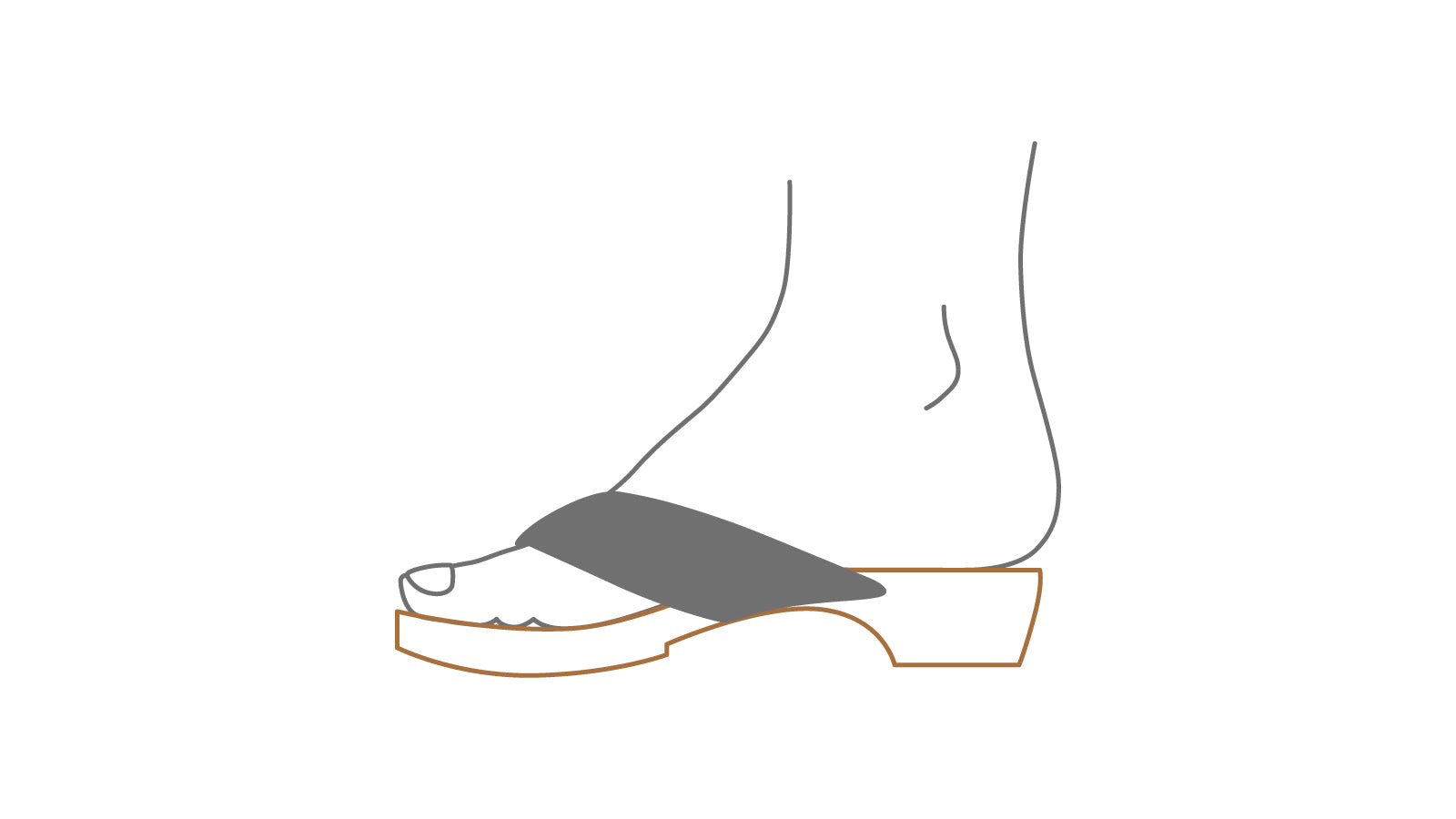
For traditional zori sandals, it is still commonly recommended to wear them with the heels extending approximately 1–2 cm beyond the back of the sole.
One reason relates to the hem of a kimono.
When walking in a kimono, footwear that extends too far behind the heel can catch the hem of the garment, potentially causing the wearer to step on it or become entangled in the fabric.
By allowing the heels to extend slightly beyond the back of the sandals, the rear edge of the sole sits a little forward of the heel. This is thought to help prevent the kimono hem from catching on the footwear.
The practice also reflects a traditional Japanese aesthetic that values a neat, elegant appearance around the feet.
Although it is unclear exactly when this style of wearing footwear became widespread, it can be seen as one of the practical customs passed down through generations of everyday life in kimono.

Does Letting Your Heels Hang Off Improve Balance?
Some explanations suggest that allowing the heels to extend slightly beyond the sole changes the position of the body's center of gravity and the way the feet move, potentially making walking feel easier.
However, this does not mean that exposing the heels necessarily improves stability.
The distribution of body weight depends on several factors, including foot shape, the position of the sandal straps, and the length and height of the wooden sole.
If the heels extend too far beyond the back, the edge of the sole may press uncomfortably against the underside of the feet, potentially causing additional strain.
What matters most is not simply how many centimeters the heels extend beyond the sole, but whether you can stand comfortably and walk naturally.
Should You Wear Modern Geta with Your Heels Hanging Off?
An important point to understand is that the appropriate way to choose a size depends on the design and structure of the footwear.
Traditional geta and zori with flat footbeds are still often worn with the heels extending slightly beyond the back. Depending on their construction and how they are worn with a kimono, this may allow for more comfortable movement.
Modern geta, however, are not all designed in the same way.
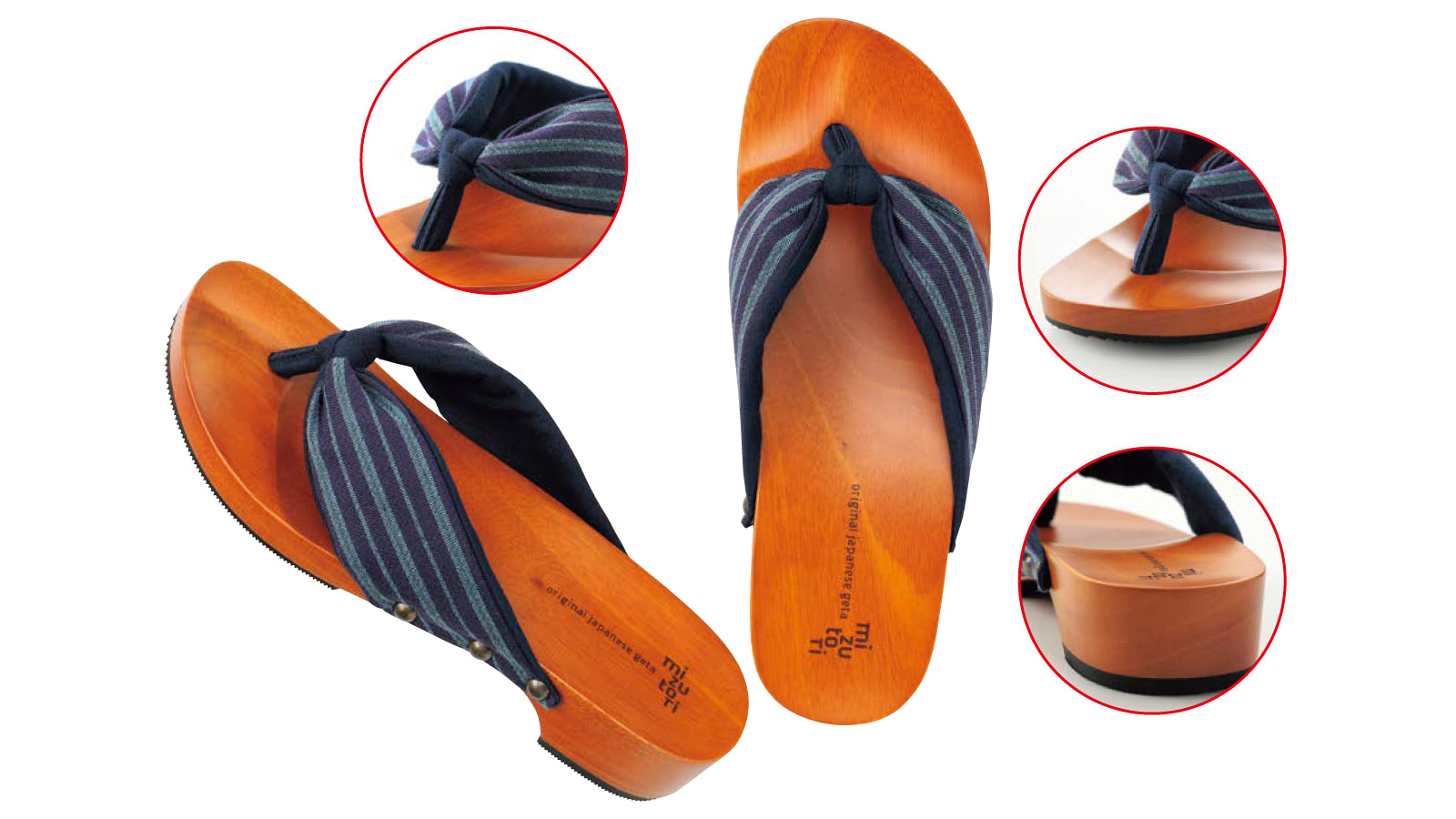
Some feature curved or contoured wooden footbeds that follow the natural shape of the feet.
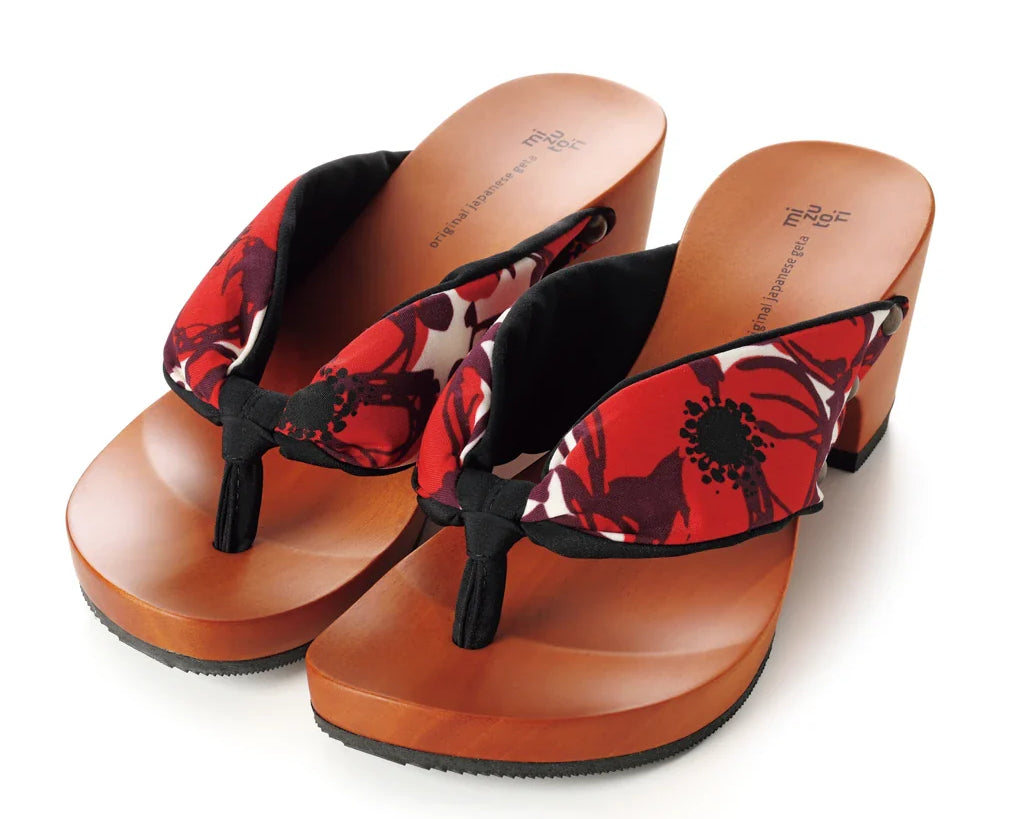
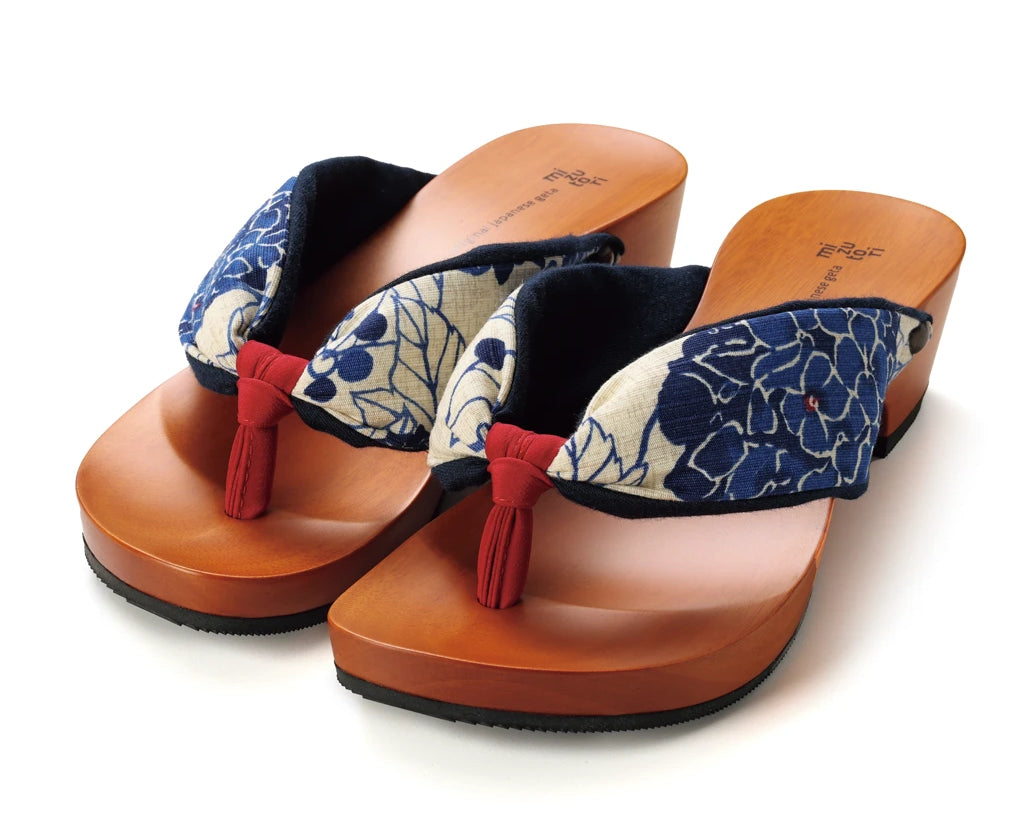
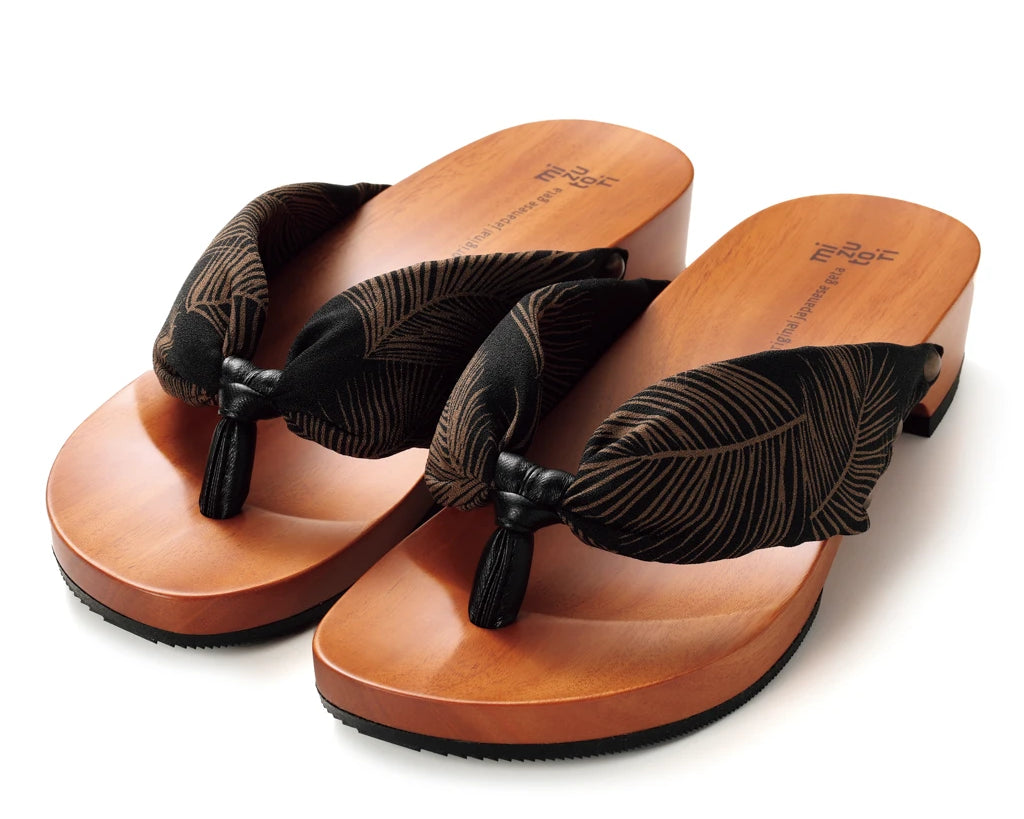
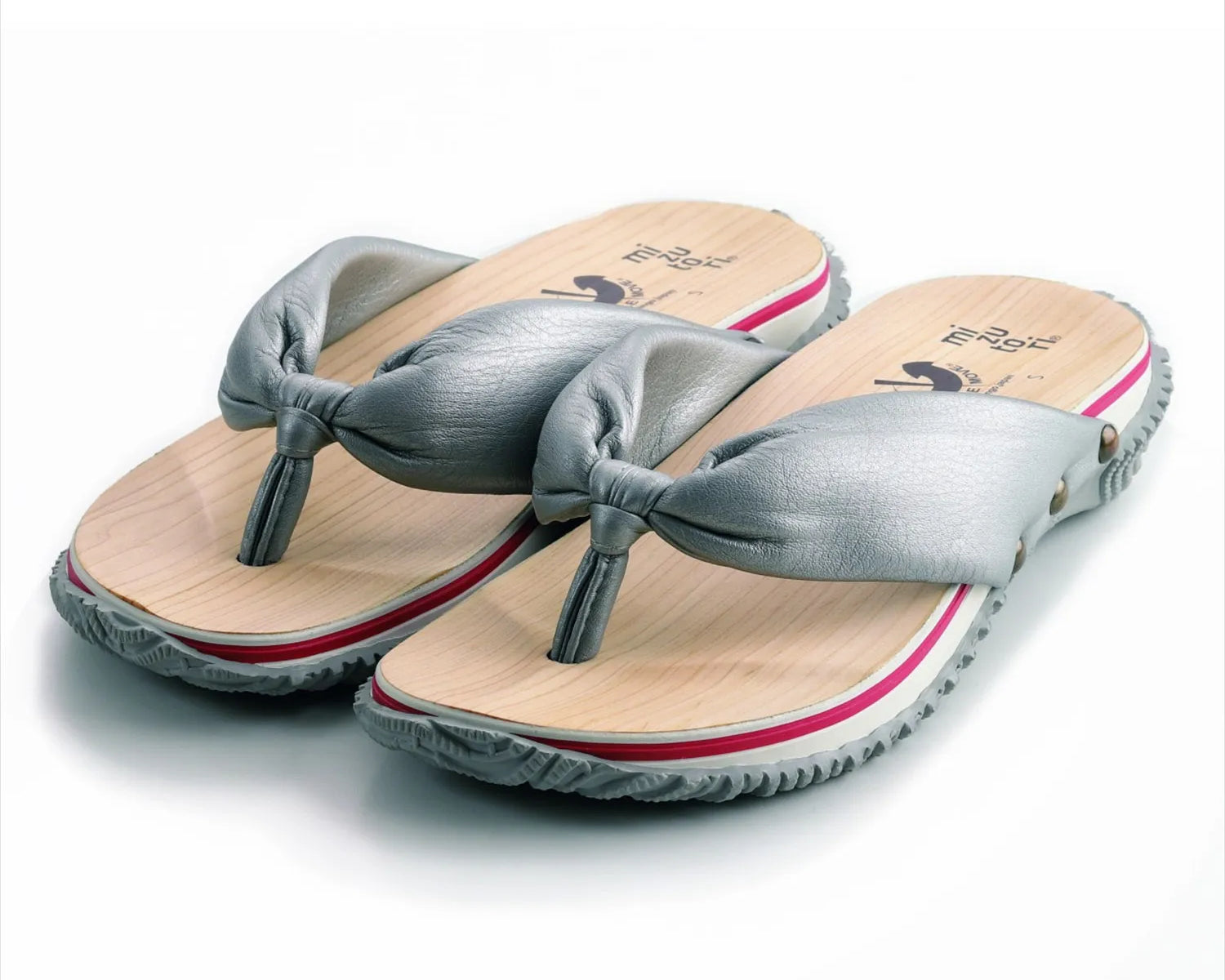
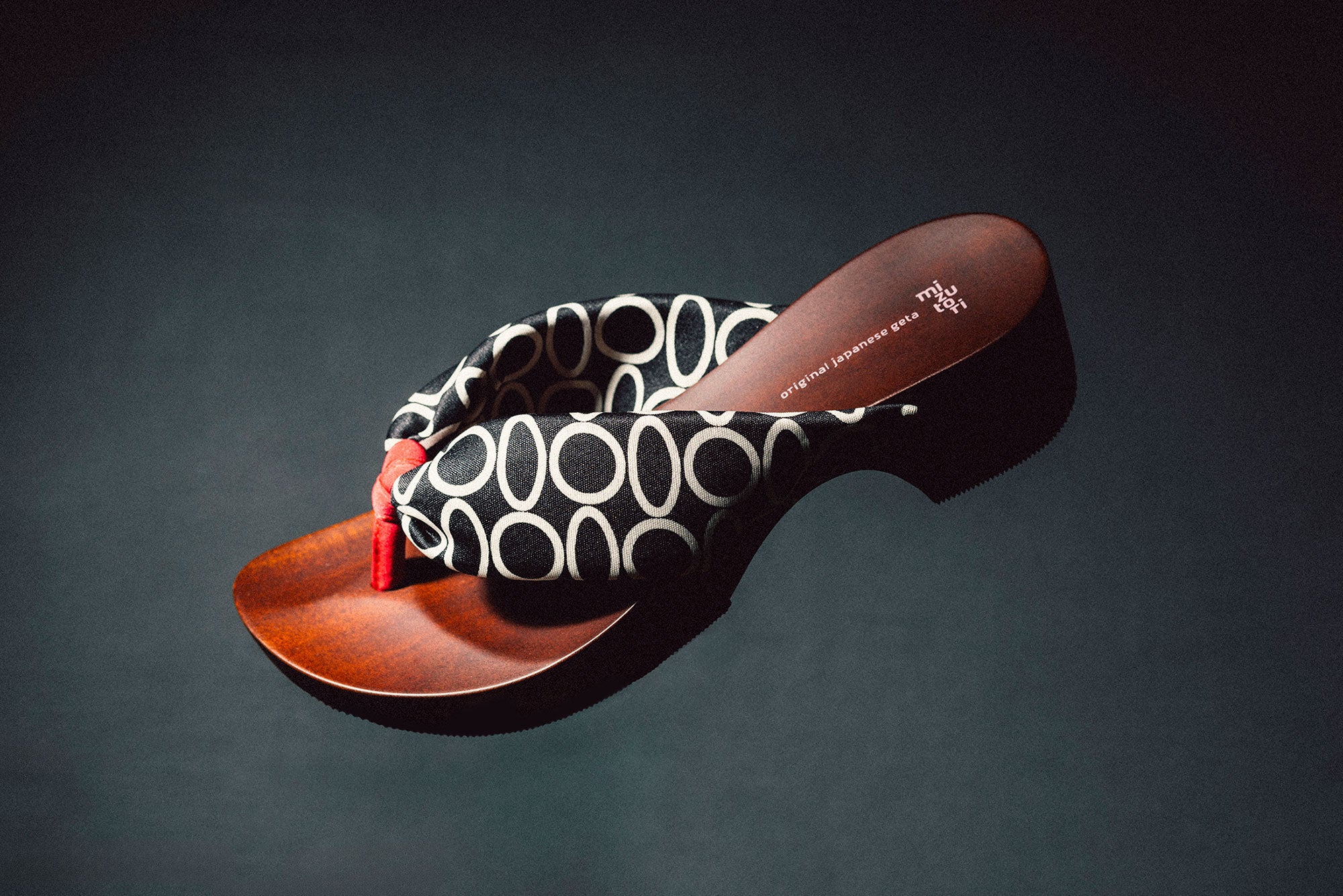
For example, mizutori geta are crafted with three-dimensionally carved wooden footbeds designed to follow the contours of the soles of the feet. For this reason, we recommend choosing a size that closely matches your actual foot length.
With a few exceptions, mizutori geta are available in 1 cm size increments. This allows wearers to find a size in which the curves of the wooden footbed align more naturally with the shape of their feet.
If you choose a smaller size based on traditional sizing advice, the contours of your feet may not align properly with the carved wooden footbed. As a result, you may not experience the comfort that the geta were designed to provide.

Conclusion: Respecting Tradition While Choosing the Right Fit Today
The traditional idea that geta should be worn with the heels slightly extending beyond the back is rooted in practical considerations for walking in a kimono, as well as an appreciation for the elegant appearance of Japanese footwear.
However, this does not mean that the same approach is suitable for every type of modern geta.
Traditional geta and zori have ways of being worn that suit their particular designs. Likewise, modern geta have their own recommended fitting methods that make the most of their construction.
By respecting traditional wisdom while considering the shape of the footwear and the individual characteristics of your feet, you can find a fit that feels comfortable and natural.
Perhaps this is the best approach to choosing geta in modern everyday life.