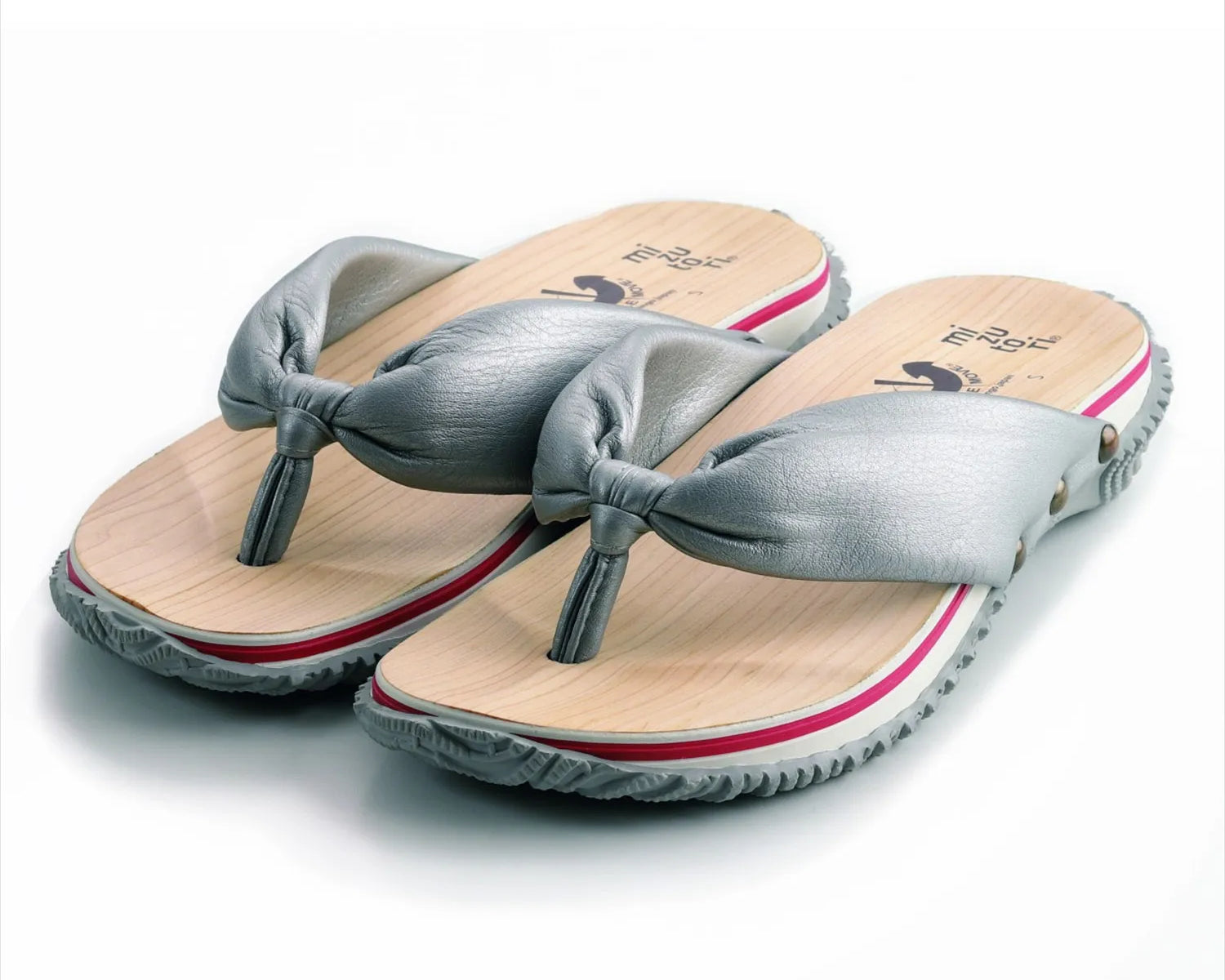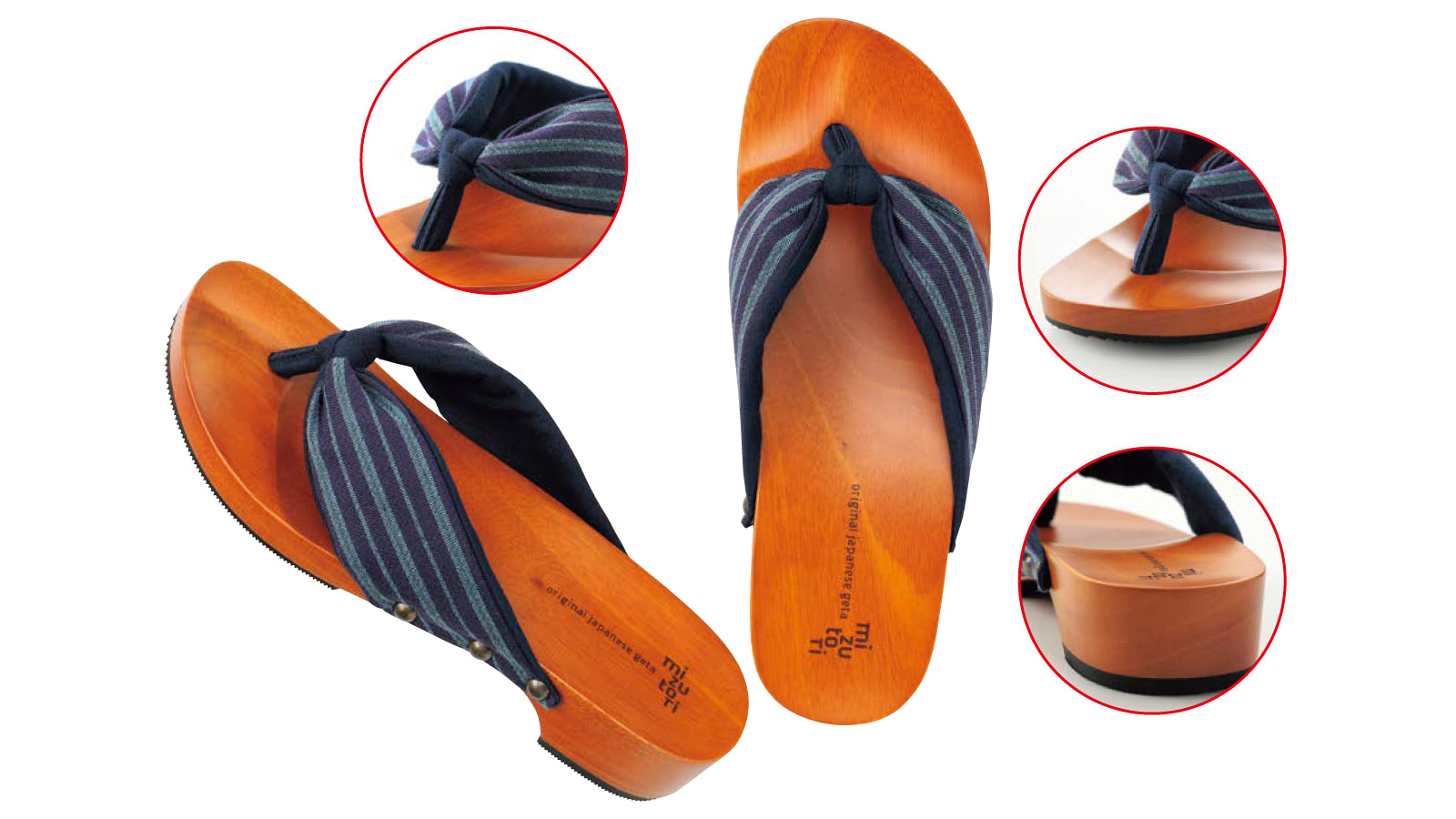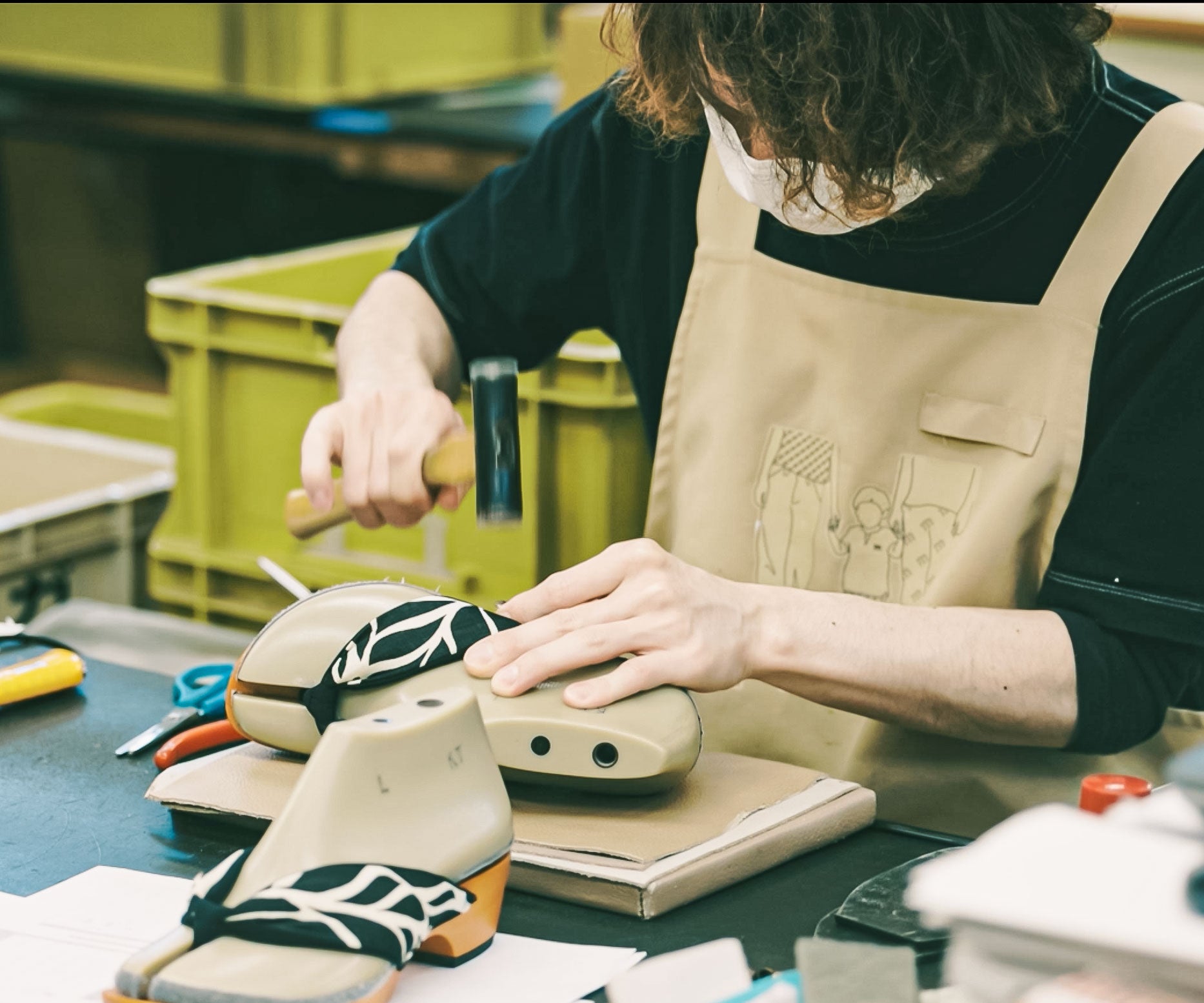
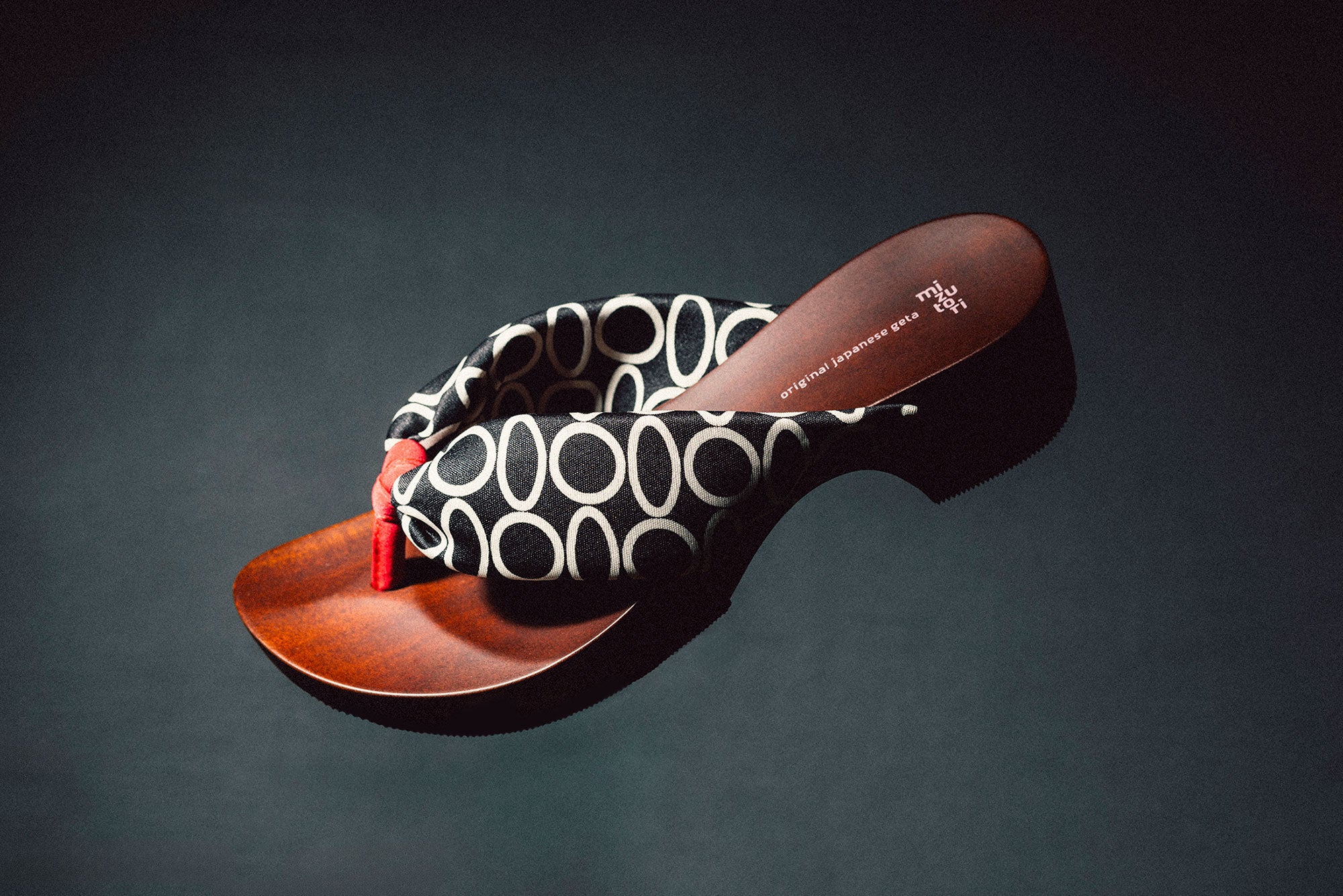

Geta are traditional Japanese wooden footwear that have been worn for centuries.
Originally created as practical footwear to keep the feet and clothing above mud and wet ground, geta gradually evolved beyond their functional role. Over time, decorative elements, craftsmanship, and personal expression became part of their appeal.
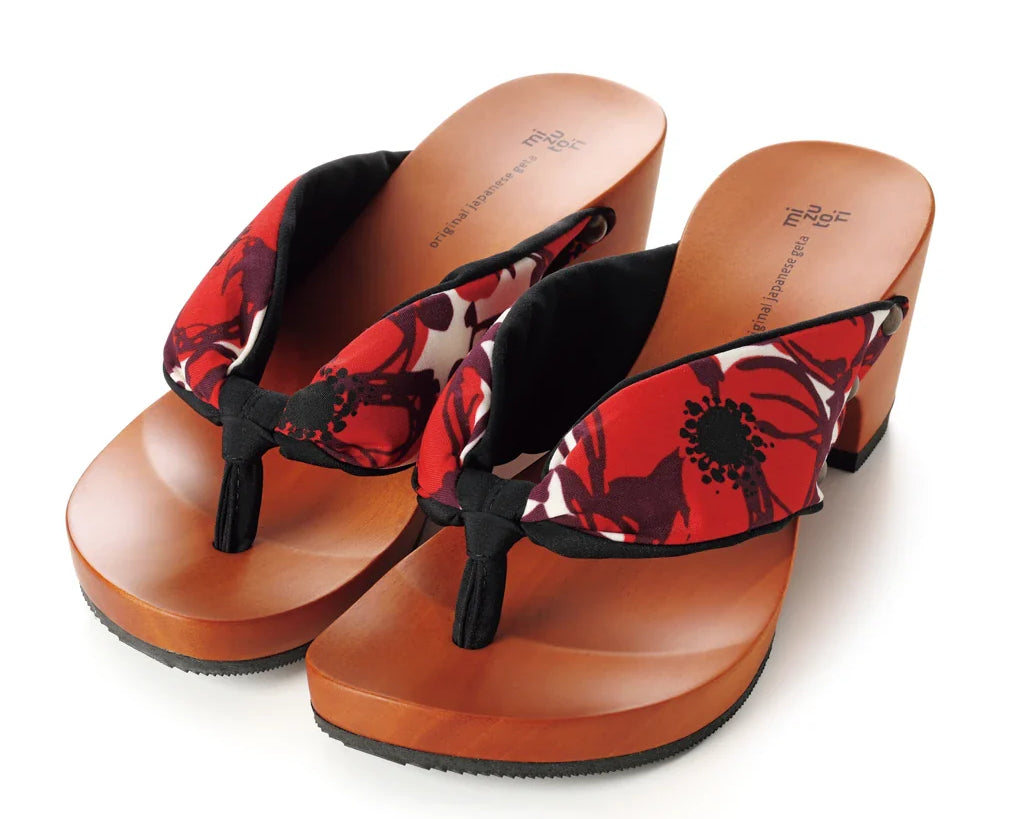
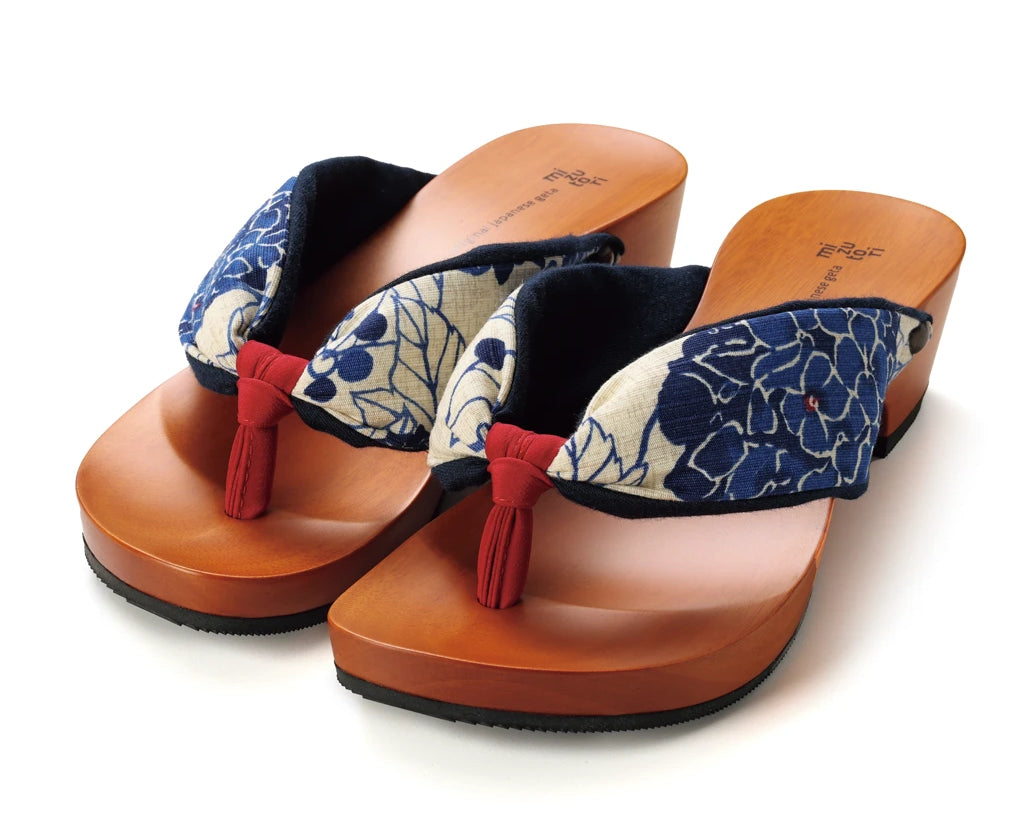
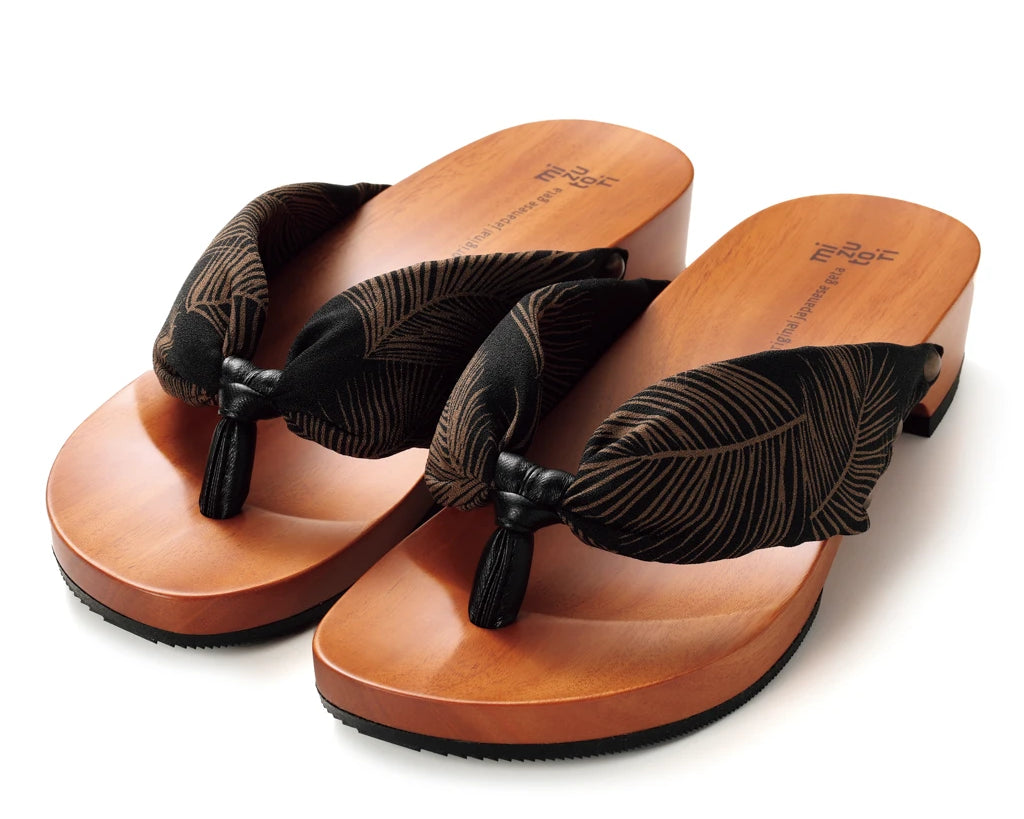
The term "Design Geta" is sometimes used to describe geta that place particular emphasis on aesthetics, including color, materials, patterns, and form, in addition to their traditional function.
Although it is not a formally defined category, the term is often used to describe modern geta that combine traditional craftsmanship with contemporary design.
Characteristics of Design Geta
Design geta are valued not only as footwear but also as fashion items.
Their distinctive appearance may be expressed through the shape of the wooden base, decorative finishes, colorful straps, unique patterns, or combinations of different materials.
Today, many designs are created to complement both traditional Japanese clothing and modern everyday fashion.
As a result, geta are increasingly worn not only for cultural occasions but also as part of personal style.
The History of Decorative Geta
The idea of decorating geta is not a modern invention.
During the Edo period (1603–1868), artisans produced various styles of decorated geta, including lacquered finishes and designs incorporating decorative coverings and embellishments.
At the time, urban culture placed great value on refined taste, individuality, and subtle expressions of style. These values were reflected not only in clothing but also in everyday items, including footwear.
As a result, geta came to be appreciated not only as practical objects but also as a way to express personal aesthetics.
Modern design geta can therefore be viewed as a continuation of a long tradition of combining function and beauty in Japanese footwear.

Design Geta in Modern Life
Today, designers and craftspeople continue to reinterpret geta for contemporary lifestyles.
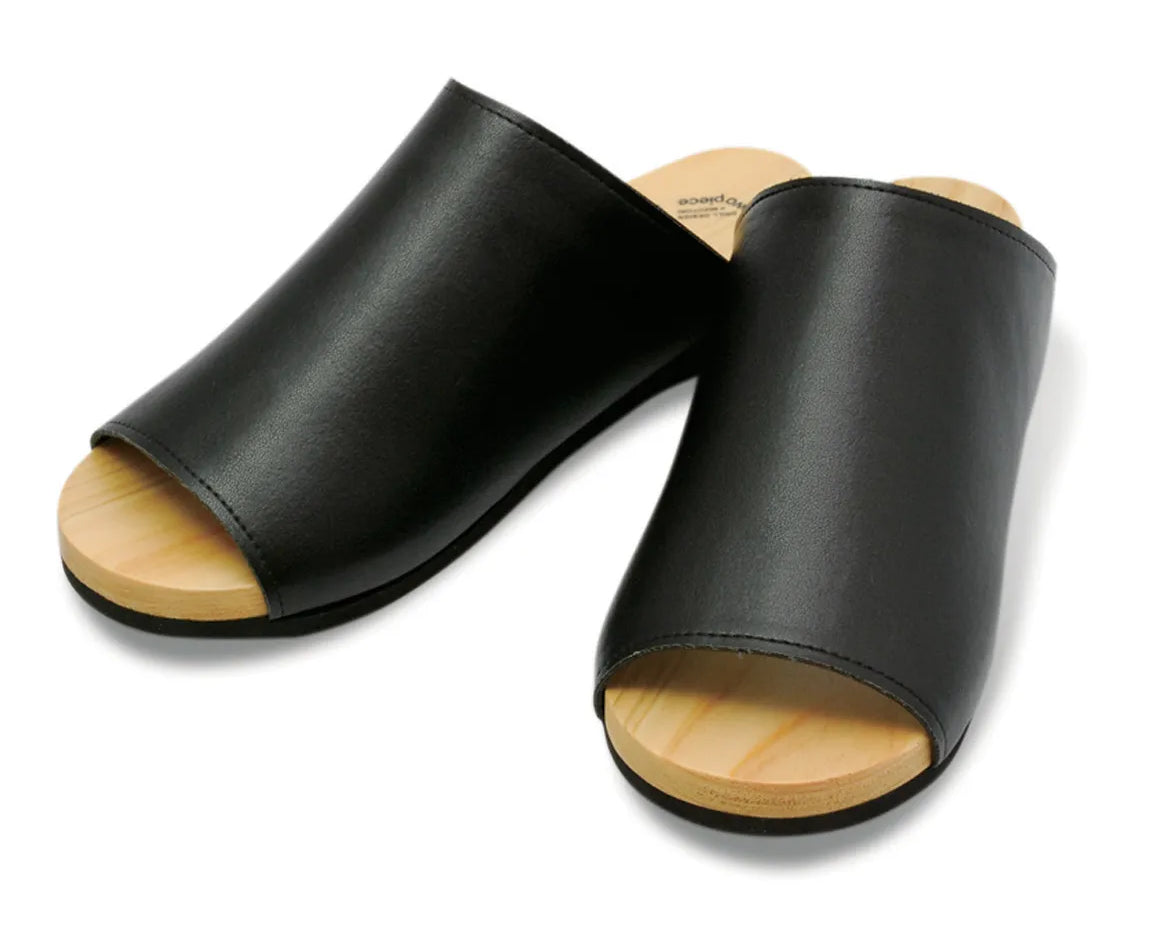
Some designs emphasize simplicity and minimalism, while others explore bold colors, modern materials, or innovative forms.
Many contemporary geta are intended to fit naturally into everyday life, allowing people to enjoy traditional Japanese craftsmanship in a modern context.
As interest in traditional crafts and sustainable products continues to grow, design-oriented geta have attracted attention both in Japan and internationally.
Why Design Geta Are Appreciated
Design geta represent more than a fashion trend.
They reflect a long-standing Japanese appreciation for craftsmanship, materials, and thoughtful design.
By combining traditional techniques with contemporary aesthetics, design geta offer a way to experience Japanese culture through an object that is both functional and expressive.

Summary
Design geta is a term sometimes used to describe geta that emphasize aesthetics as well as function.
While not a formally defined category, design geta are characterized by their attention to color, materials, patterns, and form.
Rooted in a long tradition of decorative footwear, modern design geta continue to blend Japanese craftsmanship with contemporary design, offering a unique balance of practicality, culture, and personal style.