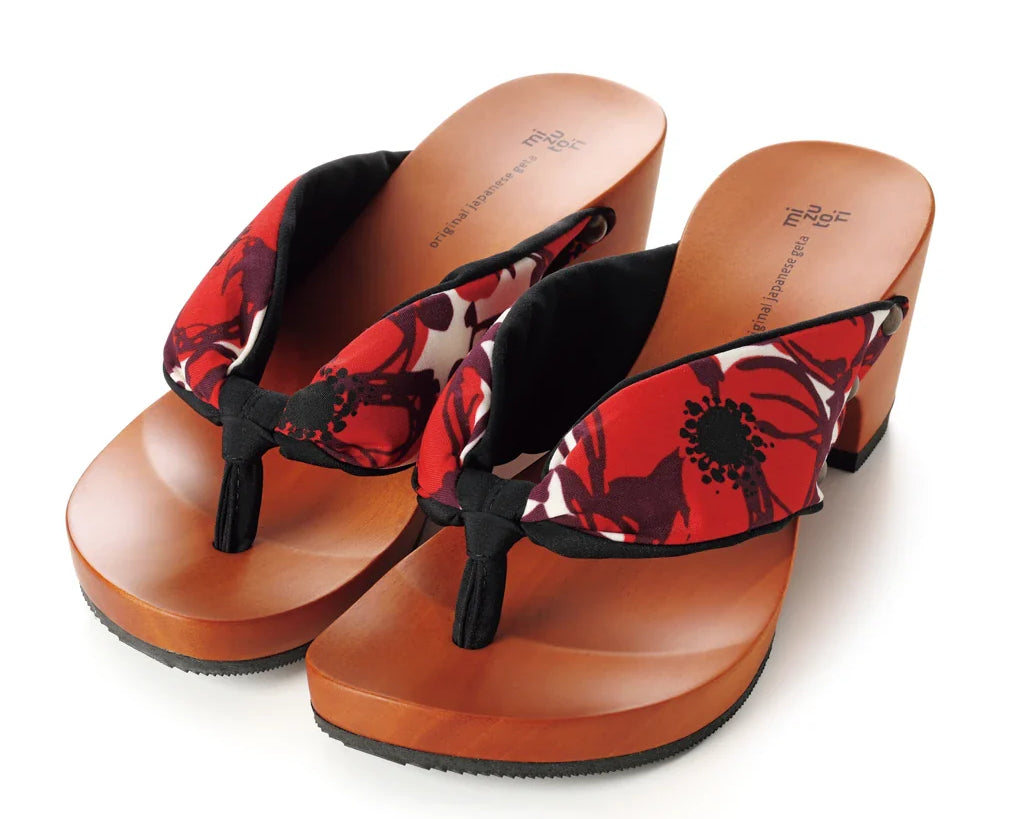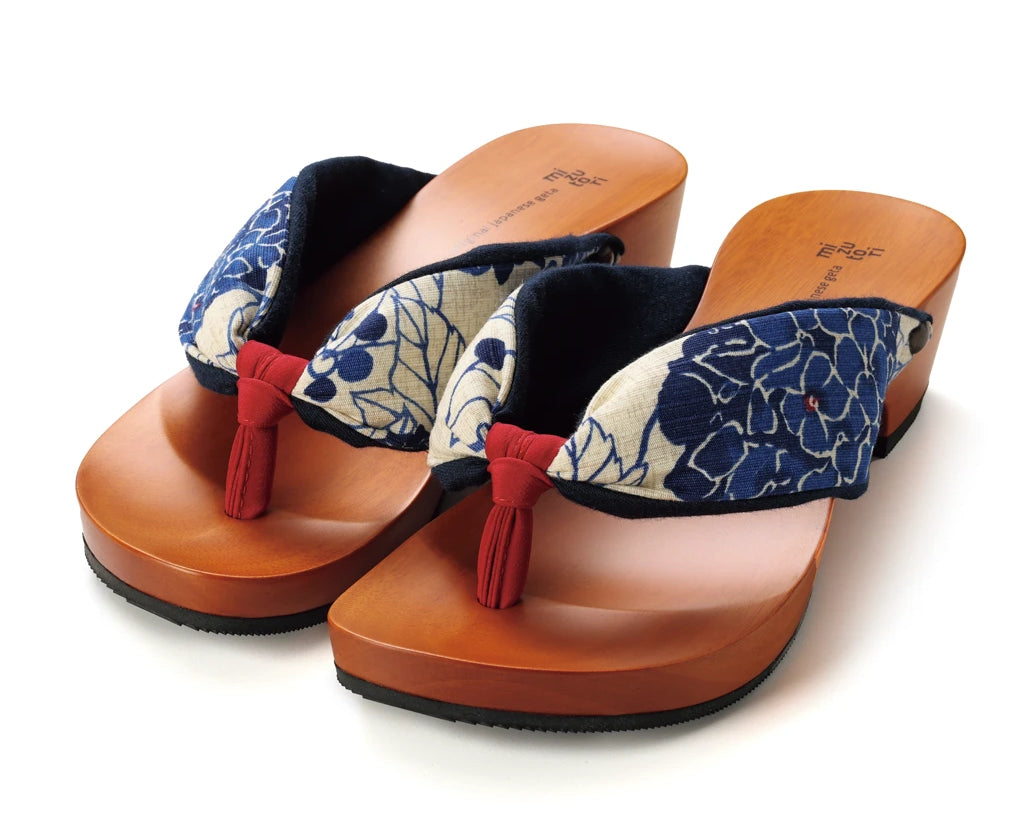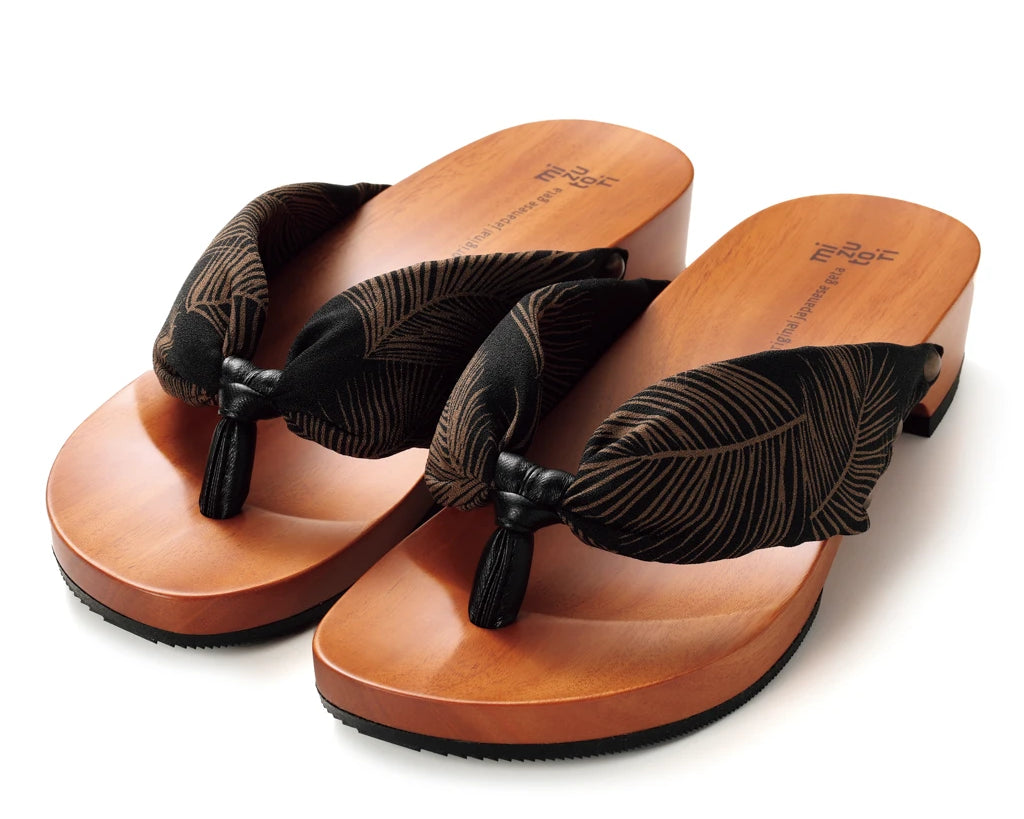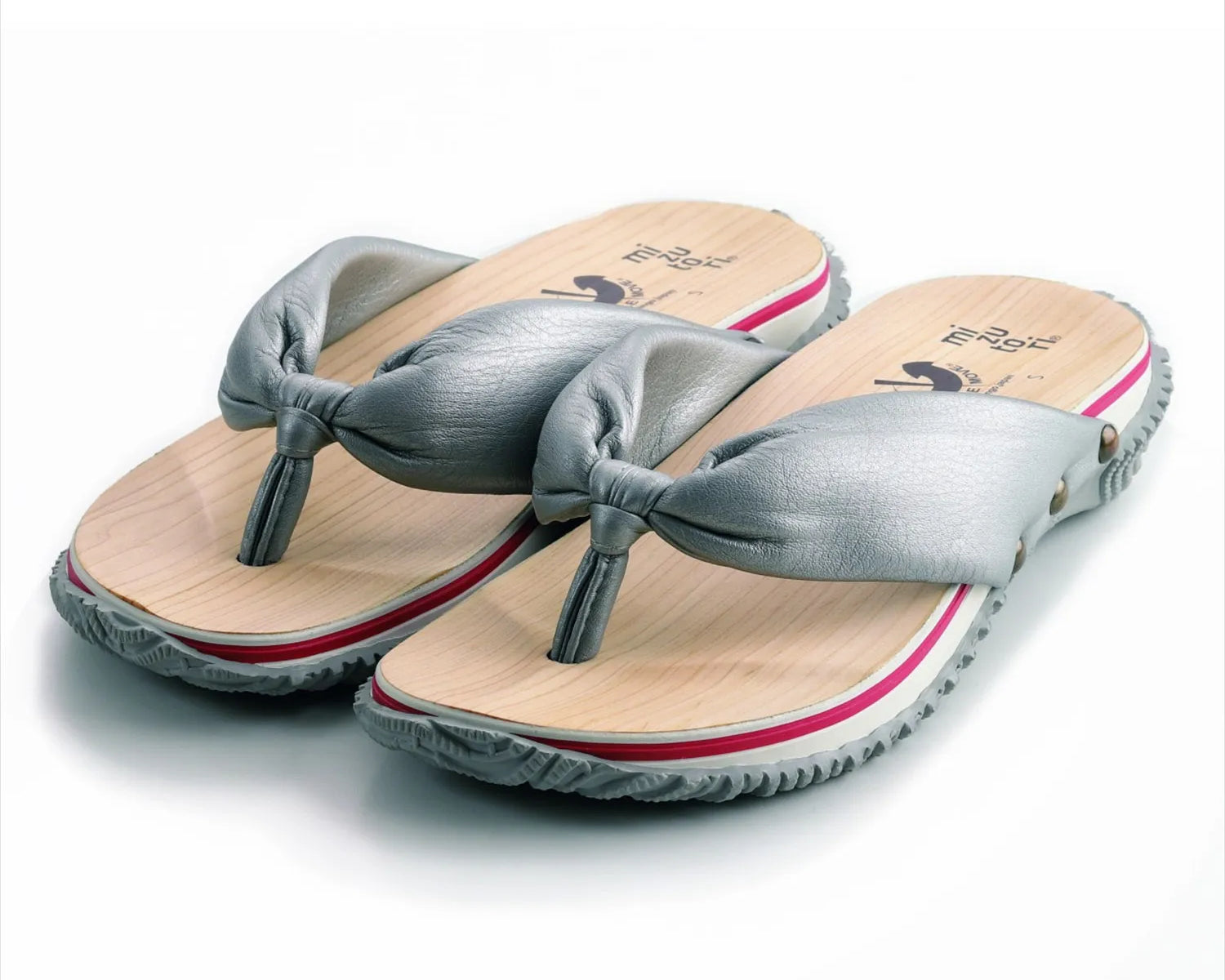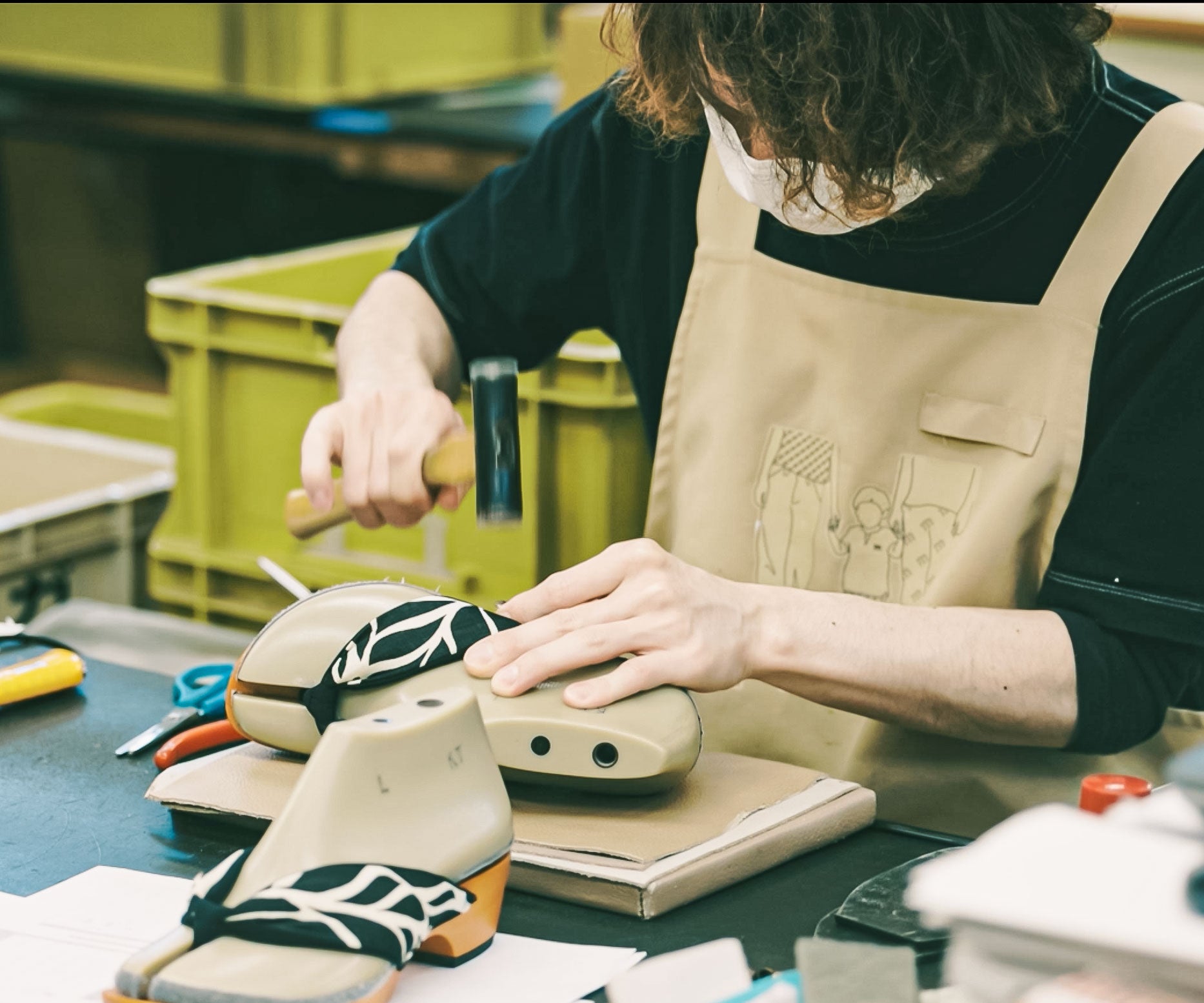
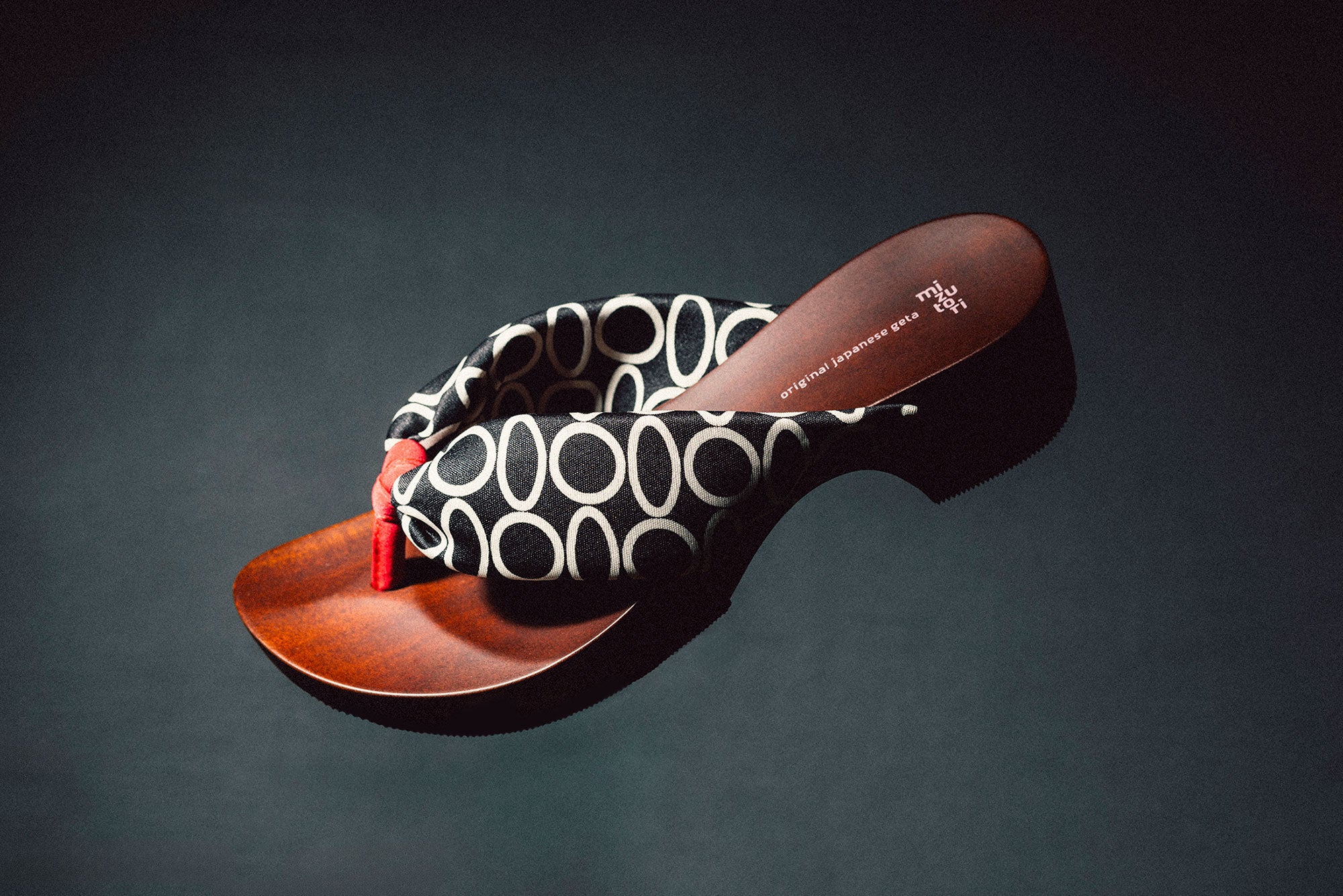

mizutori creates modern Japanese wooden sandals (geta) designed for comfort and everyday wear.
What Is mizutori?
Episode 66
When 0.5 cm Makes a Difference
“Which would be better for me,
M or L?”
It’s a question
we often hear
from customers
who aren’t sure
which size to choose.
For example,
let’s say your foot
is about 24 cm long.
In our hitete series,
size M has a wooden sole
measuring 23.5 cm,
while size L
measures 24.5 cm.
Whichever you choose,
the difference between
your foot and the wooden sole
is just 0.5 cm.
Some people think,
“Maybe I should go with L.
Better a little too big
than too small.”
Others say,
“Aren’t geta supposed
to be worn
with the heel
slightly over the edge?”
and lean toward M.
When that happens,
I always say,
“Try walking in both.”
And then I tell them,
“I recommend the one
that feels like
it moves with your foot
as you walk.”
Once they actually
walk in both sizes,
most people say,
“Ah, I see.”
And they understand
what I mean.
With the exception
of some children’s styles
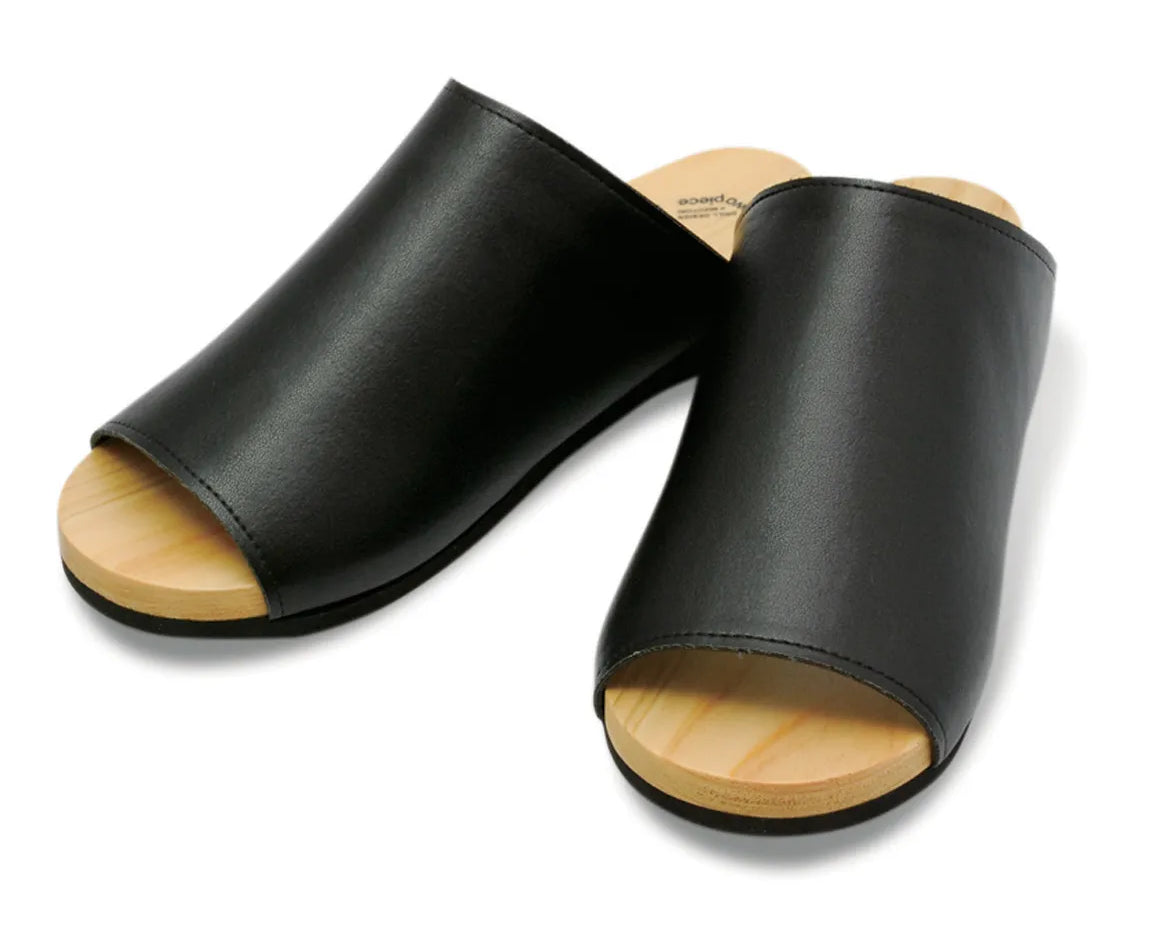
and slipper-type designs,
mizutori geta
are available
in 1 cm size increments.
When you consider
that each wooden sole
has to be individually shaped,
it would certainly
be easier for us
to offer fewer sizes.
Managing our inventory
would be much simpler too.
Even so,
we continue
to offer 1 cm increments
because we want people
to be able to choose
a size that fits
their own foot length
as closely as possible.
The fit we aim for
with mizutori geta
is one where
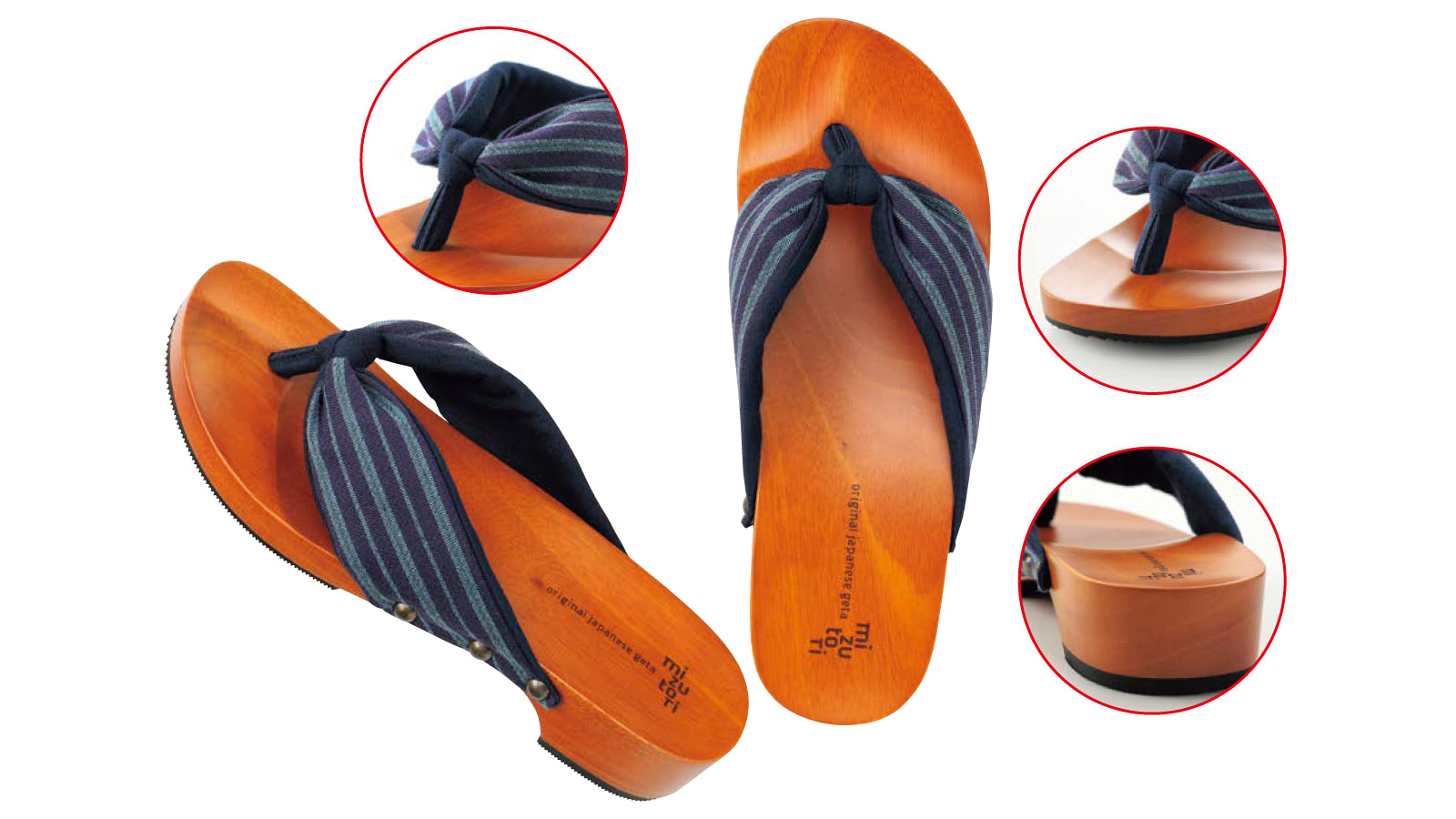
the wooden sole
moves naturally
with your foot—
almost as though
the two have become one
as you walk.
The sole of your foot
settles into
the carved contours
of the wooden base,
while your toes
gently grip the hanao
and help lift
the geta
with each step.
Because of this,
choosing a larger size
because it seems
as though a looser fit
might be more comfortable
can sometimes have
the opposite effect.
The wooden sole
may lag behind your foot
with each step,
and over time,
you may begin
to notice its weight
and feel more tired.
There is another
important difference
from traditional geta
and zori.
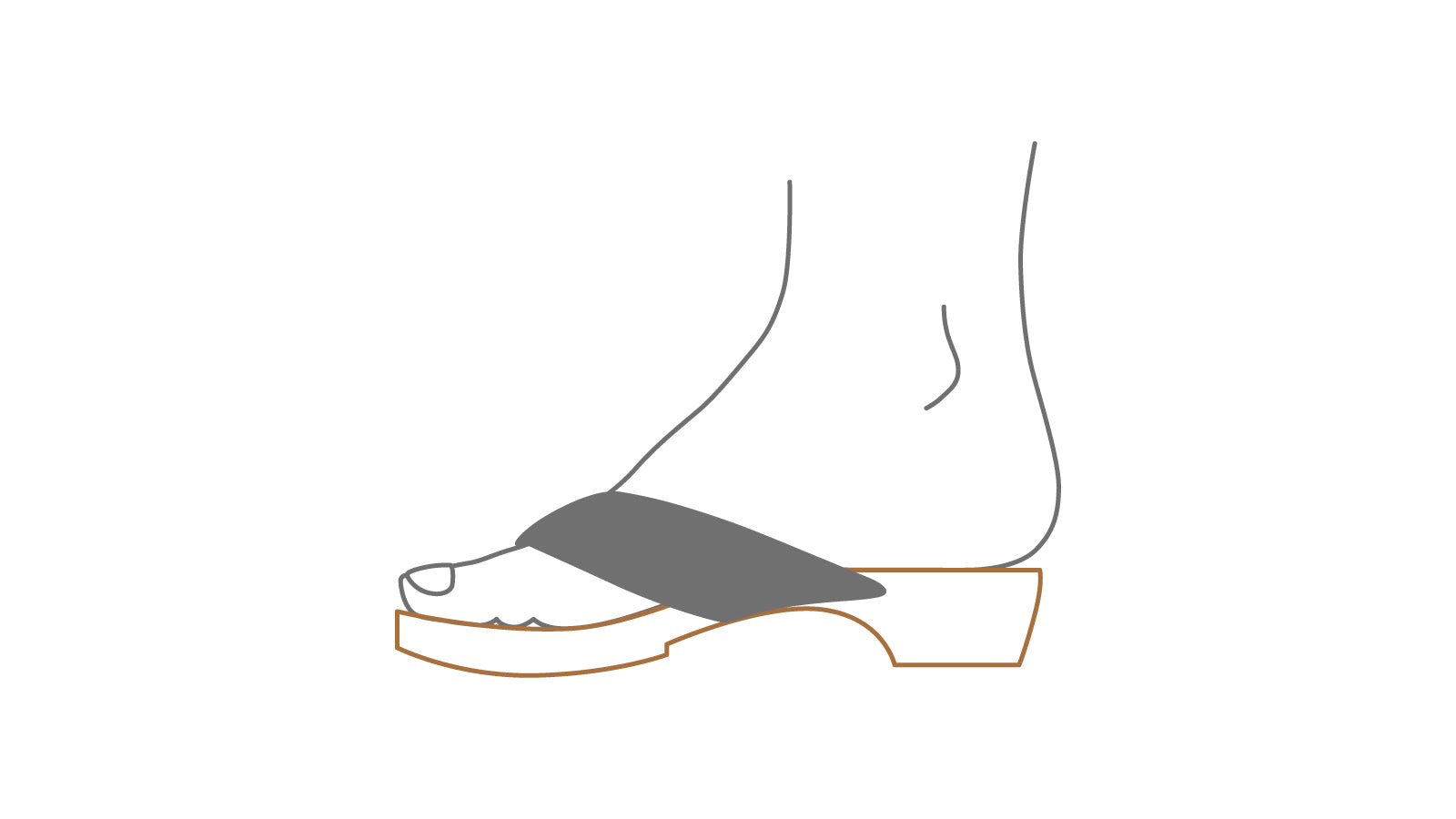
They are often worn
with the heel
extending slightly
beyond the back.
But with mizutori,
wearing them that way
can shift the position
of your foot
away from the contours
carved into the wooden sole.
As a result,
you may not experience
the fit and comfort
that mizutori geta
were designed to provide.
That said,
everyone’s feet
are different.
The shape of your feet,
the sensitivity
of your skin,
the kinds of footwear
you have worn
over the years,
and what simply
feels comfortable
to you—
all of these
vary from person
to person.
Some people prefer
a slightly looser fit.
Others prefer
a snugger fit at first,
knowing that the hanao
will gradually soften
and adjust
as they wear them.
And yes,
the hanao will
naturally become
a little looser
over time.
But if the hanao
already feels painfully tight
from the beginning,
we would not recommend
forcing yourself
into a smaller size.
As makers,
we have a fit
that we recommend—
one designed
to bring out
the comfort
we intended
for mizutori geta.
But ultimately,
what matters
is how they feel
on your own feet
when you actually
walk in them.
Just 0.5 cm.
On paper,
it seems like
such a tiny difference.
But once
you start walking,
there are times
when you simply know—
“Ah.
This is the one.”
That is why,
even though it means
more work to make them
and more sizes
for us to manage,
we want to give you
the best possible chance
to find the size
that feels comfortable
on your own feet.
A pair where
your feet and your geta
seem to move
comfortably together.
Finding that pair—
the one that feels
right to you—
may be the final touch
that completes
the comfort
of mizutori geta.