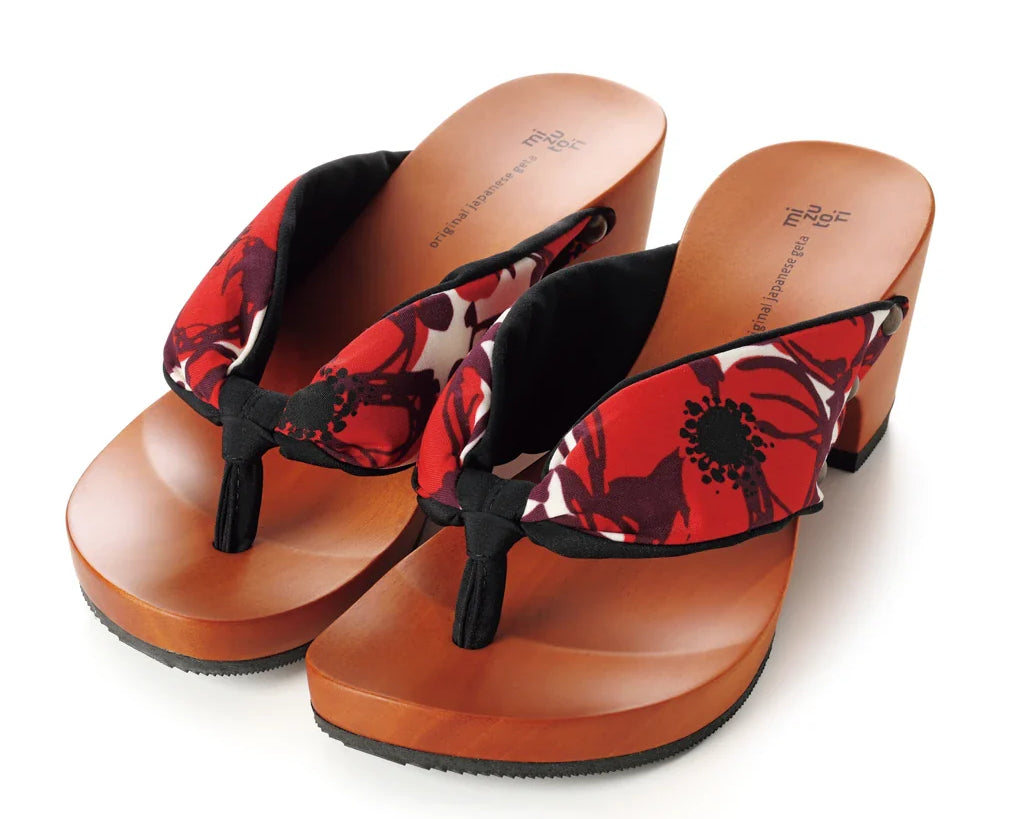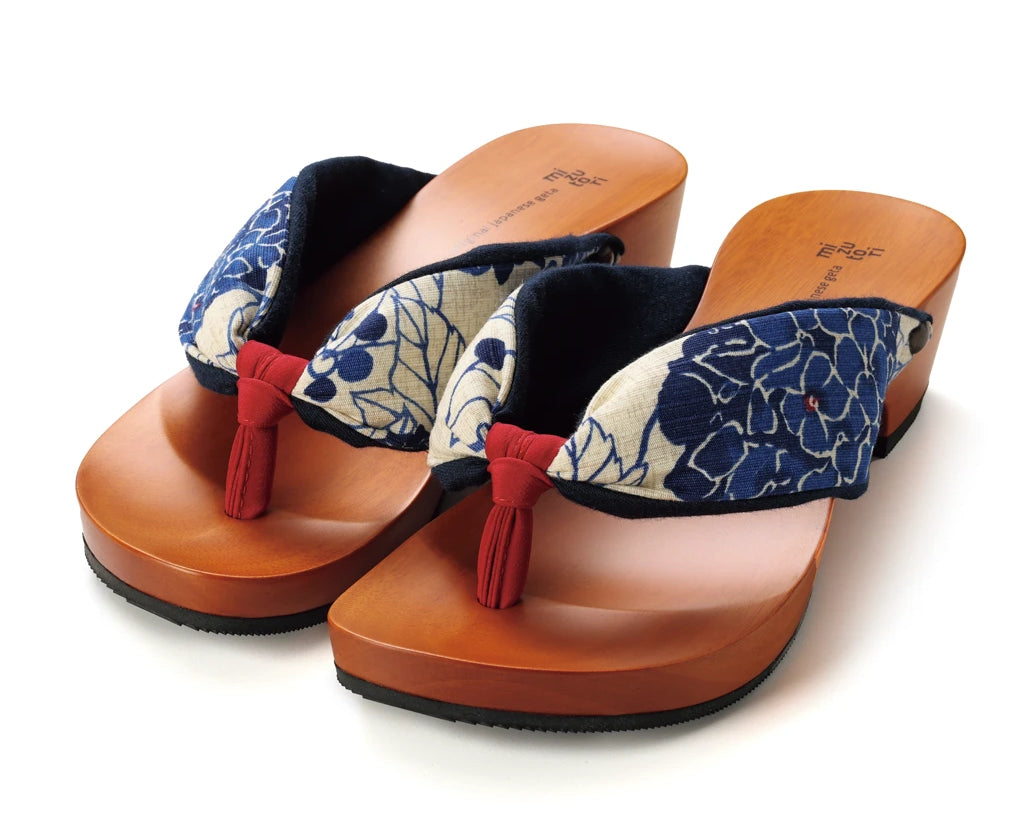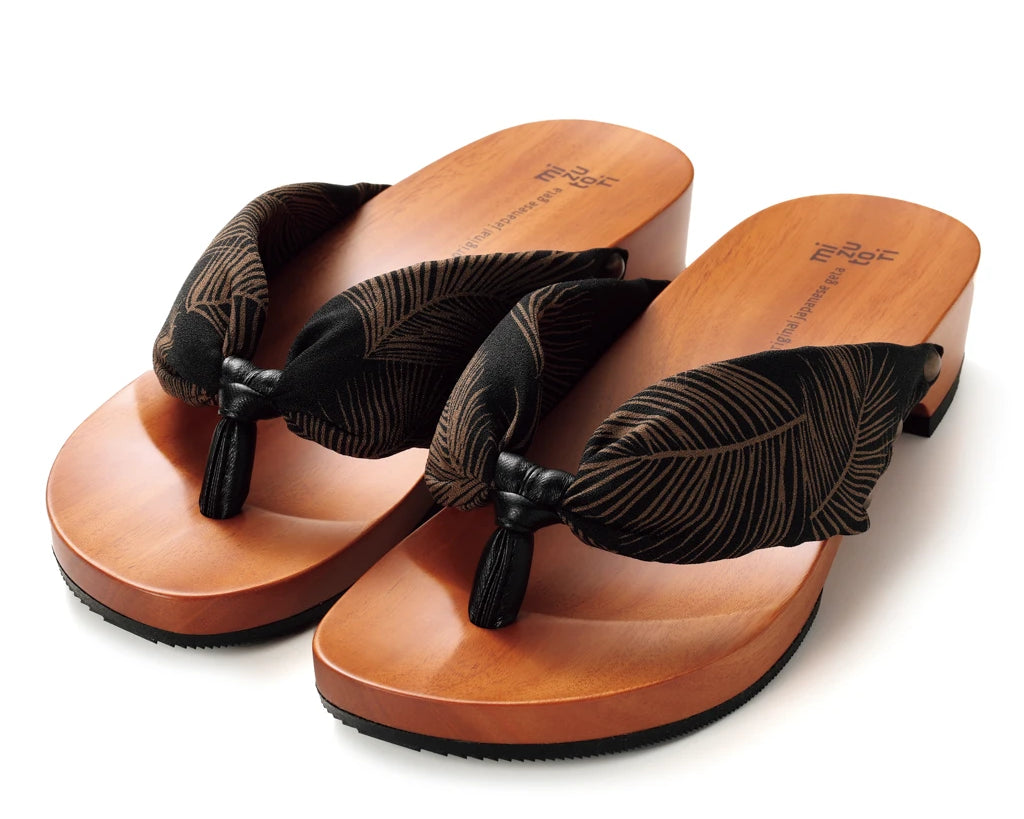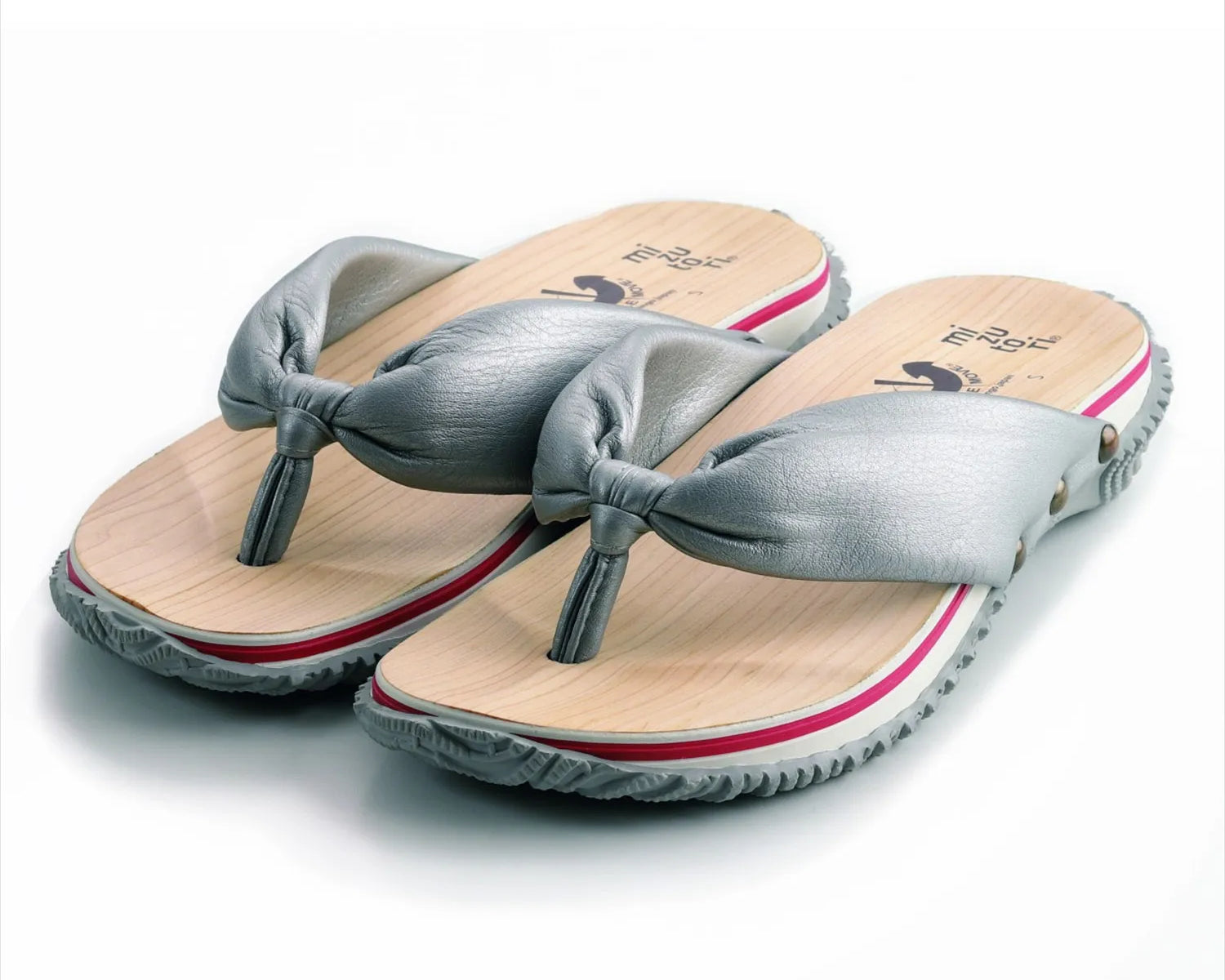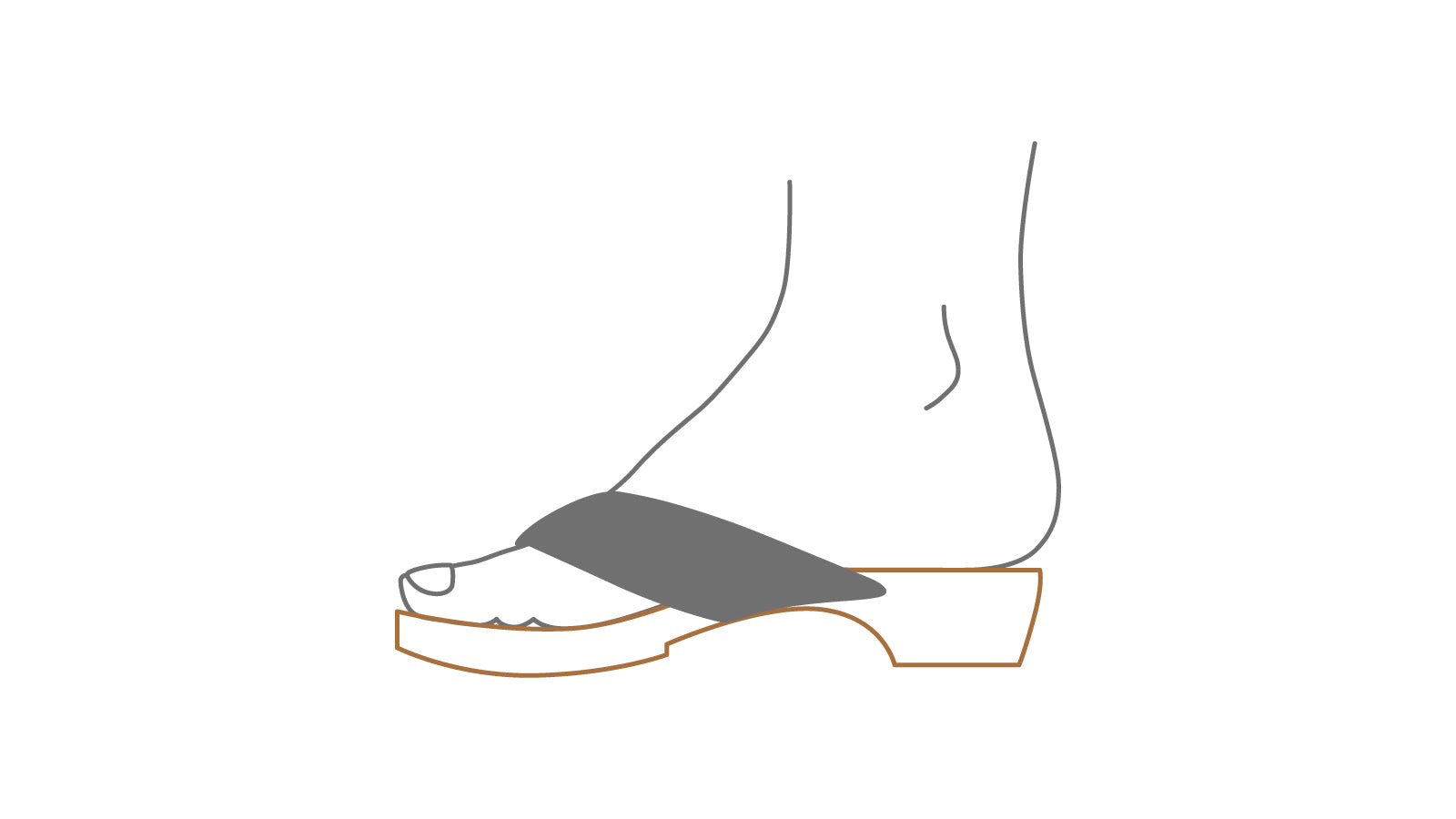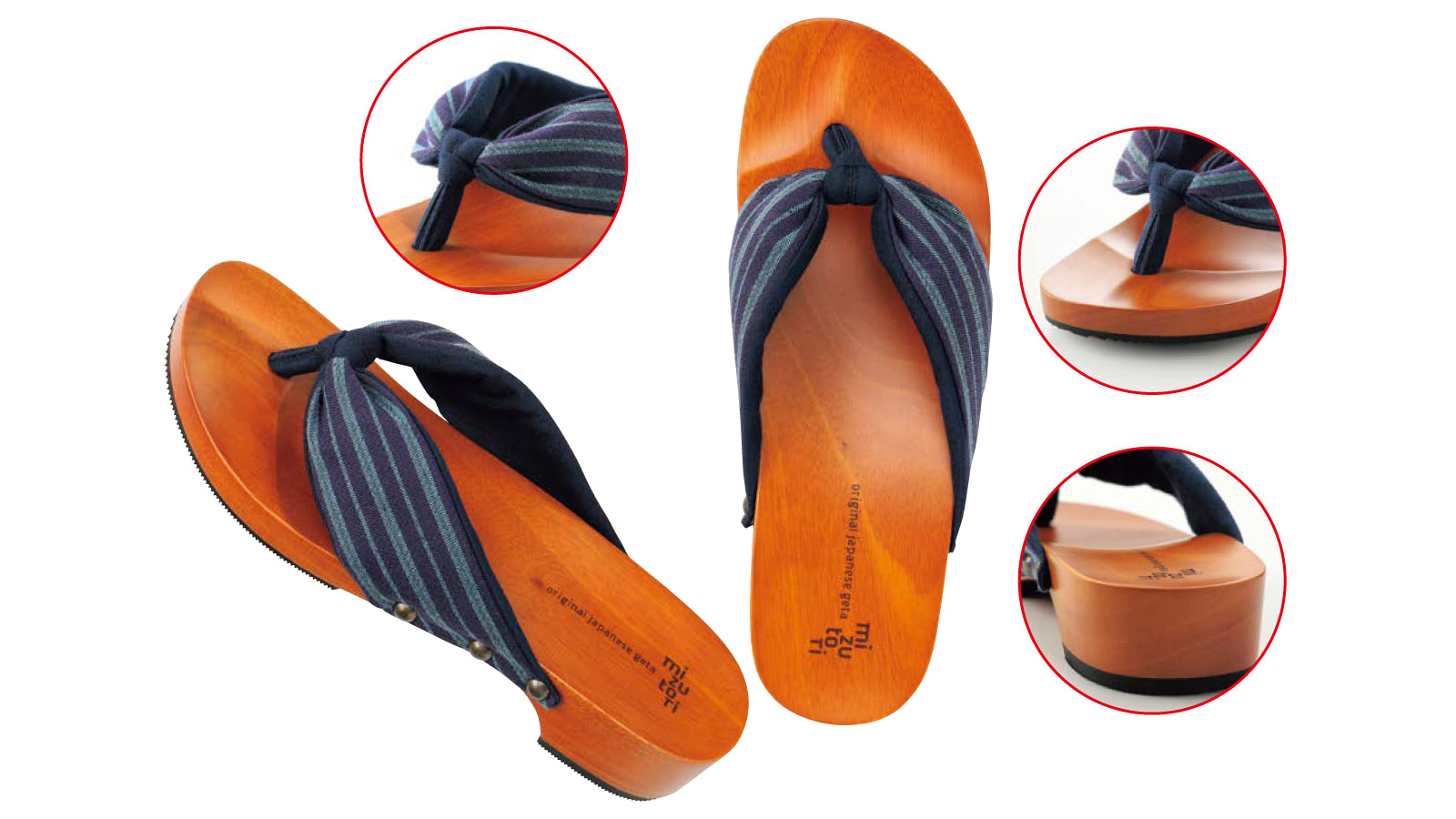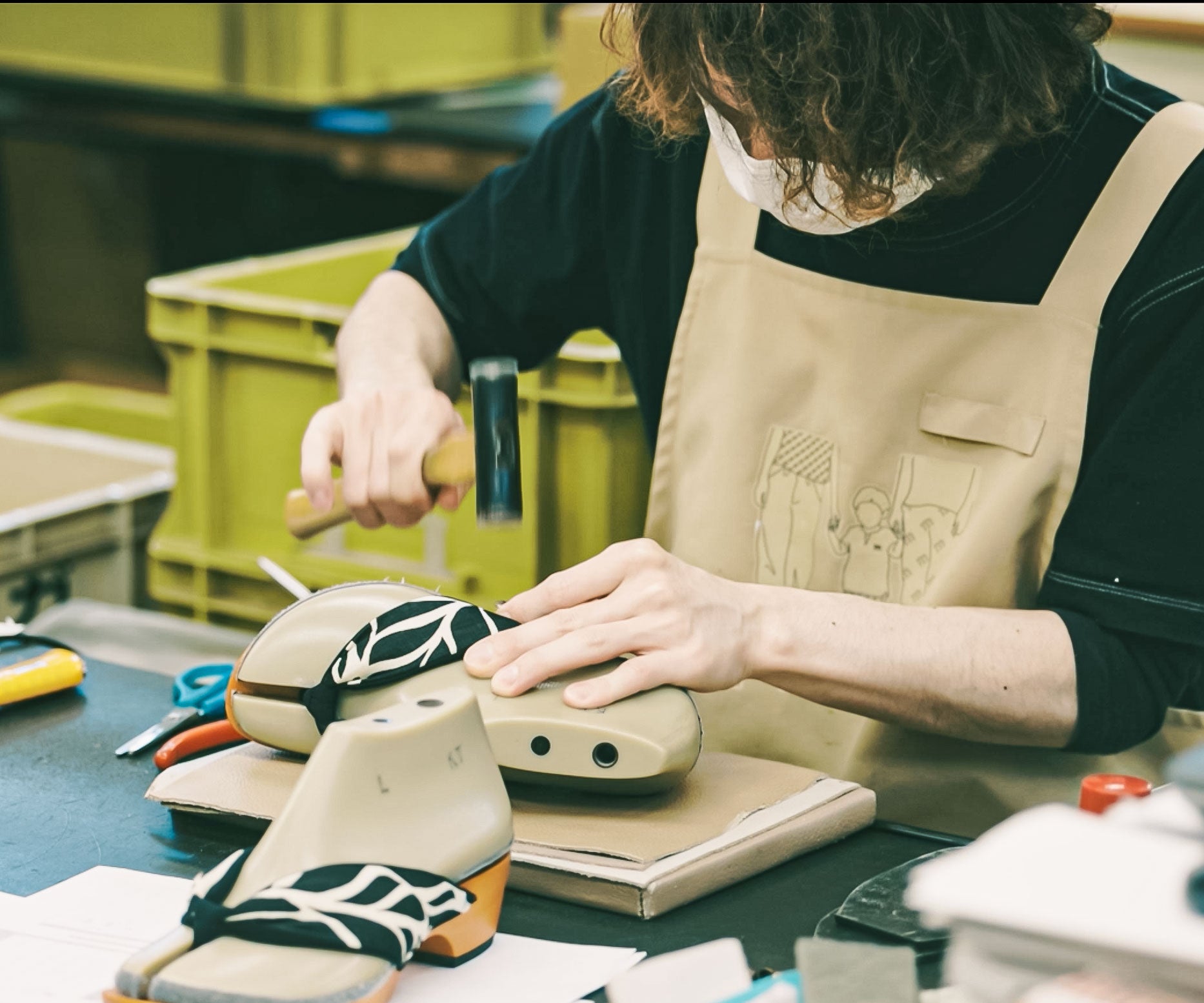
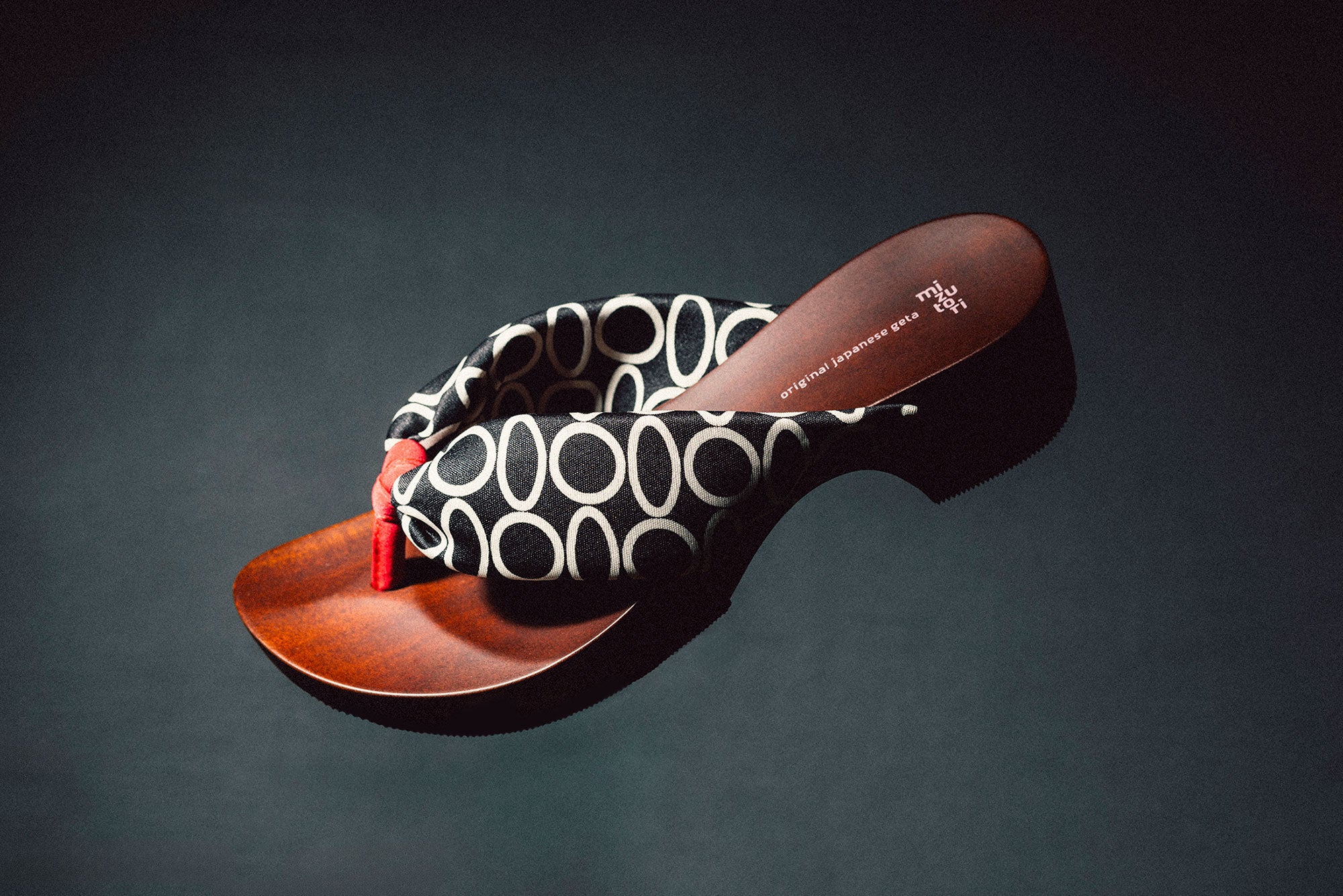

mizutori creates modern Japanese wooden sandals (geta) designed for comfort and everyday wear.
Episode 46
Creative Geta — Giving Form to Ideas
At mizutori,
in addition to developing our own products in-house,
we have also taken part in projects
that bring a wide range of ideas into form.
One such initiative
is a local program called
the “Dream Design Contest.”
In this project,
children choose an industry from Shizuoka’s local crafts
and freely design products
based on what they wish existed.
Over the years,
we have had the opportunity
to bring to life several designs
created by children who chose geta.
Within those ideas
are thoughts that are wonderfully free—
ideas that adults might never arrive at.
And at times,
we encounter perspectives
that make us pause and rethink.
For example,
one child who practices kendo
designed a pair of geta
to wear on the way to their training hall.
Because it often becomes dark
on the way home,
they incorporated reflective material

into the straps.
We were deeply impressed
by how naturally their everyday experiences
had taken shape in the design.
We have also received proposals
from students studying design—
including a new kind of footwear
that combined elements of geta and tabi.
With delicate floral carvings
and carefully considered color combinations,
the design required a great deal of trial and error
to bring into form,
but it became a truly memorable piece.

Projects like these
invite us to approach making
in a slightly different way.
We set aside, for a moment,
the usual standards we value—
such as efficiency, scalability,
and the balance of comfort—
and instead focus first
on bringing the idea itself to life
as faithfully as possible.
Each part is made with care,
and time is taken to shape it fully.
The process is not always simple,
but working in this way—
using a different kind of thinking
and focusing entirely on realization—
feels refreshing to us
and brings new perspectives.
Children’s ideas
are free and imaginative,
yet at the same time
firmly rooted in everyday life.
Perhaps that is why
they hold so many hints
and possibilities
for the future of local craftsmanship.
These crafts
have been passed down
over many generations.
And yet today,
with the number of artisans decreasing,
many of them stand at a crossroads.
In this context,
for children to take an interest
in local crafts
and to experience their appeal
through initiatives like this
carries deep meaning for the future.
Free ideas
create new perspectives,
and those perspectives
connect to the next generation.
We hope that these small beginnings
will grow into a force
that supports the future
of local craftsmanship.