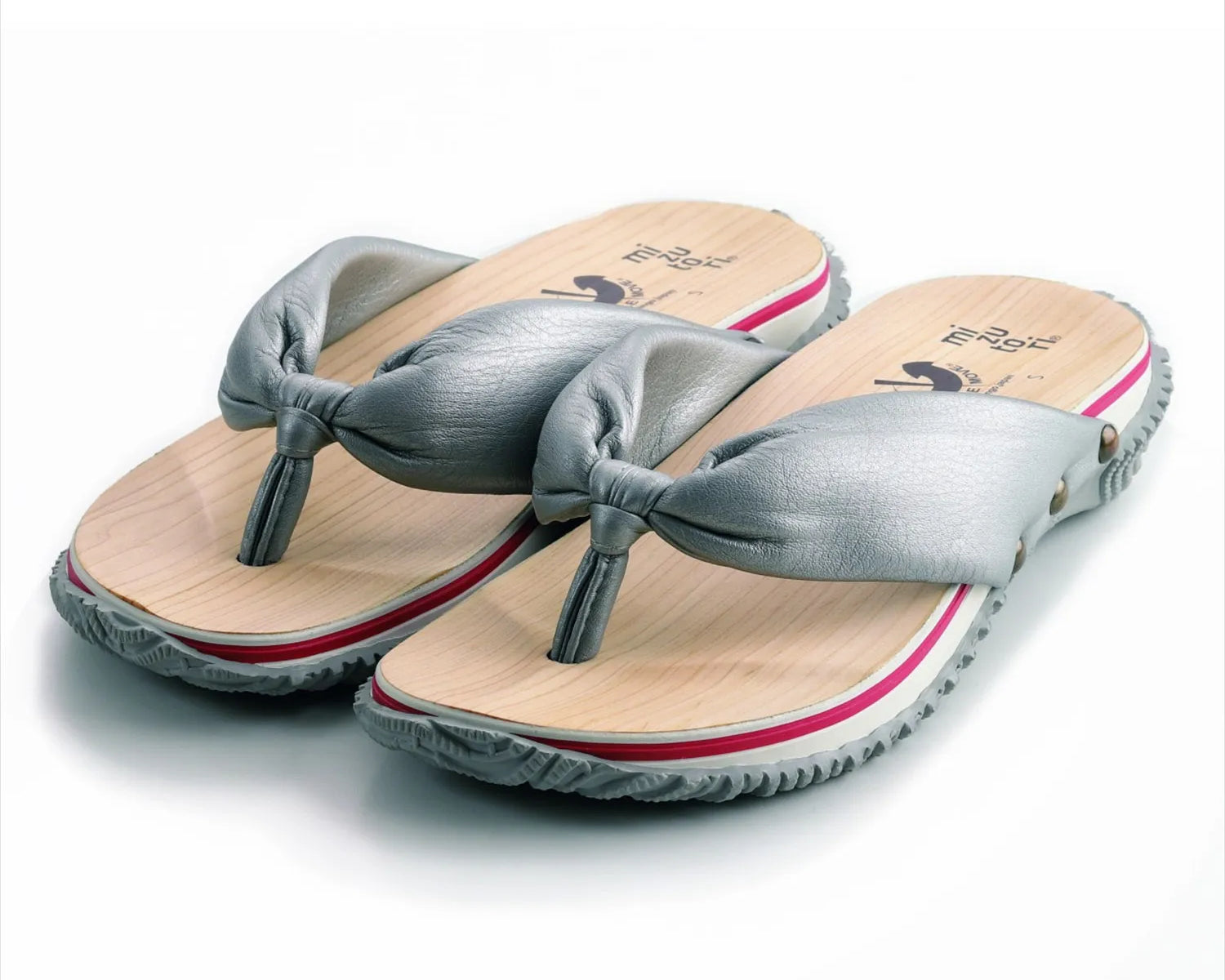

mizutori creates modern Japanese wooden sandals (geta) designed for comfort and everyday wear.
Episode 28
2026 New Designs Announced
— How a New Hanao Pattern Is Born
Amid our daily work of facing geta,
there is one time of year that troubles us more than any other.
It is the moment we must decide on “next year’s hanao.”

mizutori offers more than 100 variations of geta,
yet each year, around 15 to 20 designs are replaced with new patterns.
Many of the fabrics we use are limited in quantity;
once the material is gone, the design is often discontinued.
Some particularly bold or distinctive patterns are introduced for just a single year as a special challenge.
Choosing the hanao that will walk alongside us for the coming year
is always a journey without a clear end.
Choosing “Only One” from an Ocean of Fabric
Customers often say to us,
“I can’t decide which one to choose.”
But before that stage —
we, the makers, are just as lost.
In fact, perhaps even more so.
The number of potential fabrics is overwhelming,
and each one holds its own beauty.
When selecting, we consider several perspectives:
• Voices from customers: “I wish there were something like this.”
• A small but deliberate “challenge” category
• A desire to share the worlds of other crafts — dyeing, weaving, umbrellas, tatami, textiles —
and to introduce stories beyond geta itself
For mizutori, choosing hanao is also about
carrying forward someone else’s story of craftsmanship.
Whether the maker is widely known or not does not matter.
What matters is the work of the hands behind the fabric,
and the emotion we felt when encountering its beauty —
an emotion we hope to share through geta.
The Moment Fabric Becomes “Hanao”
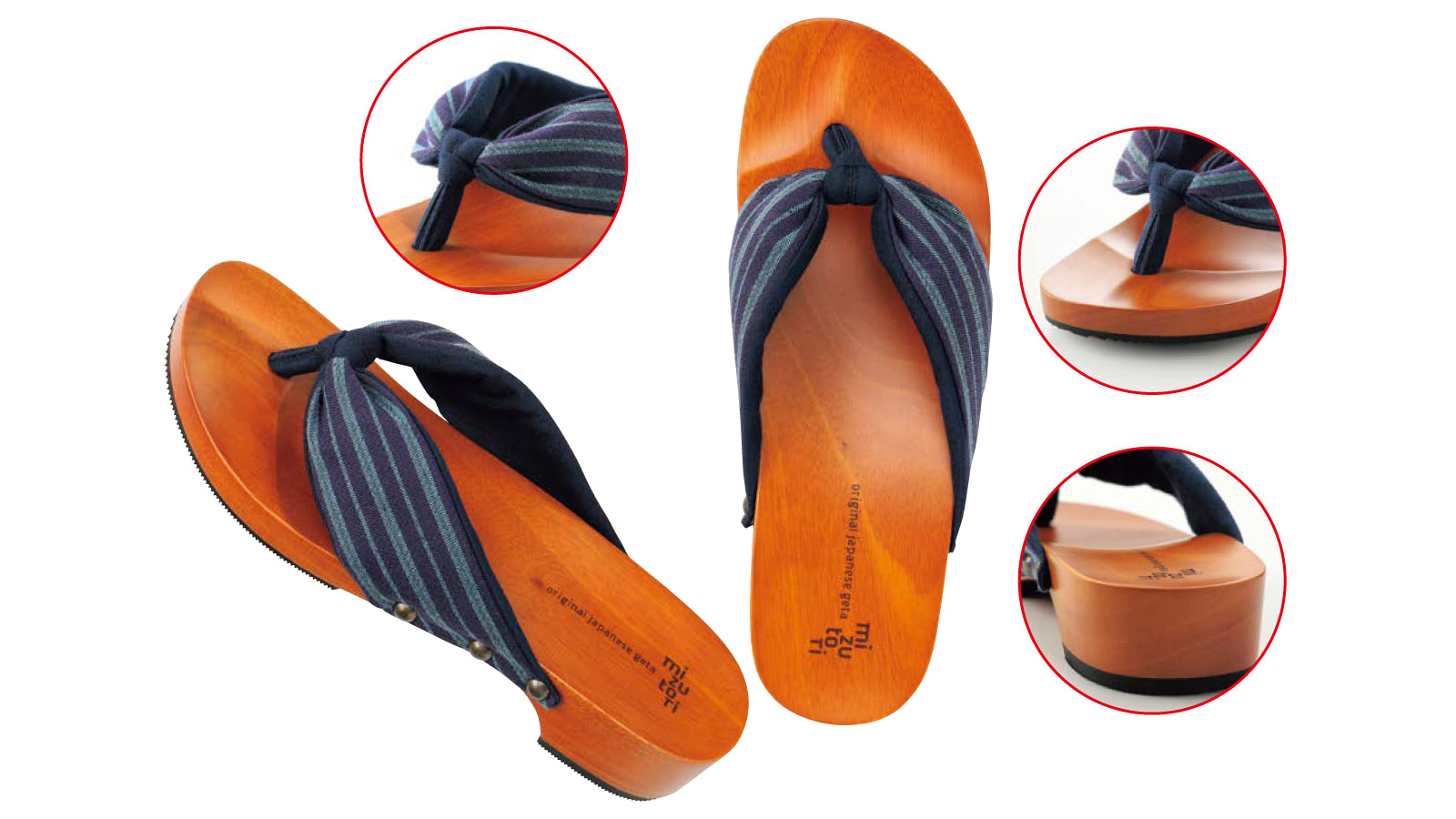
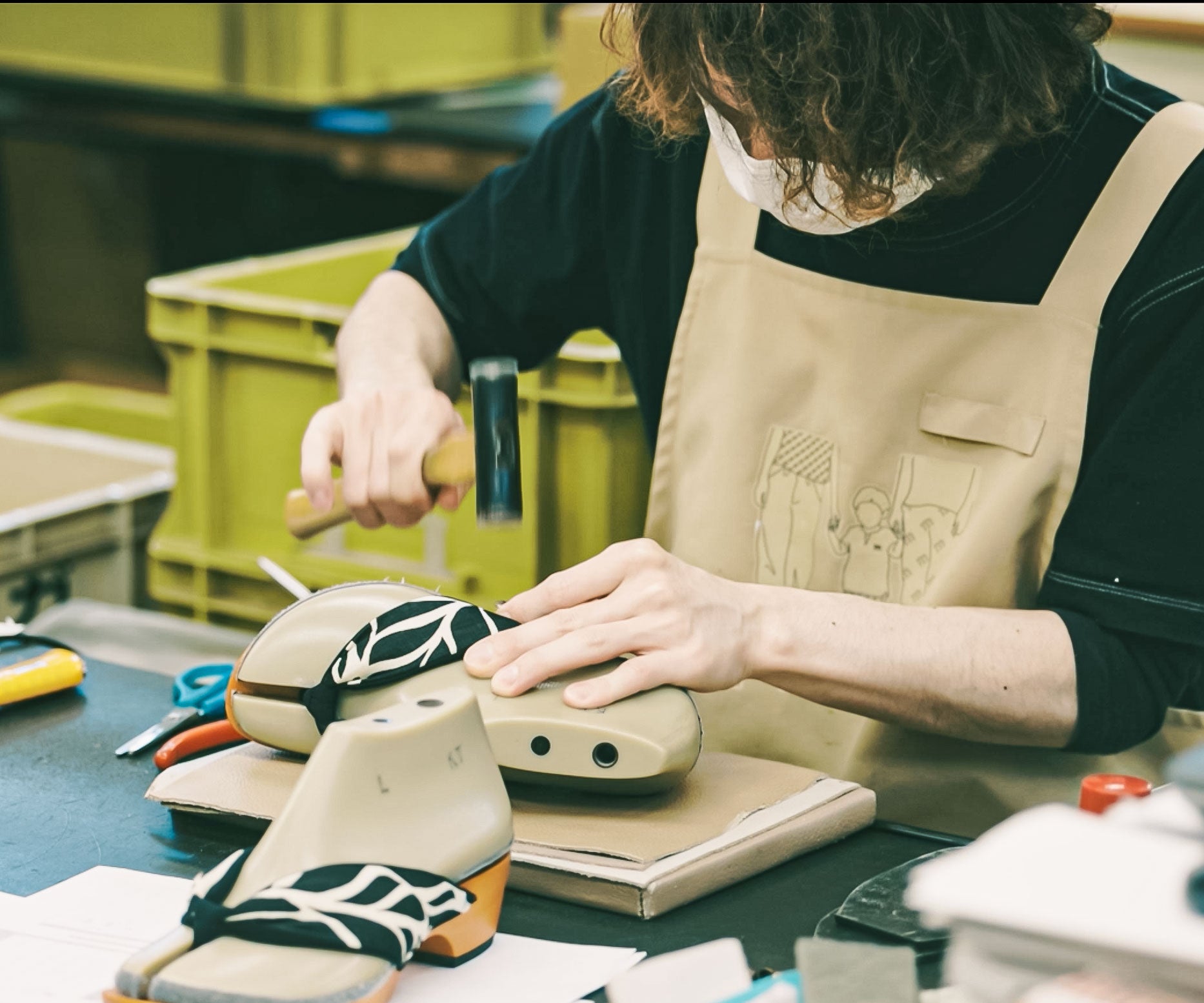
Once selected, the fabric is first shaped into hanao form.
At that moment, everything changes.
The expression transforms dramatically,
and from there, another long journey begins.
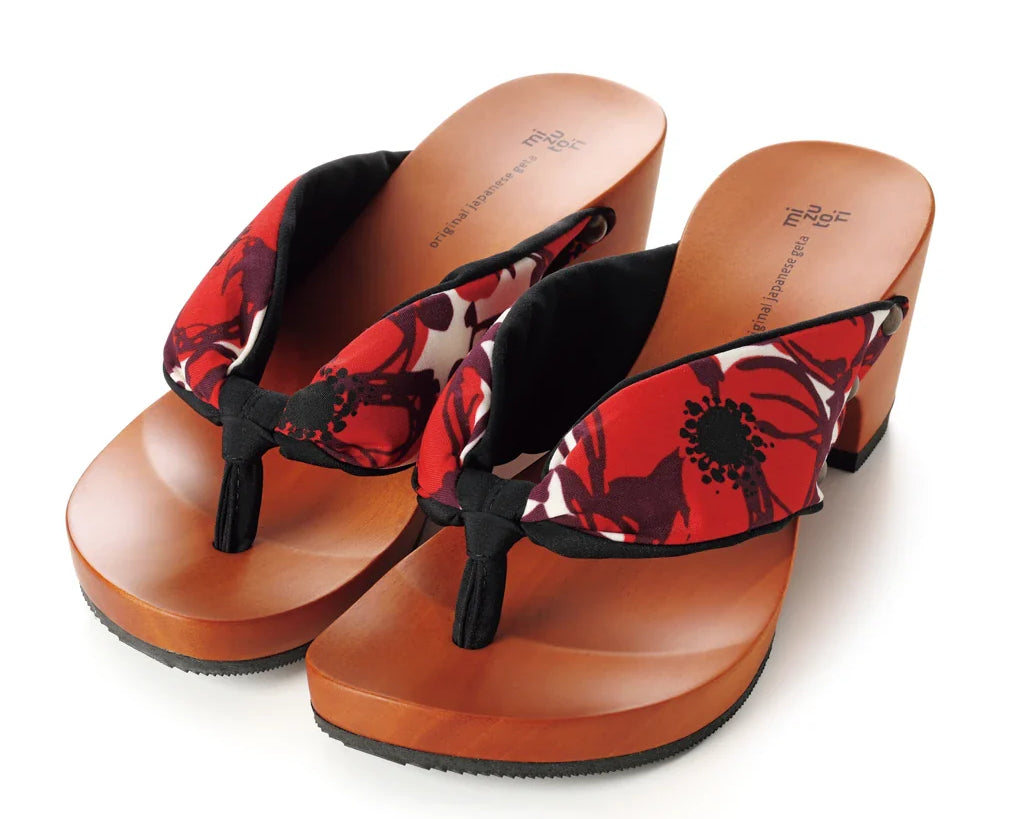
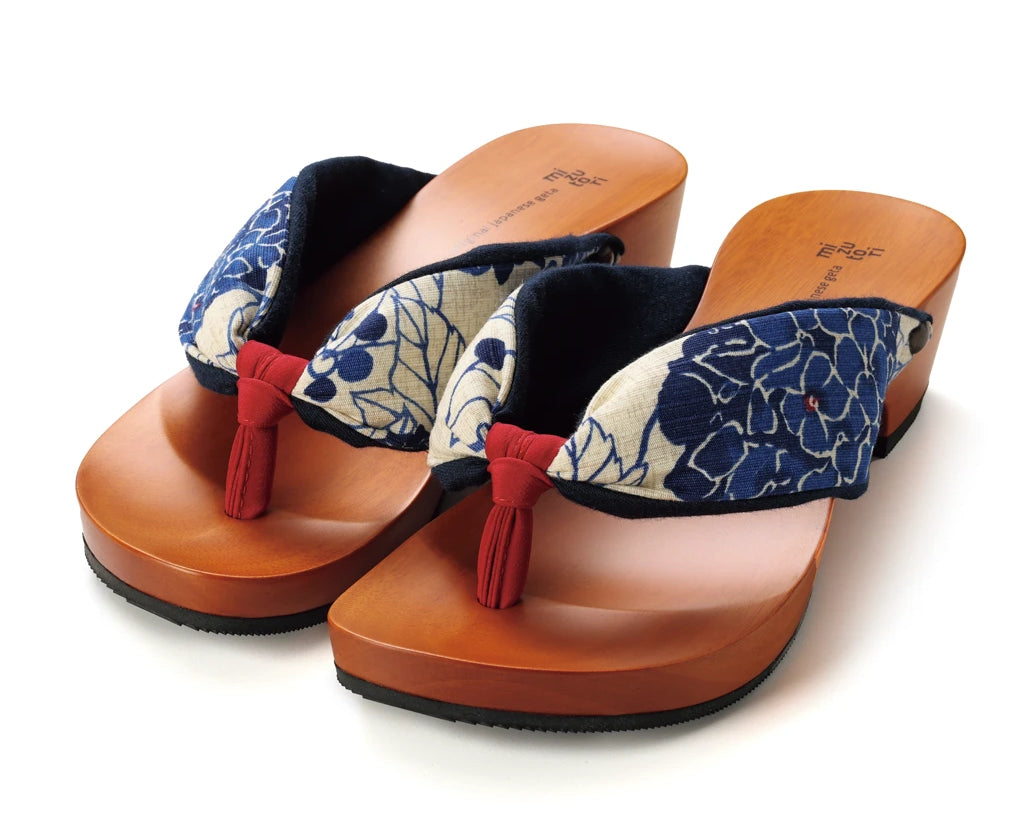
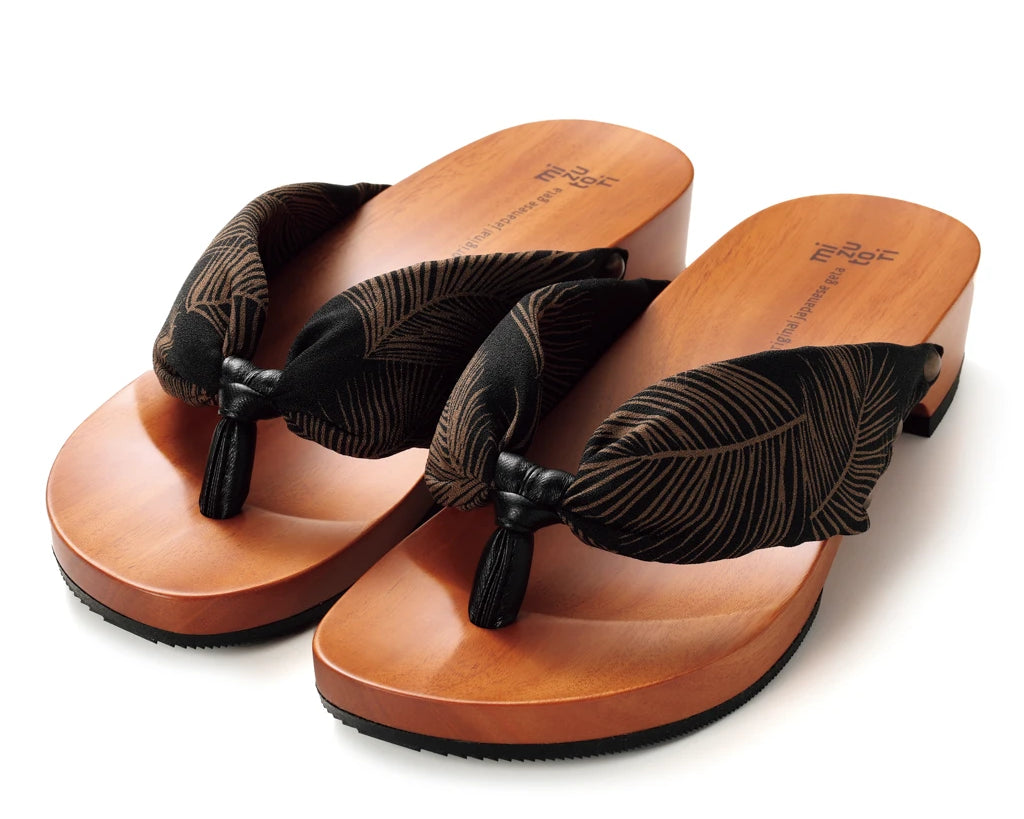
• The color of the lining
• The color of the front thong (maetsubo)
• The “five-centimeter world” that appears on the surface as hanao
Within that narrow strip,
how can we express the full charm of the pattern?
Even the slightest adjustment can alter the entire impression.
We revise again and again.
No matter how beautiful a design may be,
if it cannot express its appeal within the limited space of hanao,
We must reluctantly let it go.
There are also practical considerations.
Fabrics that fray easily,
or feel too stiff against the skin, cannot be used.
Beauty and practicality must coexist —
because they are meant to be worn for a long time.

The Final Step: Pairing with the Geta Base
Once the hanao is finalized,
we test it against different geta bases.
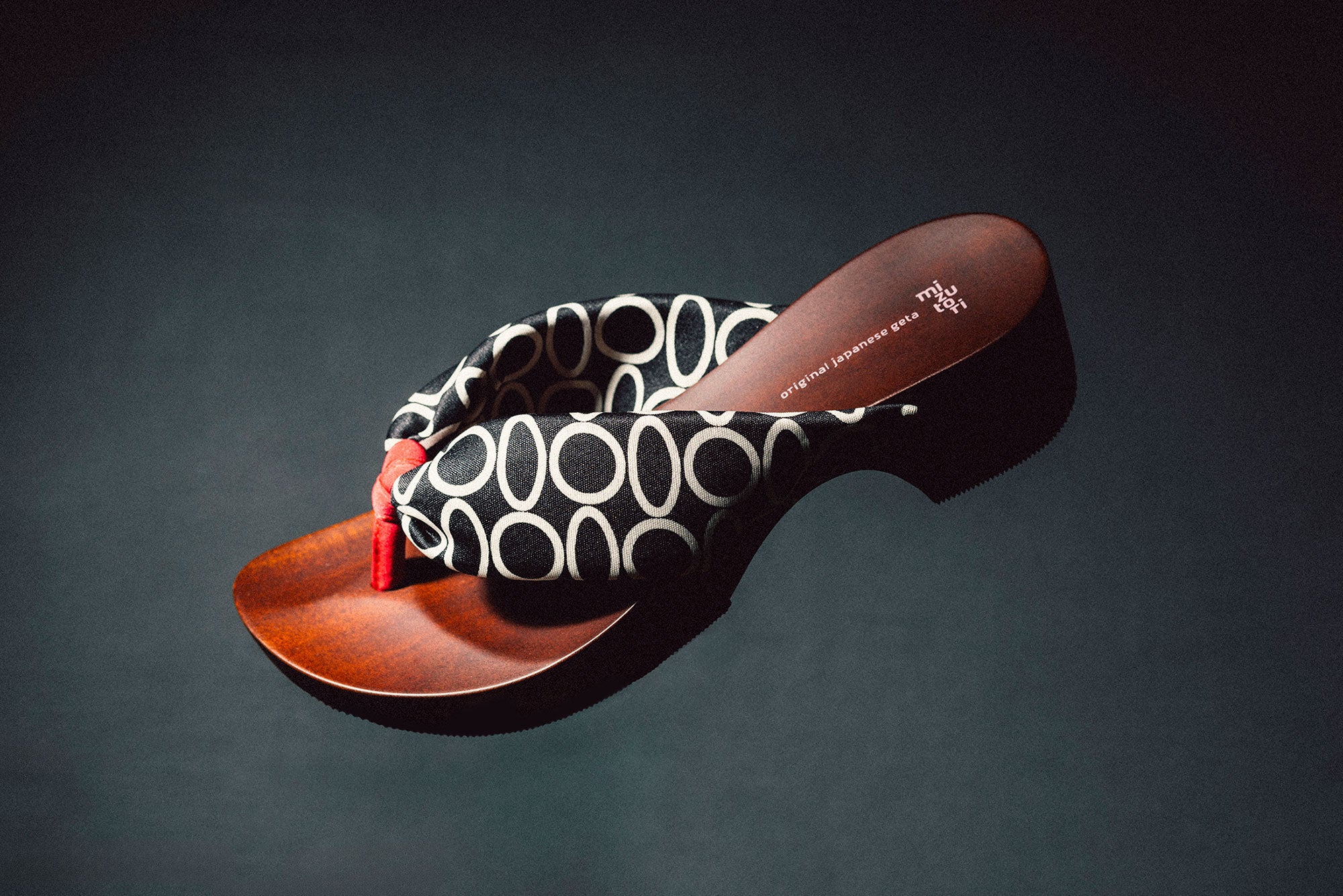
Patterns that shine against black,
patterns that harmonize with natural wood grain,
patterns whose character shifts depending on heel height —
There is no single correct answer.
The trial and error continues.
We sometimes hold internal votes,
ask our sales team for their perspective,
or even request feedback from partners and collaborators.
Inviting many viewpoints
helps prevent the mizutori world from becoming narrow.
Different generations, different fashions, different tastes —
we want to stay close to all of them.
To be honest —
there are times when a pattern that is not our personal favorite is selected.
And yet, we release each year’s new designs
with the firm belief that somewhere,
someone will say, “This is the one I love.”
The 2026 Collection Awaits
And so, once again,
after a long journey of hesitation and deliberation,
the hanao for 2026 have been decided.
There is about one month until their release.
Behind each new design lies uncertainty, doubt,
encounters with fabric,
and the quiet dedication of craftspeople.
As you await the release,
we hope you might also imagine these unseen stories
woven into every pair.