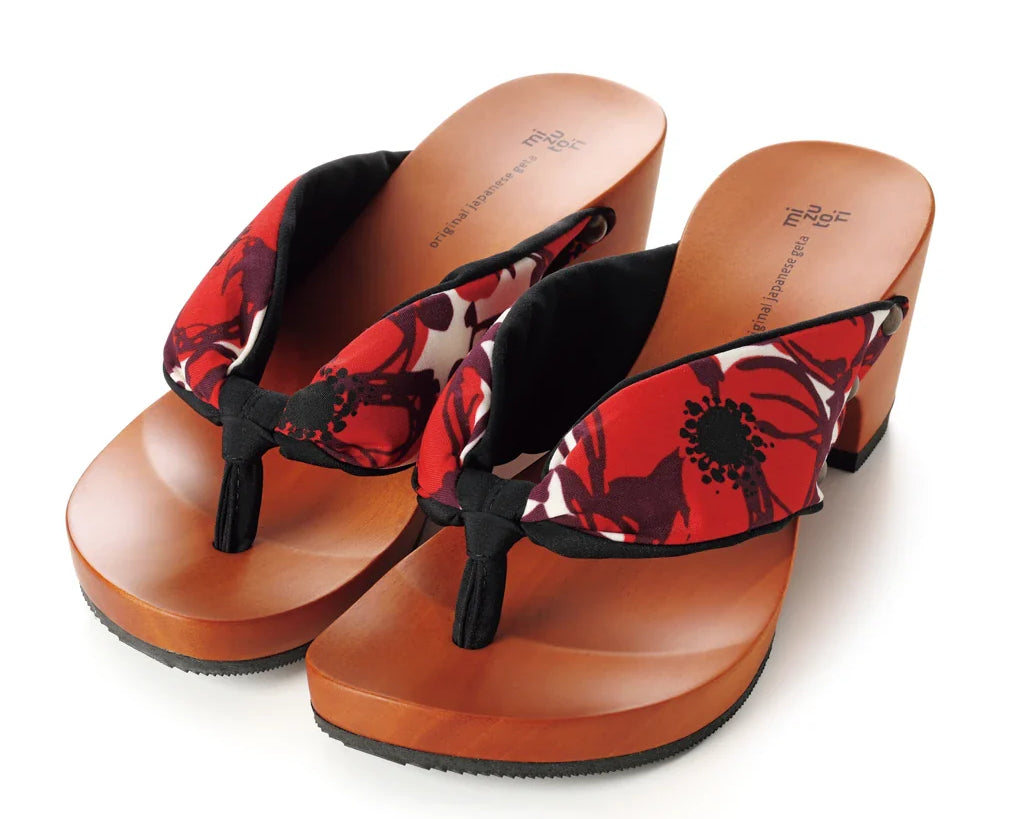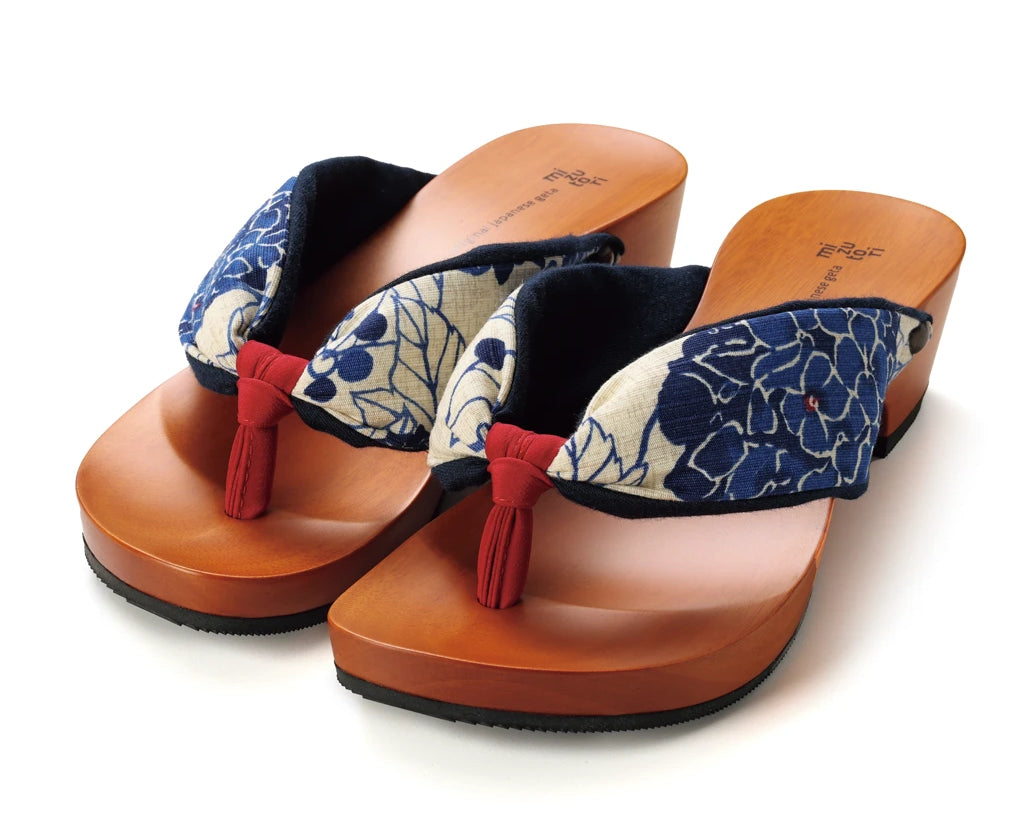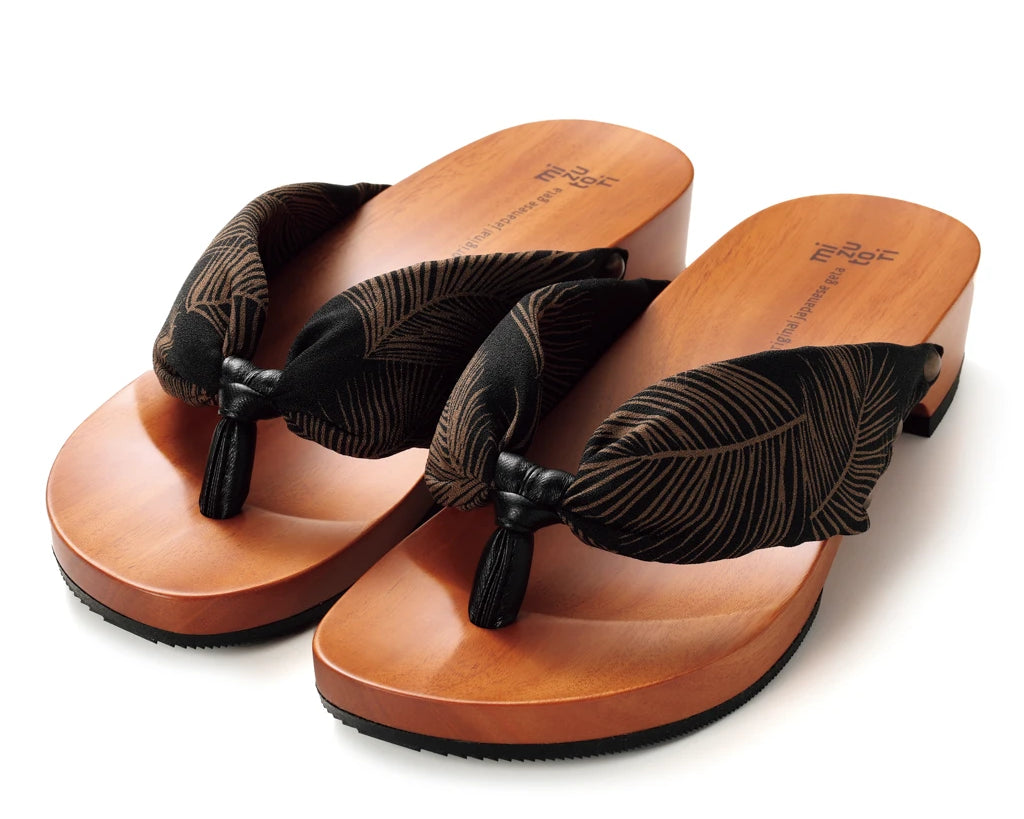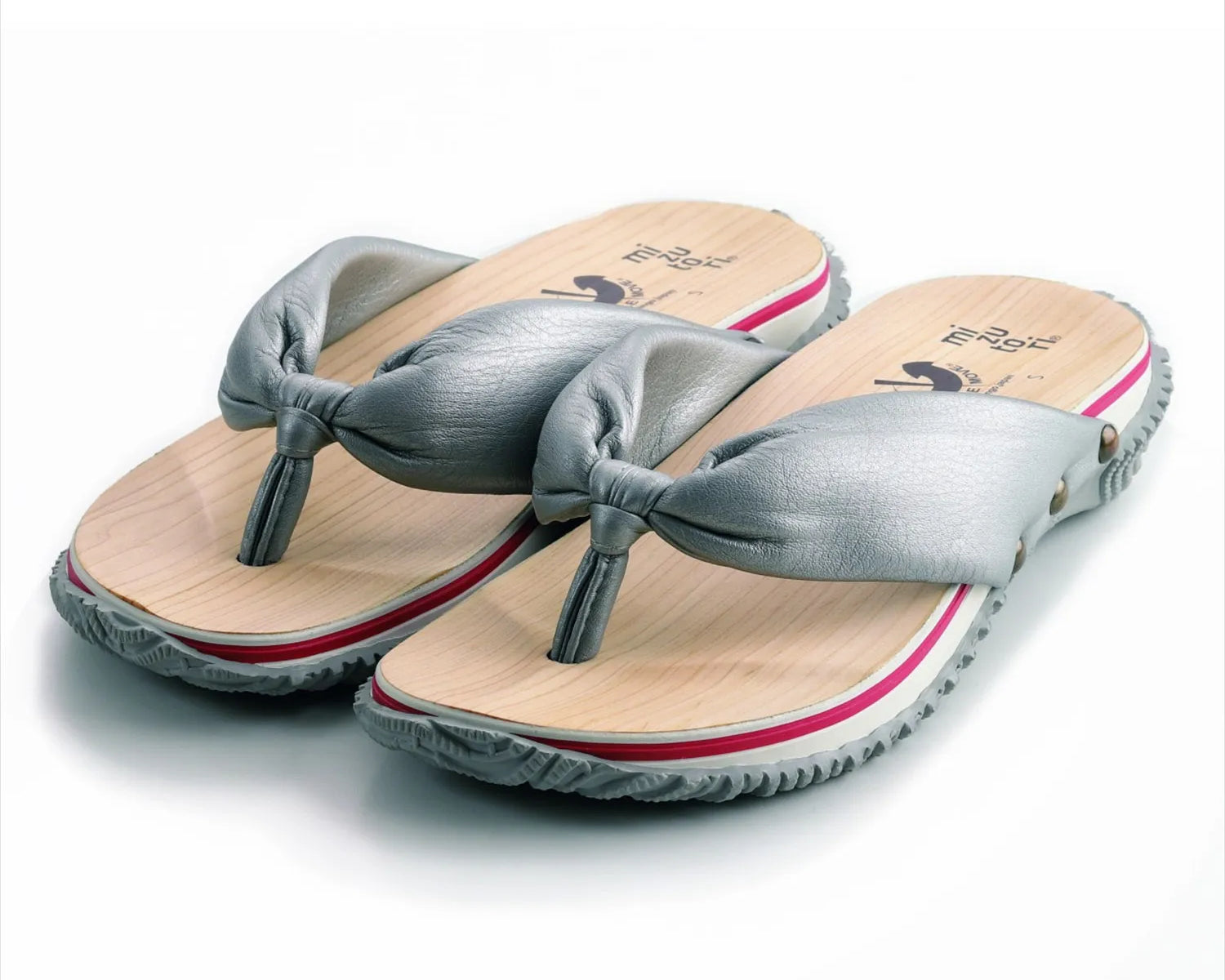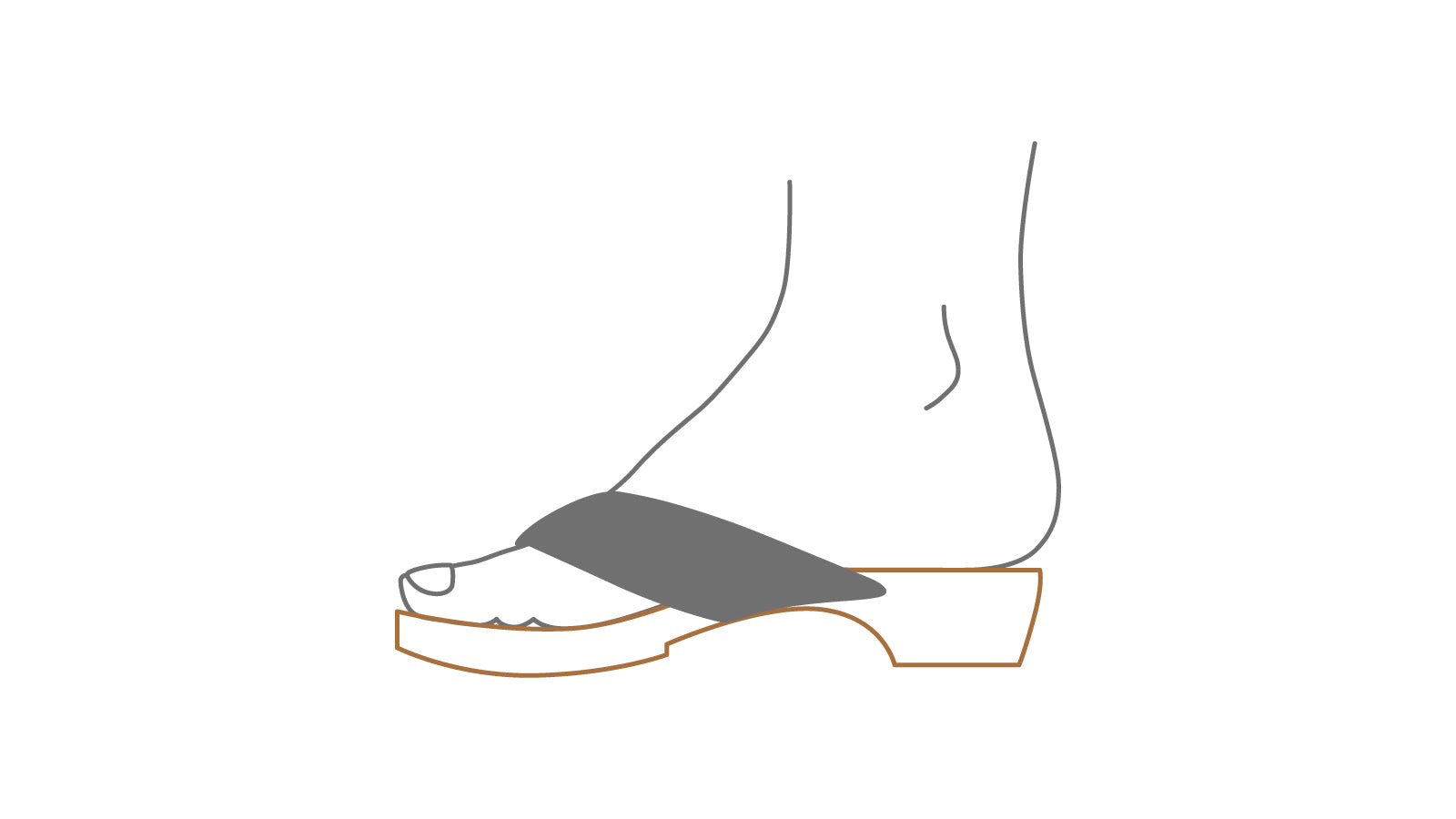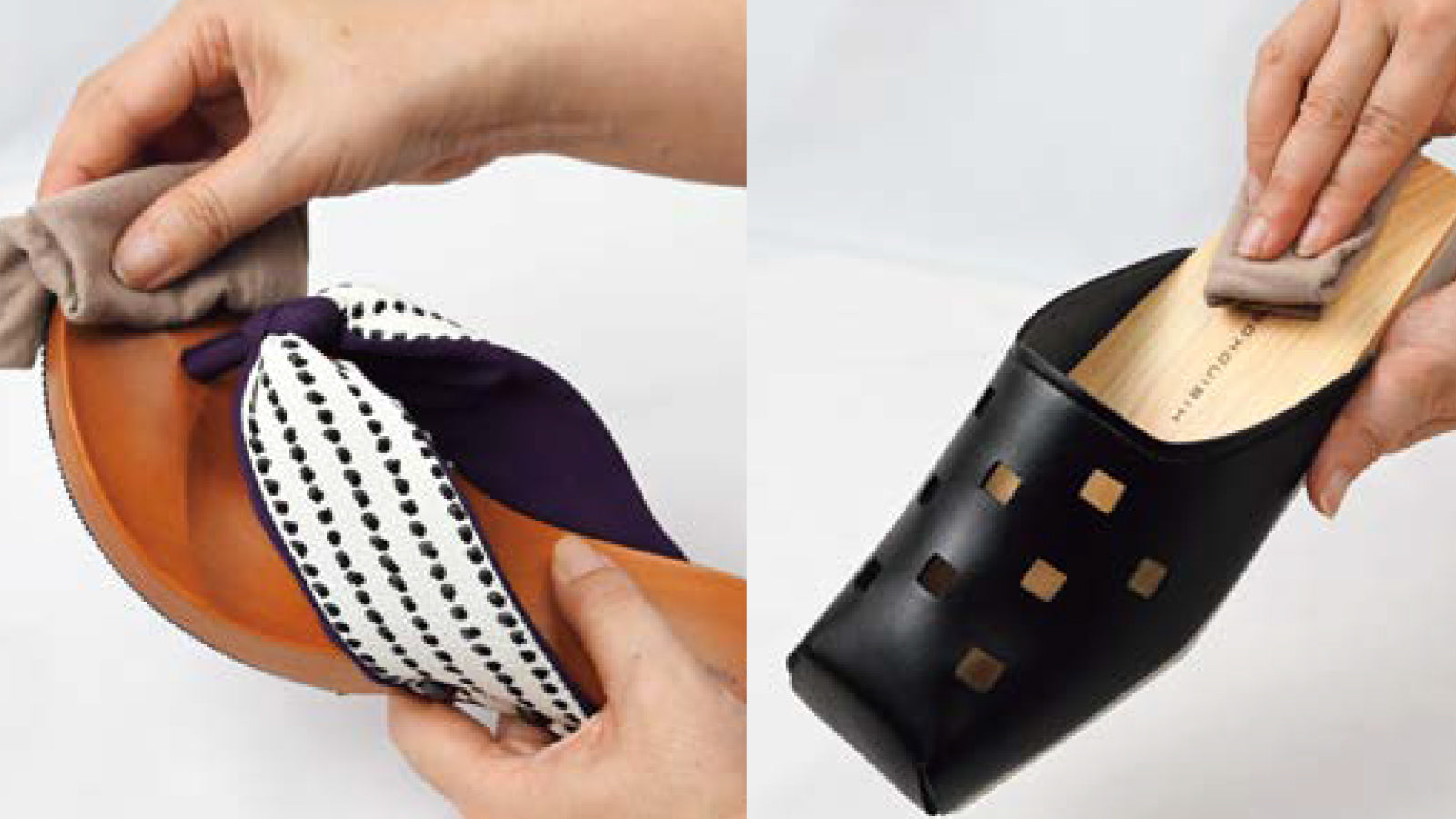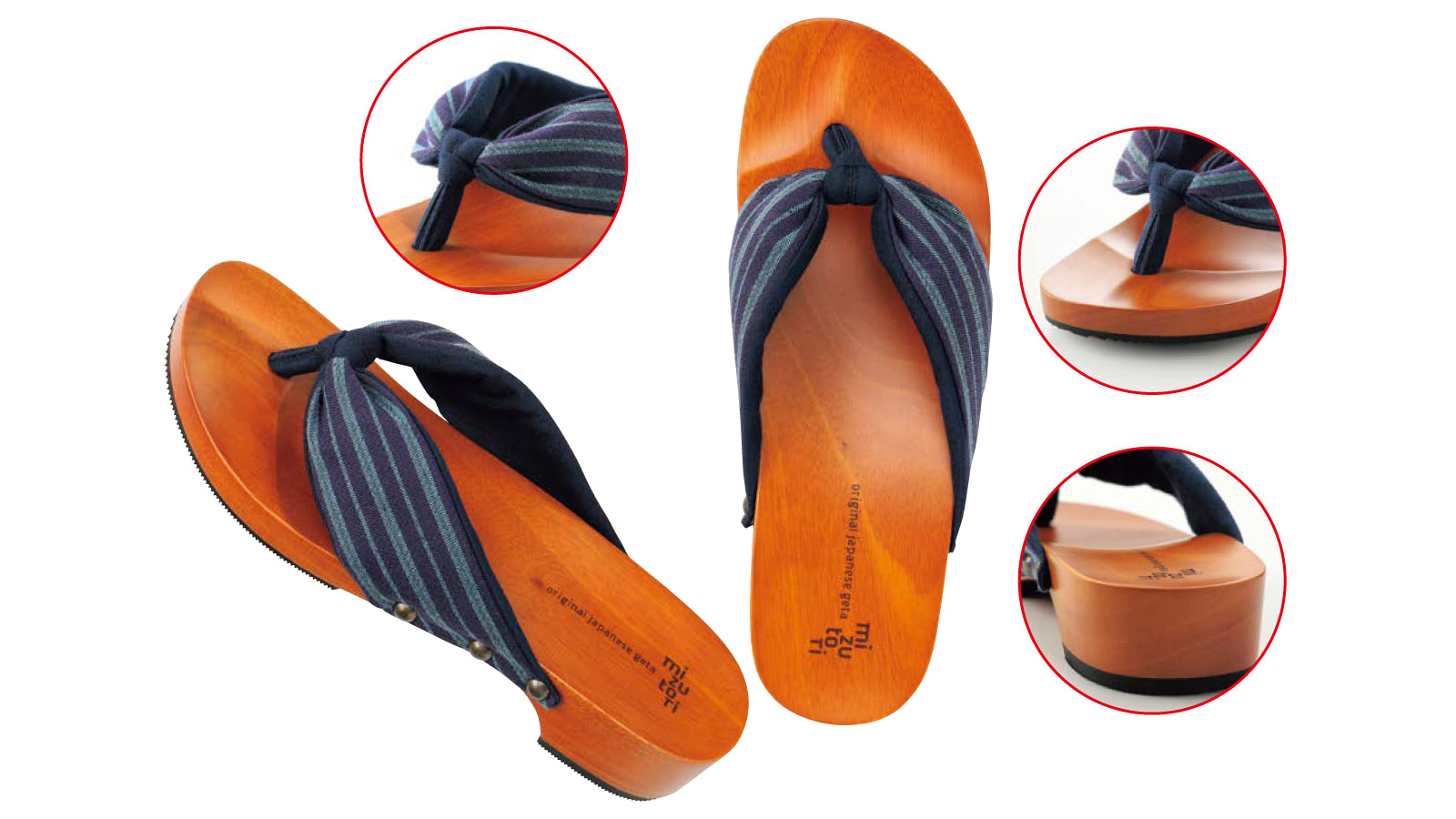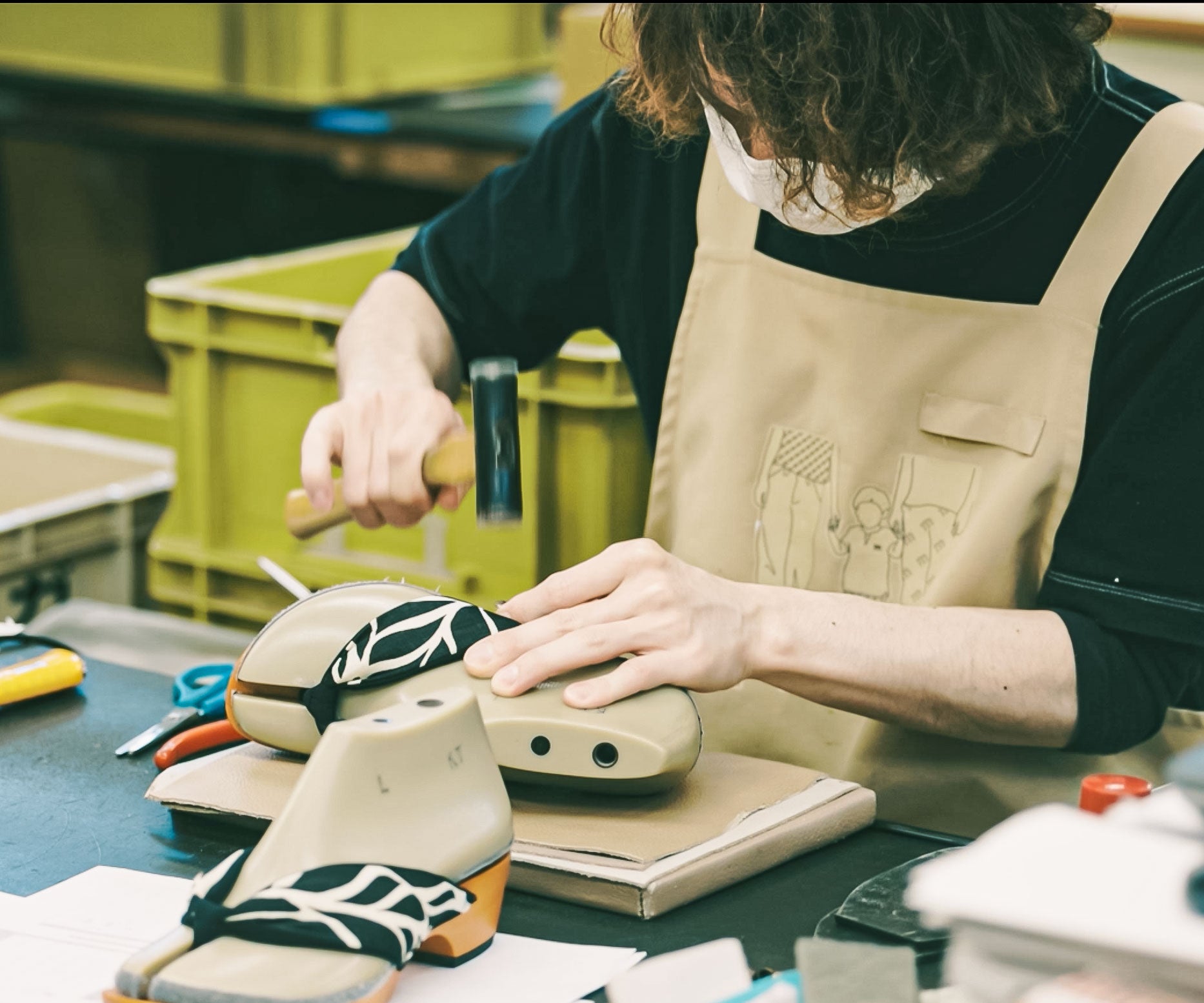
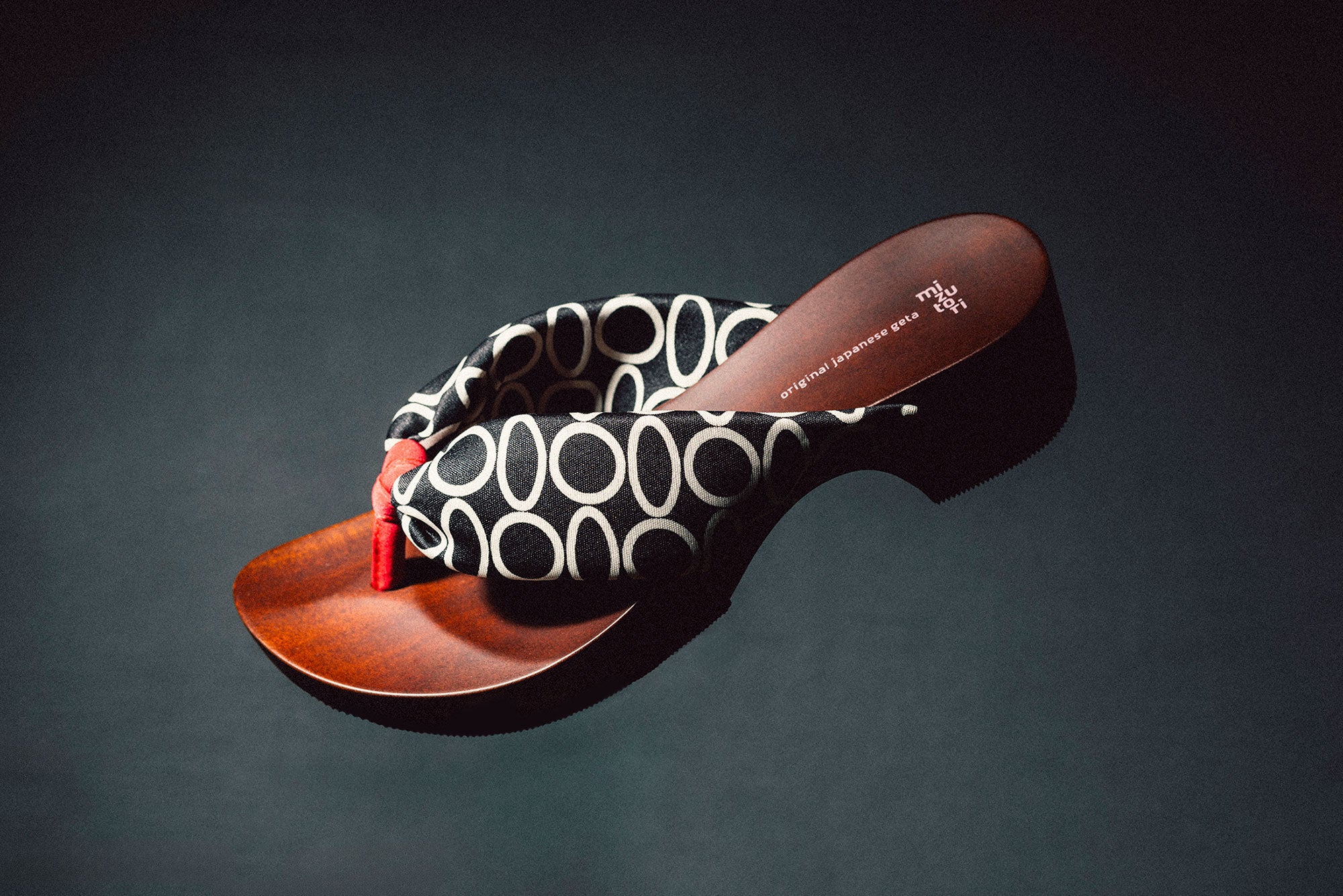

mizutori creates modern Japanese wooden sandals (geta) designed for comfort and everyday wear.
Episode 35
The Footwear That Was Never Eliminated

Our world today is filled
with astonishing convenience.
Even when it comes to footwear,
there are countless options
that are lightweight and easy on the feet.
And yet,
geta have not disappeared.
They are hardly practical for commuting.
They make sound.
They offer no cushioning.
To wear them comfortably
requires a bit of familiarity.
And still,
geta continue
to be chosen by someone.
Why
were they not eliminated?
As we stand in the workshop,
facing geta each day,
we sometimes find ourselves wondering.
Perhaps it is because of culture.
Geta have long been worn
in Japanese daily life.
They are tied to festivals and ceremonies,
to kimono and special occasions,
and are often spoken of
as a symbol of “Japanese-ness.”
We also often hear
that they are good for one’s health —
that they engage the toes,
improve posture,
and strengthen the core.
These, too,
may be part of the reason.
Some may see them as fashion —
bringing freshness
when paired with Western clothing,
adding a quiet individuality at the feet.
None of these explanations
are wrong.
And yet,
they do not seem to fully explain
why geta remain.
Few people say from the beginning,
“I wear them for my health.”
More often, we hear,
“I happened to try them,
and they were more comfortable than I expected.”
“I liked the feeling of the wood beneath my feet,
even the sound they made as I walked.”
In many cases,
it seems that people are led by sensation —
by what they feel
when they first put them on.

If we measure only by convenience,
there are many superior options.
And yet,
to choose geta —
that small decision
holds something
that cannot be measured in numbers or words,
something understood only by the one who wears them.
Geta gently draw
the wearer’s awareness
toward their own body.
Through the soles and the toes,
attention returns
to the act of walking itself.
Even along a familiar road,
awareness settles again
at one’s feet.
Perhaps
the reason geta were not eliminated
lies in this quiet influence —
their ability to awaken such sensation.

Geta are neither
“a thing of the past”
nor “a passing trend.”
Perhaps it is precisely because
they never became a trend
that they never disappeared.
And perhaps it is because
they never became excessively convenient
that they have endured.
A wooden base
and a single strap to support the foot —
a footwear design
reduced to its essential minimum.
As everyday footwear,
they are overwhelmingly surpassed
by more convenient options.
And yet,
that is exactly why
they have become something one chooses intentionally —
a footwear selected
by the wearer’s own will.
Even today,
somewhere, someone
is choosing geta.
So that they may remain
one of those choices,
mizutori, too,
will continue
to carry them forward.